An Echo of Deco
Léonie Alma Mason transforms a 1930s Parisian apartment into a luminous family home, designed for contemporary living and approached with meticulous craftsmanship
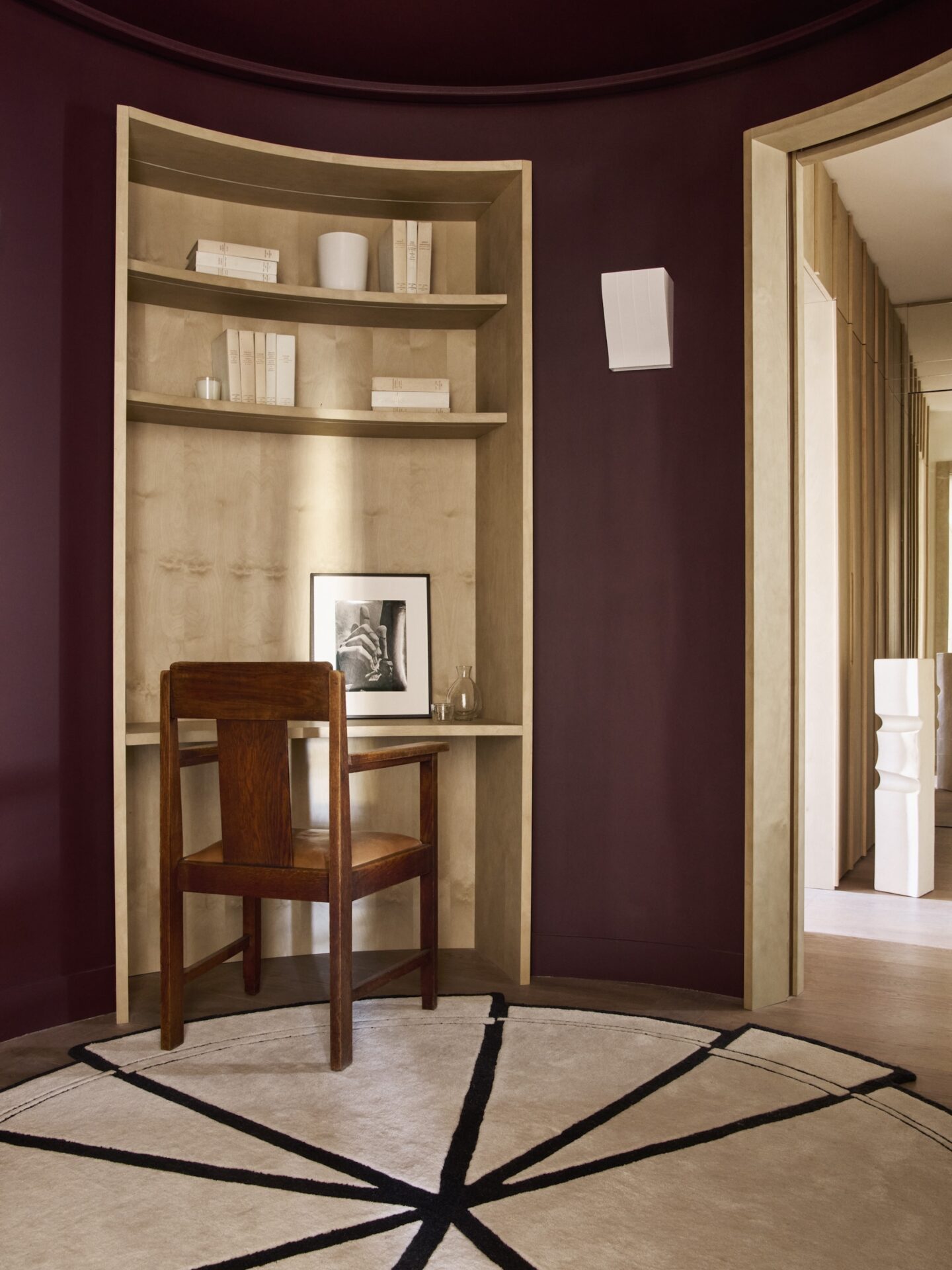
Never underestimate the power of transitional space. In this Parisian project, Léonie Alma Mason of LA.M Studio created a rotunda that does much more than connect one room to another: in a deep, dark, purplish-black hue, it serves as an enveloping moment – almost an intake of breath – as you step from the ‘public’ living areas to the more private sleeping zone. And with its curving walls, burr timber joinery and geometric rug, its references place us firmly in the era in which the building was constructed, at the height of art deco in the 1930s.
Mason calls the rotunda “an intelligent, cosy knot” that knits together the layout. Some of those threads run beyond this “knot”, throughout the whole apartment, particularly the idea of an art-deco style reinterpreted through the designer’s exacting eye.
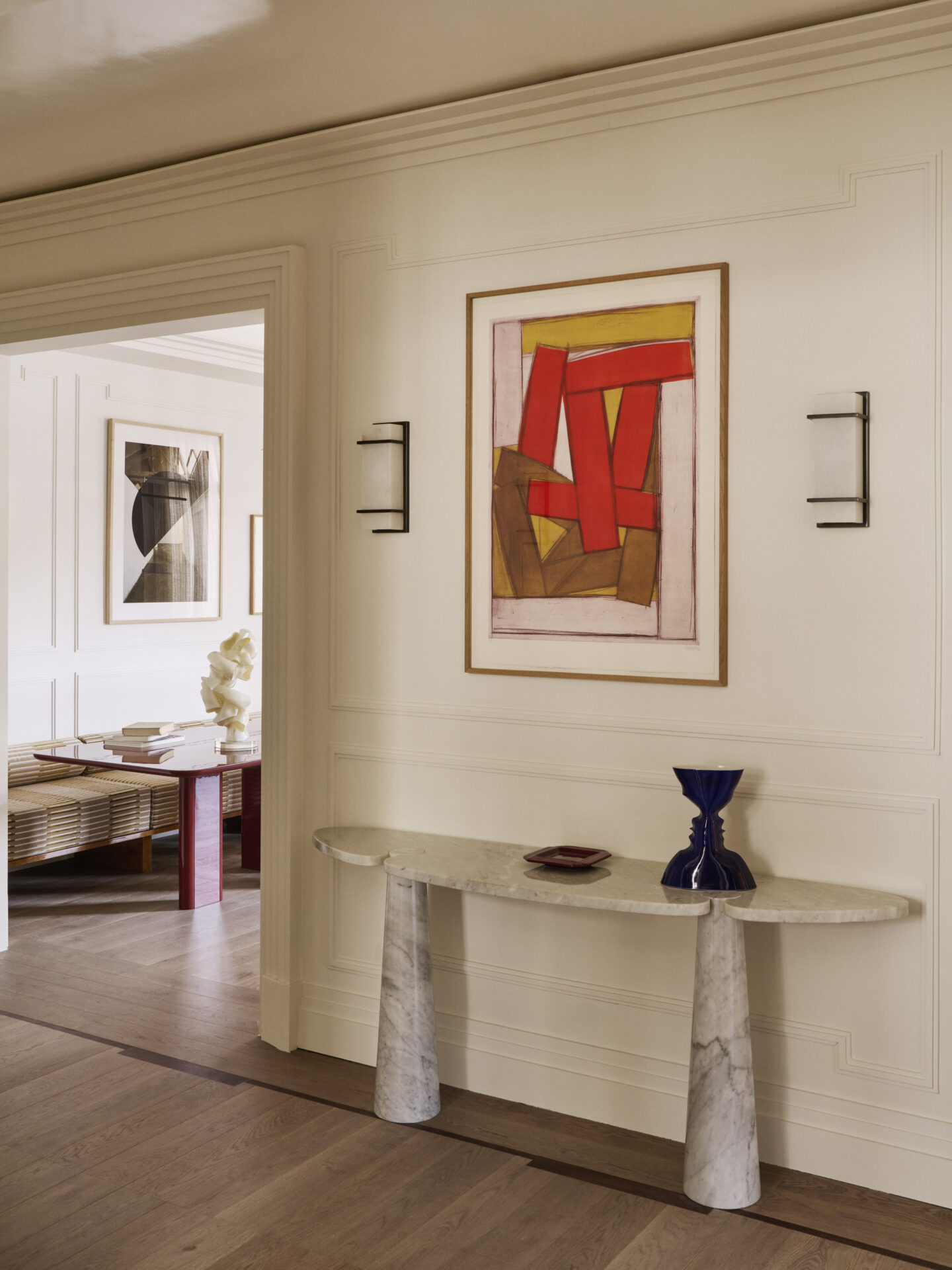
Although it may not appear that way now, not many historical details had survived the apartment’s serial renovations – an advantage in a way, because it left Mason free to modernise and improve the layout. Instead, she looked to the wider building’s architectural features to find clues for how she might introduce some deco-inspired elements to the interiors.
A detail from the ironwork on the windows has been reinterpreted as a graphic black line used as a pattern on parquet floor, for example. “The materials and colour palettes are also my vision of this period,” says Mason. “Using high-gloss wood burl in the kitchen was one of the first ideas, matched with a veined marble. But this is balanced with angular stainless steel, to anchor this space in our time.”
As an interior designer, but also an imaginative ensemblier, I really love to hand-draw unique pieces for every project
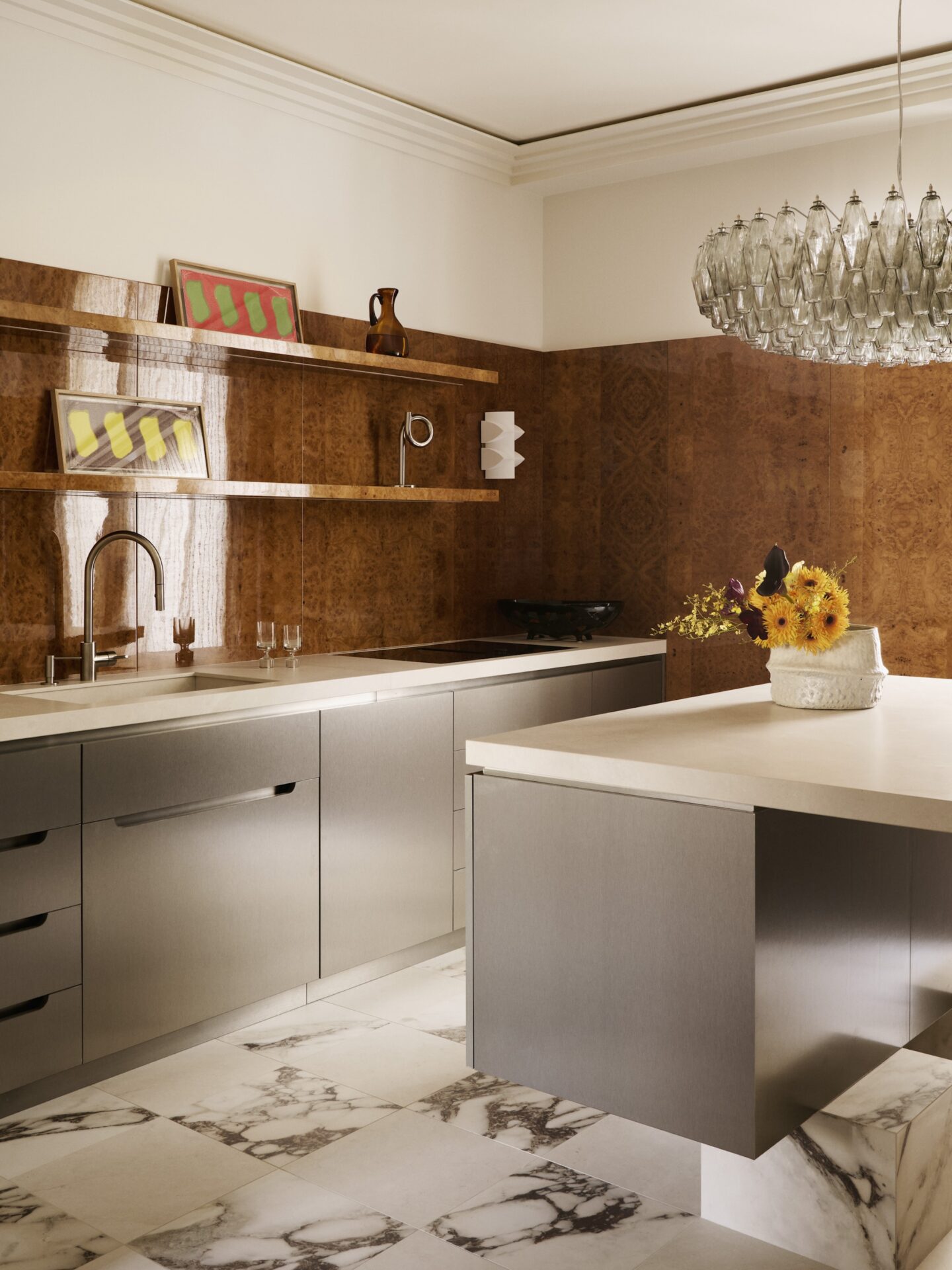
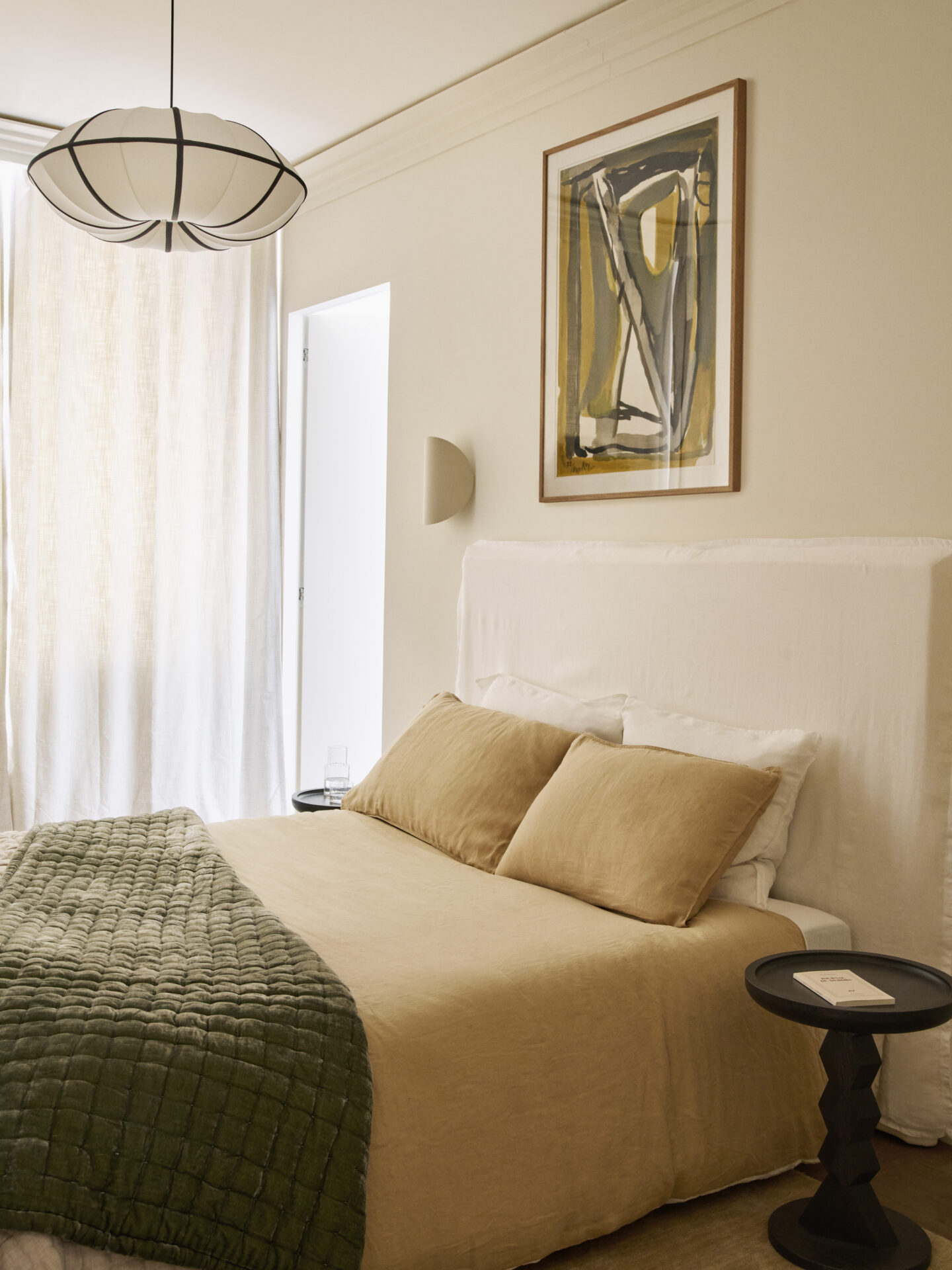
The layout needed to be updated to reflect contemporary Parisian lifestyles. “French families want to live comfortably, but also to gather friends for dinners or parties,” says Mason. To achieve that balance, she opened up the reception areas, linking them through a grand entrance vestibule, which now flows into the kitchen and double living room, creating a generous sequence of interconnected spaces. Natural light from both facades streams through the rooms, its movement amplified by high-gloss ceilings, another nod to 1930s interiors.
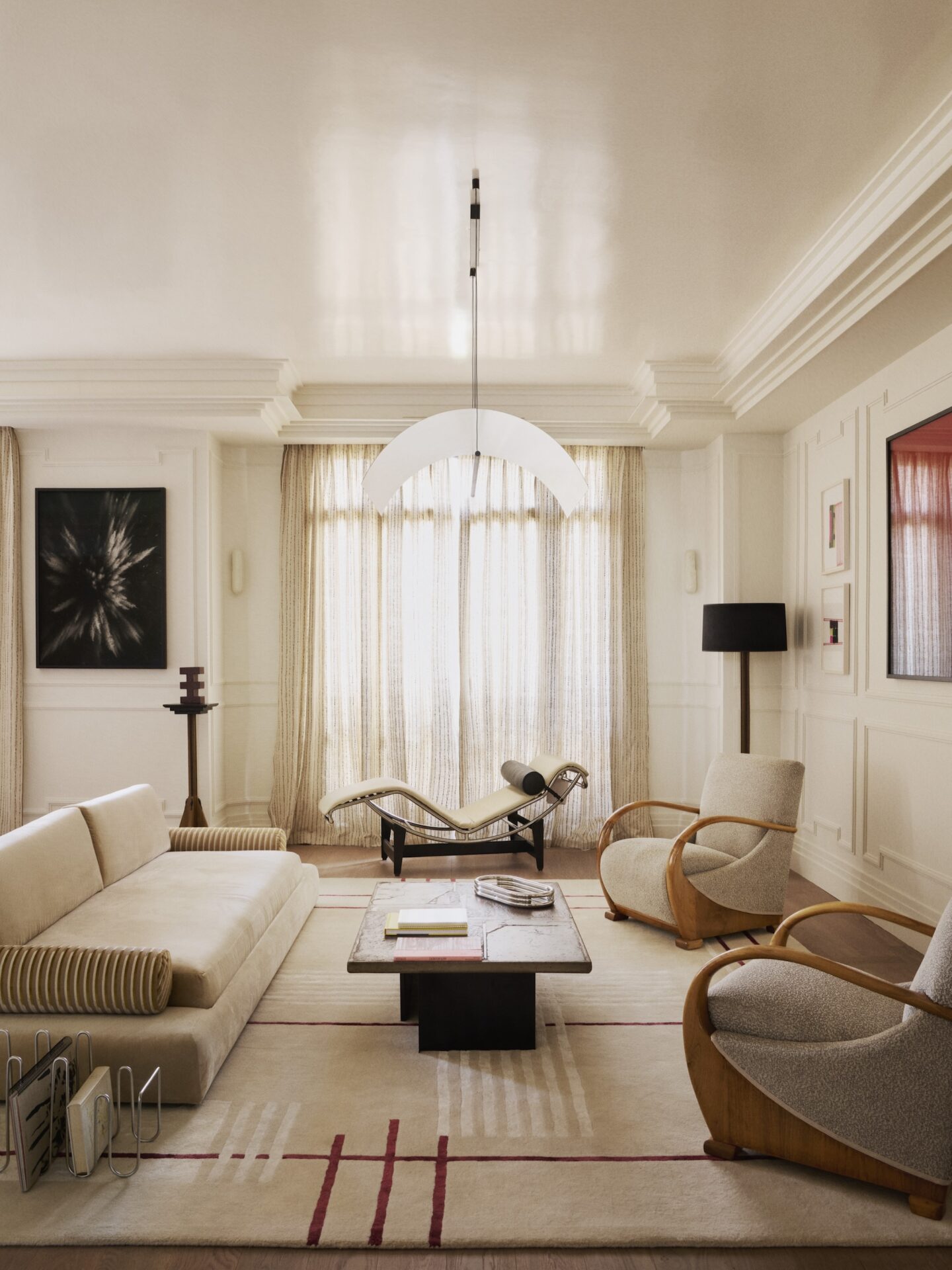
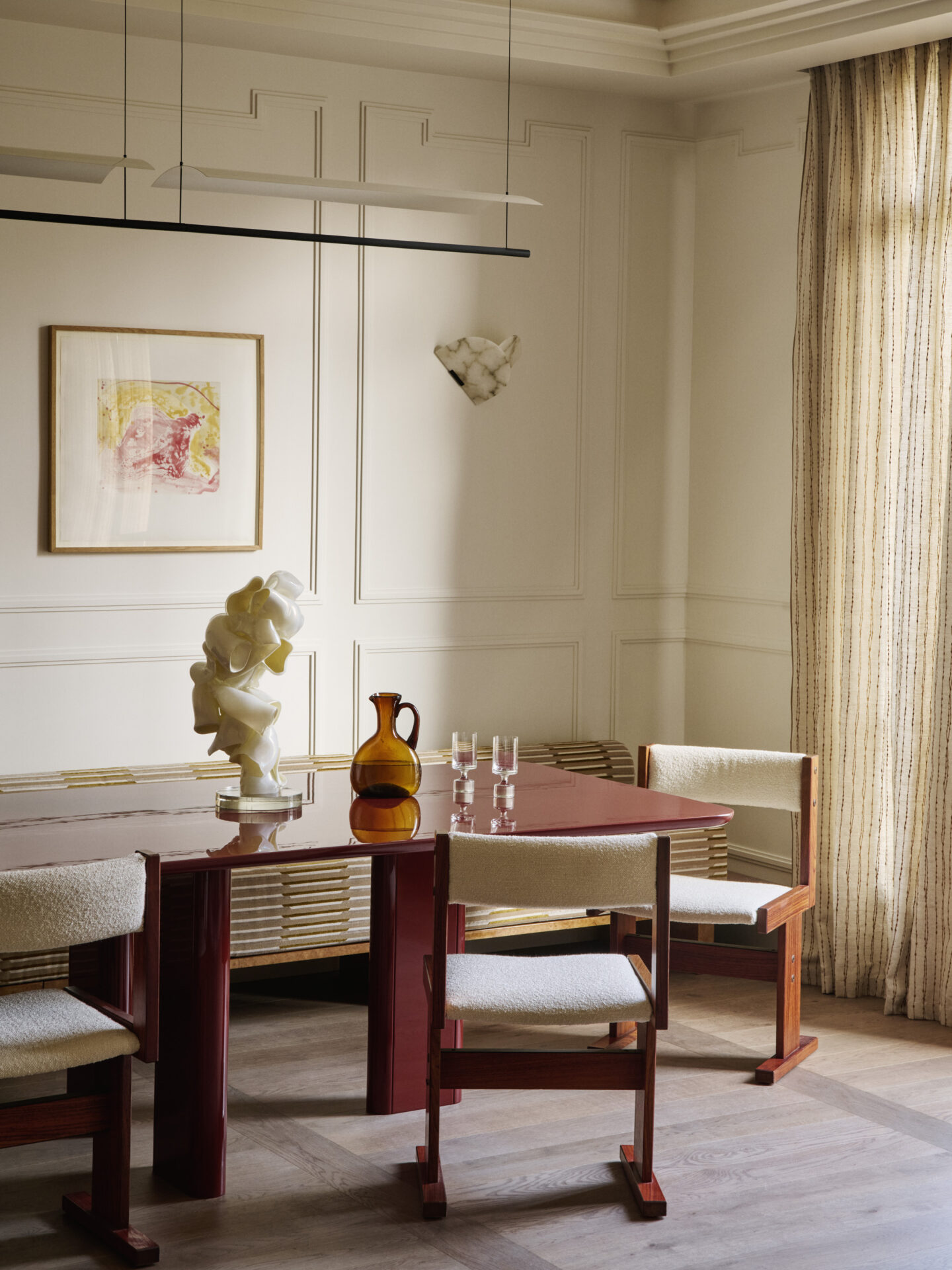
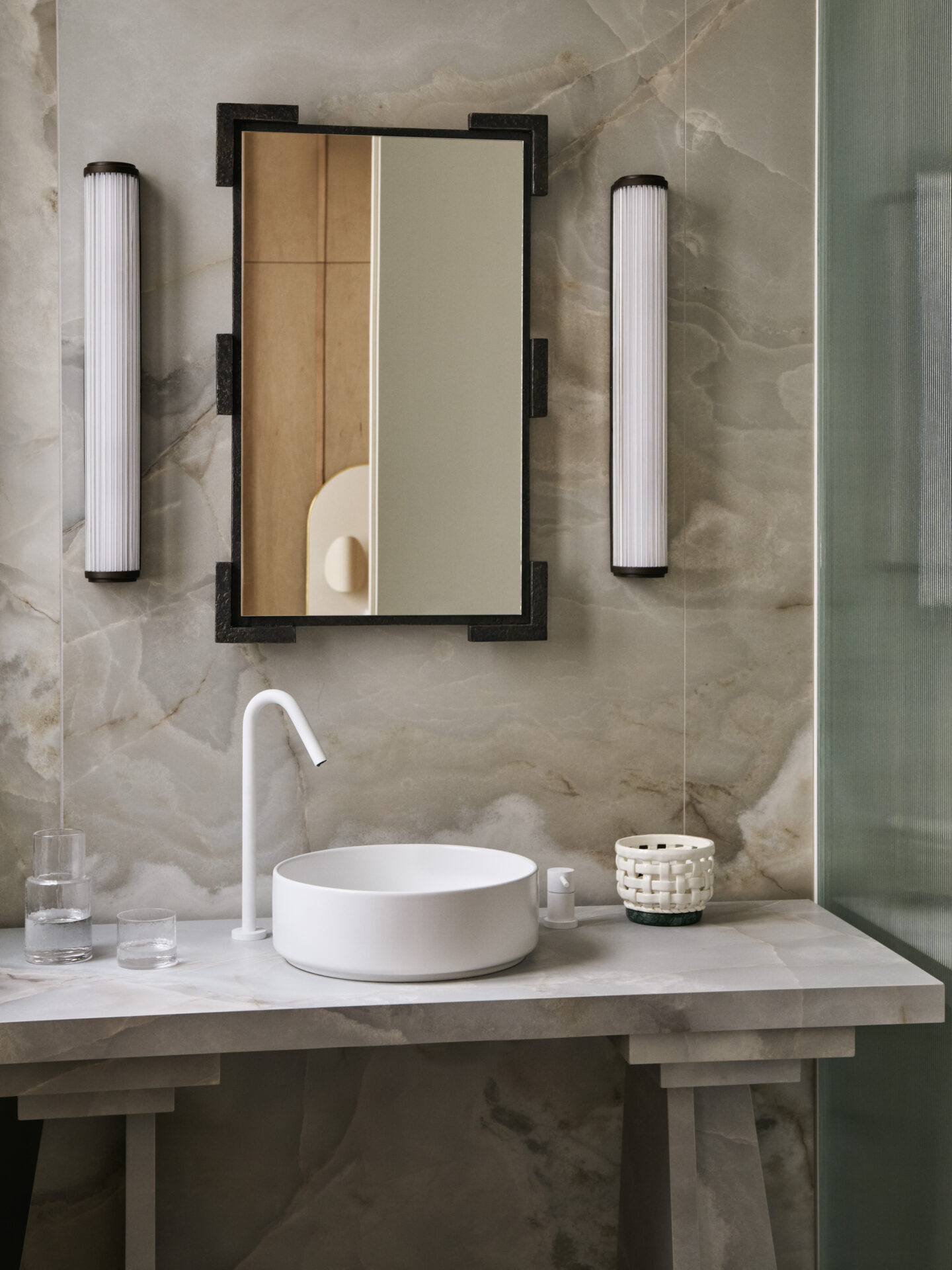
Bespoke craftsmanship is a defining feature of the project, from the large-scale architectural elements to the smallest accessories. “As an interior designer, but also an imaginative ensemblier, I really love to hand-draw unique pieces for every project,” says Mason. “It’s one of my favourite parts [of my role], because it allows us me to personalise the details that make a real difference and employ increasingly rare savoir-faire.” As well as three custom rugs, she designed hammered wrought-iron mirrors – “made by one of my favourite craftsmen” – a material chosen for its timelessness.
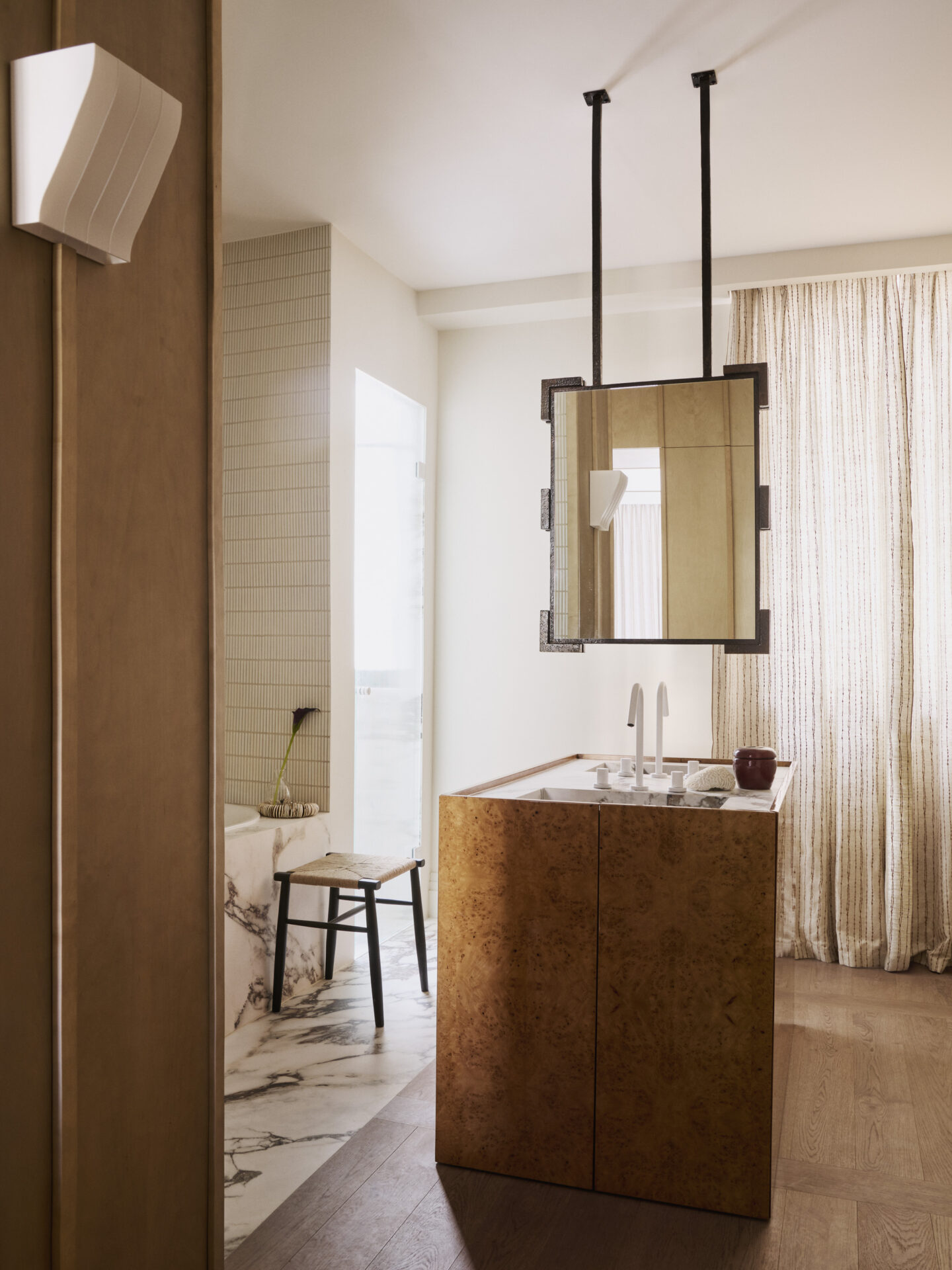
One of the mirrors hangs in the bathroom – not, as is conventional, on the wall, but suspended right in the centre of the room, above a double-sided freestanding marble vanity that’s been wrapped in burr timber. “I liked the sculptural effect of this central block that a couple can share, while still having a kind of privacy. Hanging the mirror therefore appeared to be the most poetic and unusual way to make it user-friendly as well,” says Mason.
The furniture is a mixture of icons, vintage designs and contemporary pieces. This is best summed up by the living room, which features Charlotte Perriand’s LC4 chaise, a pair of art deco chairs, and Hauvette & Madani’s Podium sofa (upholstered in a Pierre Frey fabric), all relatively low-slung designs that appear to increase the height of the room. At the centre is a stone, concrete and metal coffee table by Danish designer Paul Kingma.
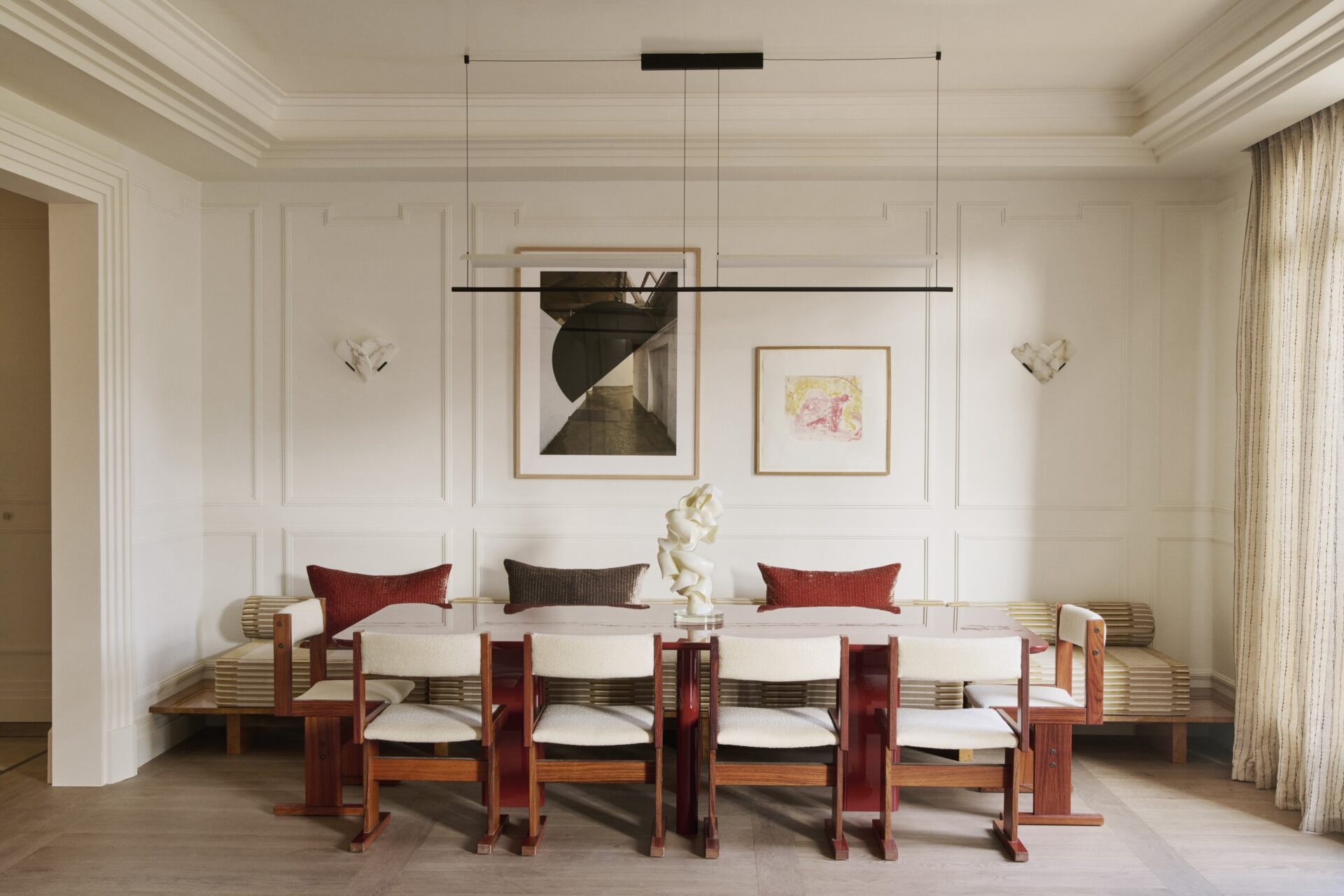
The dining area mixes the informality of a long banquette with the 1970s aesthetic of a glossy dark-red Joe table by Gabrielle Paris, and vintage dining chairs by Poul Poulsen. Nearly every space is enlivened by contemporary artwork, an element that was devised in collaboration with Parisian galleries Catherine Putman and Maubert, and which is frequently used to pull together a theme of colour or form.
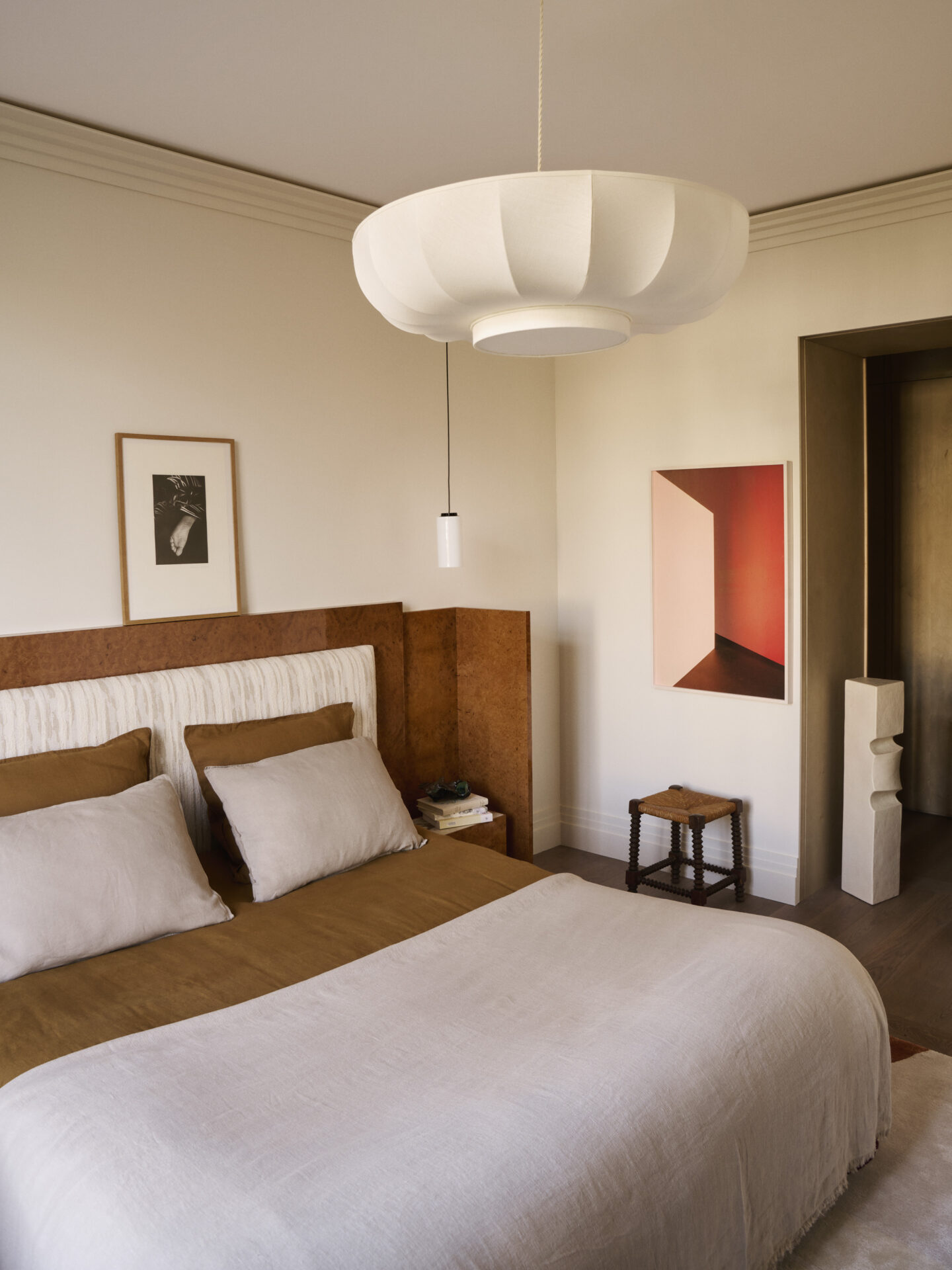
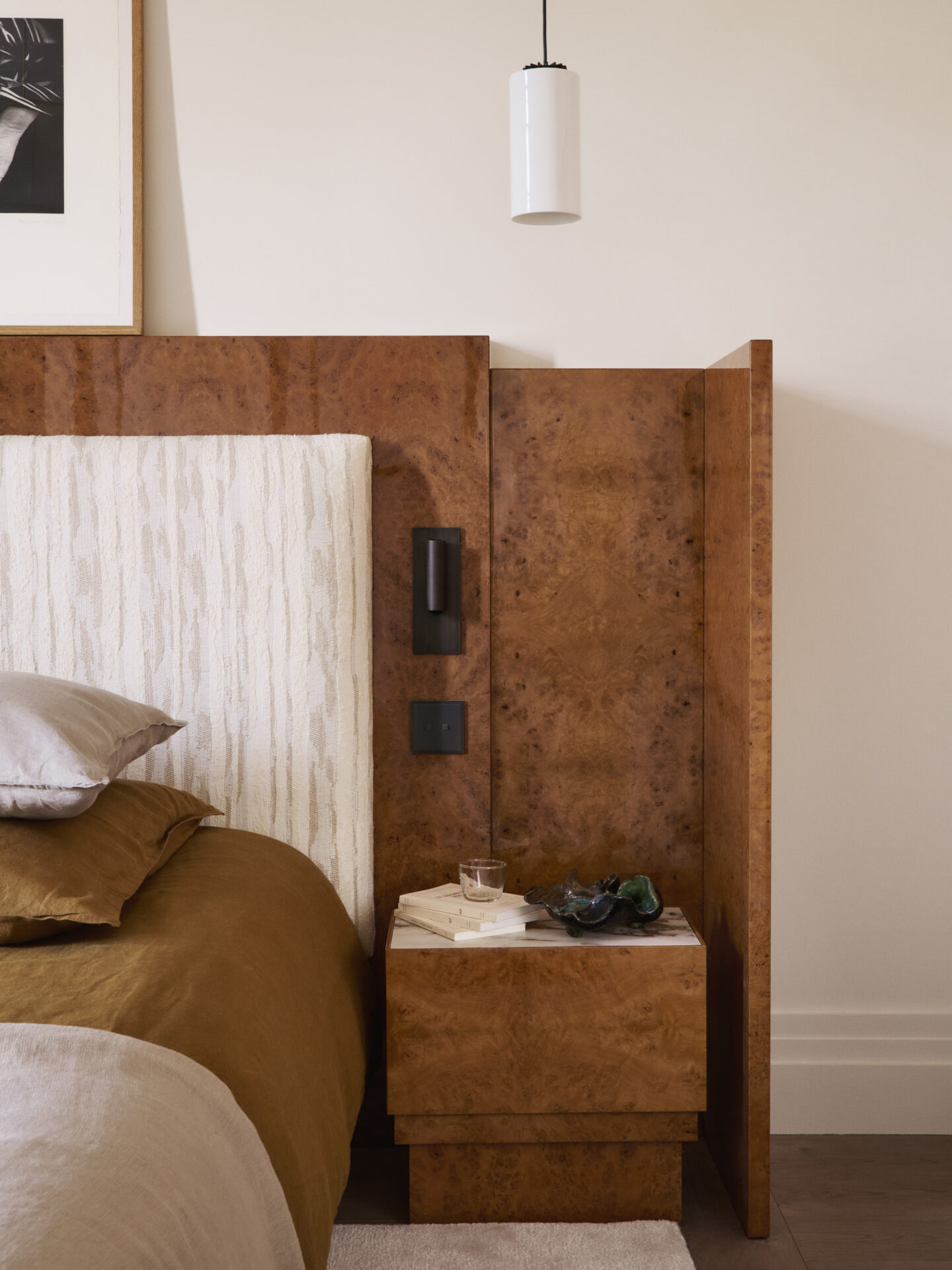
Mason describes the project as one of “understated luxury, expressed through refined details in a palette of neutral hues. It’s not boring. It’s a vibrant space enlivened by curated furniture and open volumes, and decorated with cutting-edge artwork. Whether with family or friends, it’s a place you’ll feel right at home.”