Monumental Simplicity
A sculptural concrete home on a sloping Catalan hillside by Raúl Sánchez Architects, where solidity and serenity meet
Architect Raúl Sánchez thinks closely about the users’ journey around the homes he designs – the progression of spaces, how they can feel open or closed, and how it feels to move between them. “I always try to convey a sense of magic, of the ineffable in my projects,” he says. “They are never obvious nor direct; they always insert some ambiguity in the way you live them.” This house in Cala Tamarit, near Tarragona on Spain’s Catalan coast, sticks close to his ethos.
Sánchez describes how the house was designed for a couple whose work is entirely digital, so for their home they wanted something that felt solid. Its tangible mass comes from its concrete construction, chosen to meet the brief. “I don’t have preferences concerning materials. I first have an idea of the construction, and then I search for the best material for it,” explains Sánchez of the thinking behind this choice. “In this case, starting from that requirement from the clients for solidity and massive materiality, it looked like the best material.”
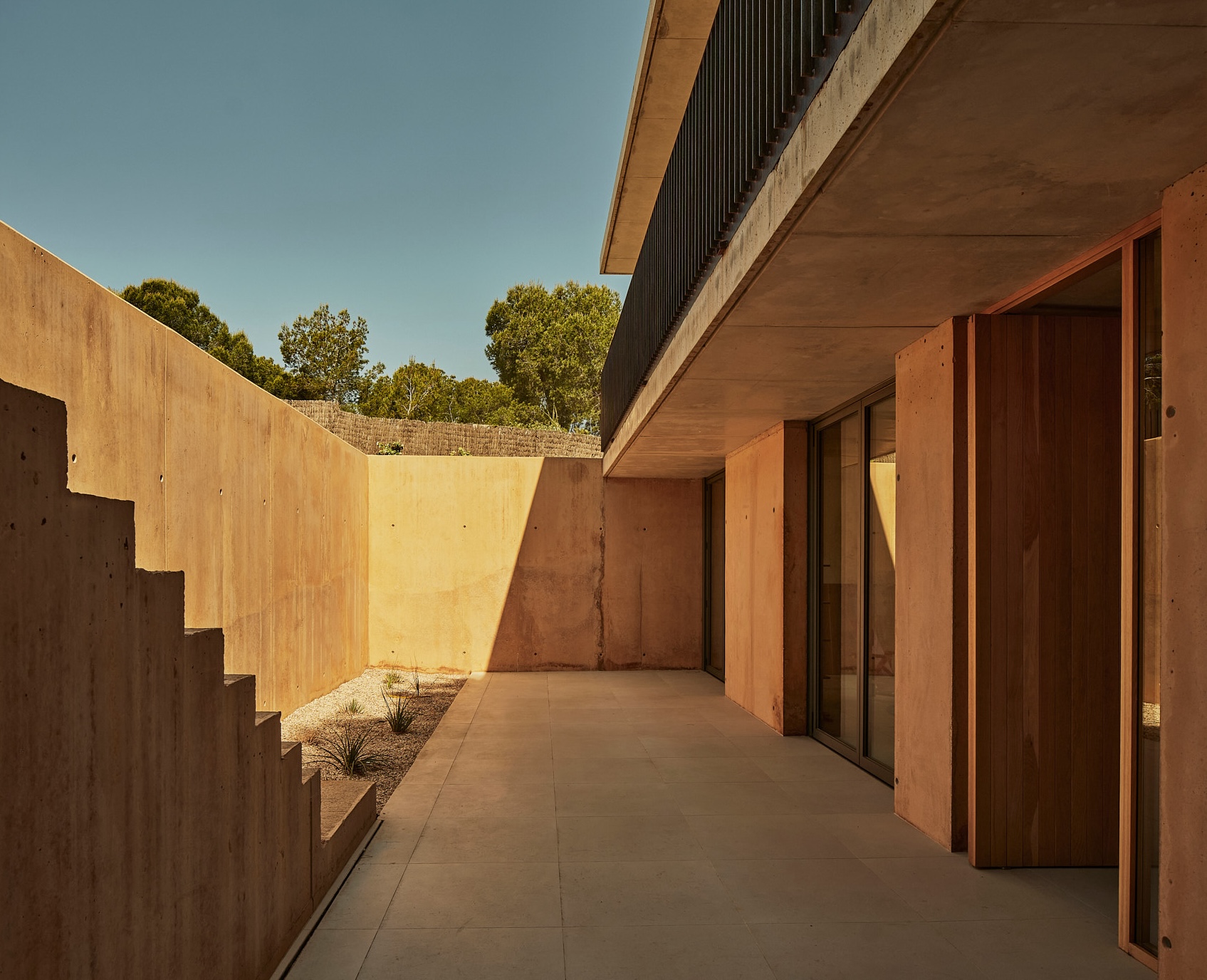
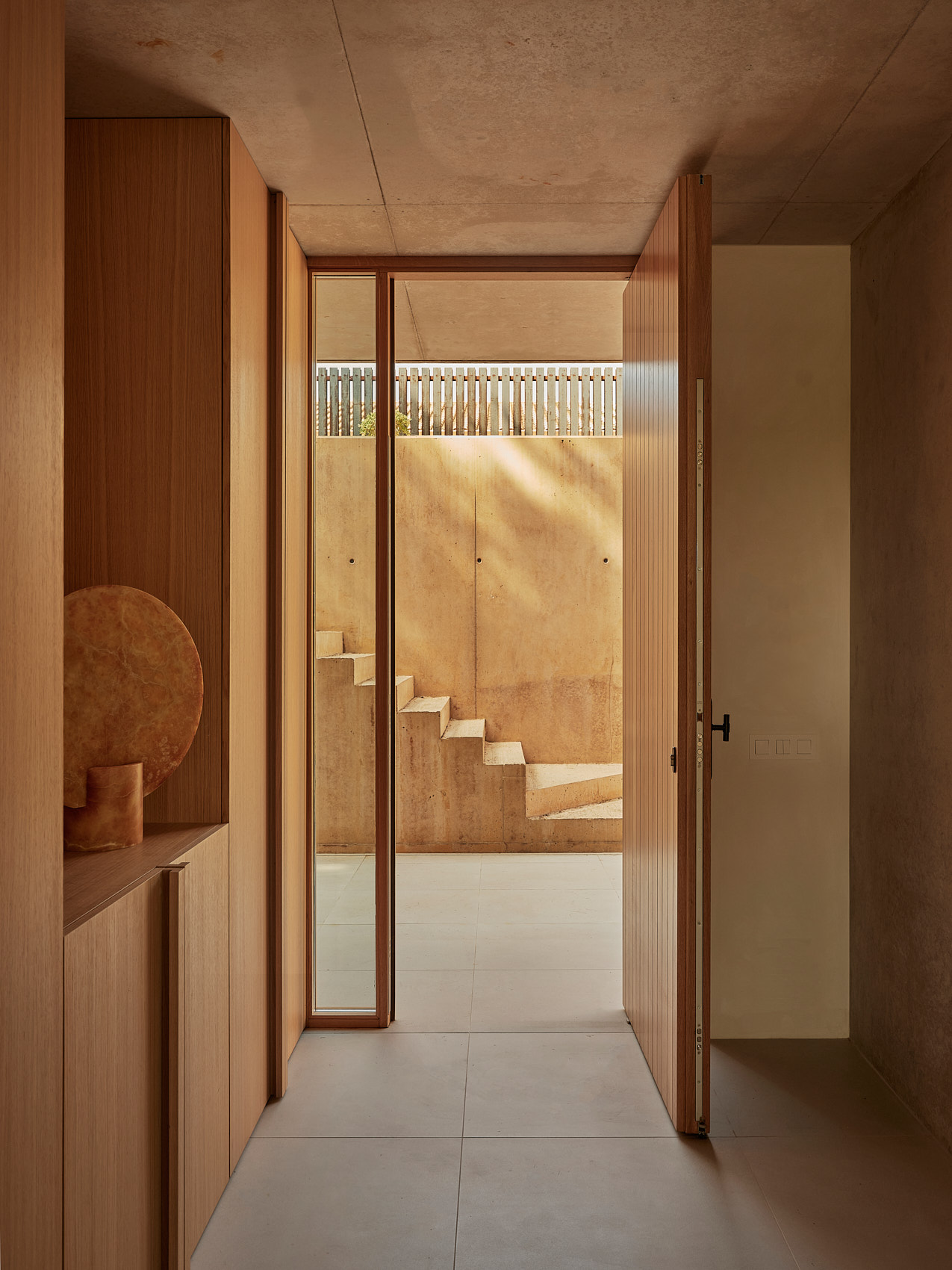
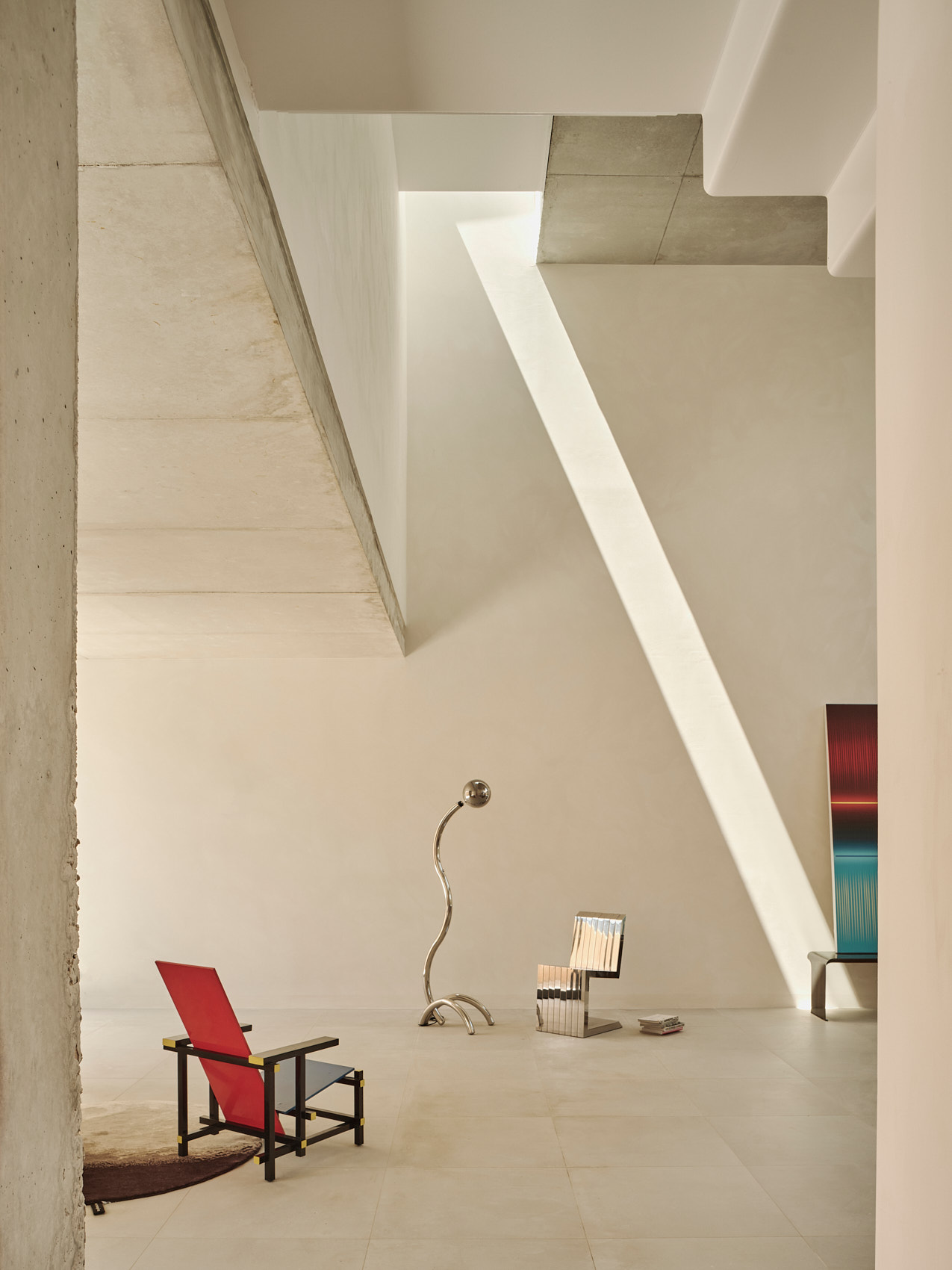
The concrete itself is a more sustainable formula that uses natural aggregates and pozzolans – mineral ash – to replace much of the cement. The material acts as structure and skin, as well as creating some sculptural moments inside where the carefully choreographed light strategically hits it. Two reinforced concrete walls frame the house (tinted beige to meet local regulations), folding inward to define the entry sequence: an external staircase runs between the two walls, ending at a sunken entry courtyard.
Sánchez makes a virtue of the steeply sloping terrain, minimising excavation in favour of adapting his design to the slope, with the sunken courtyard creating an intensely private, hunkered-down feeling for the entrance. The architect describes it as “one the more beautiful elements of the house: that sensation of descending the concrete stair, surrounded just by the tinted concrete walls, with no view of the neighbours, only the sky above…”
That sensation of descending the concrete stair, surrounded just by the tinted concrete walls, with no view of the neighbours, only the sky above…
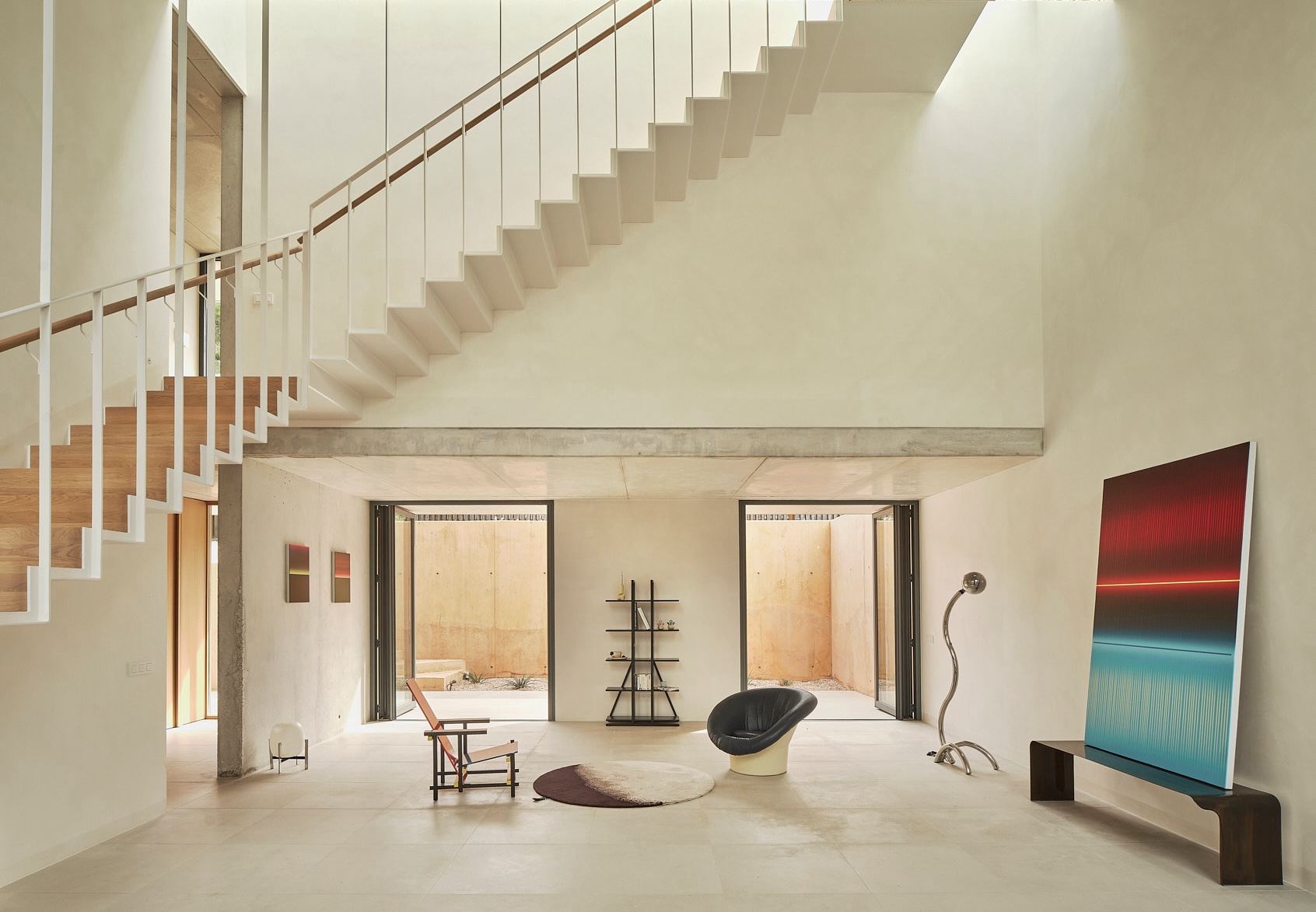
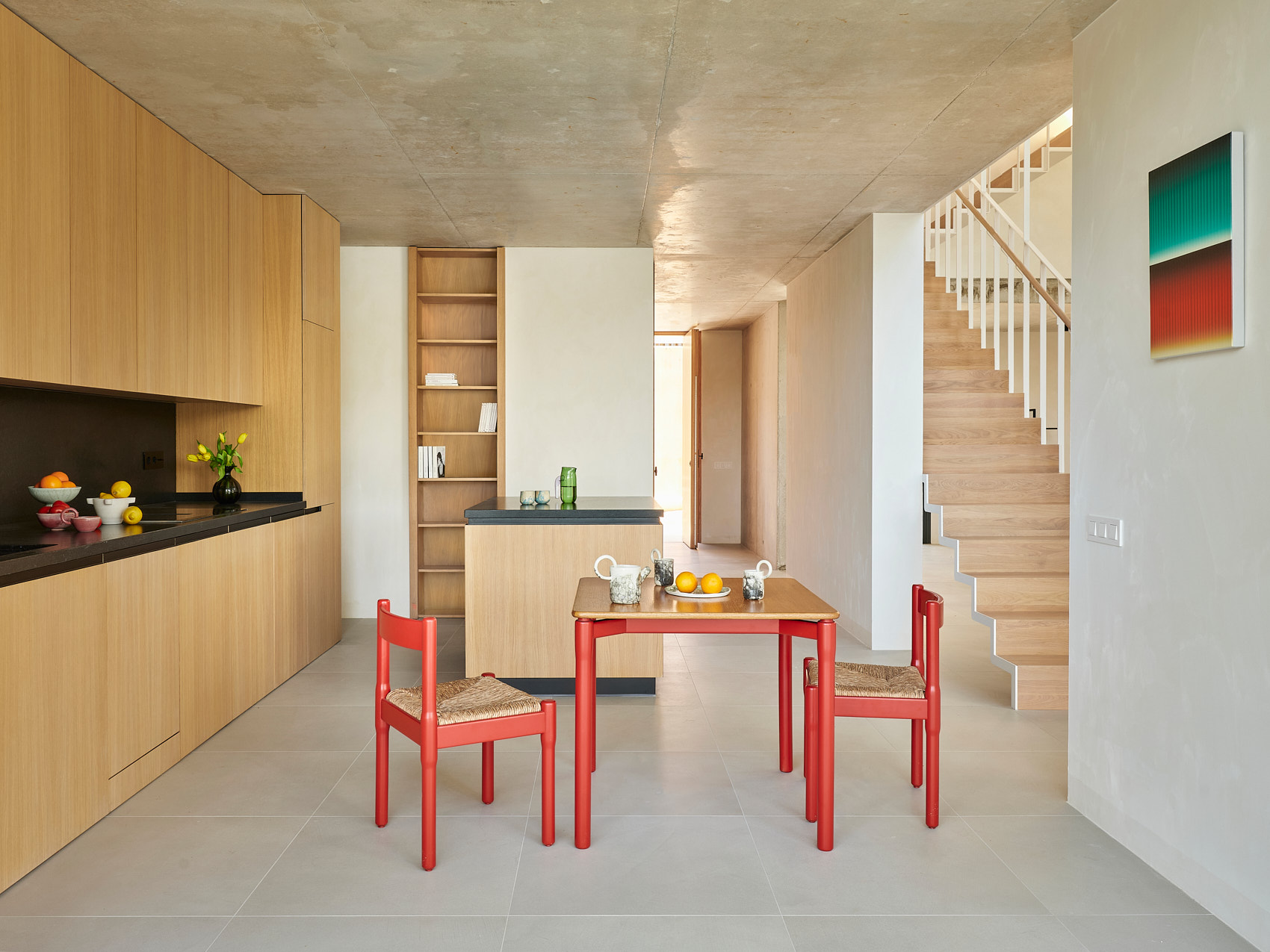
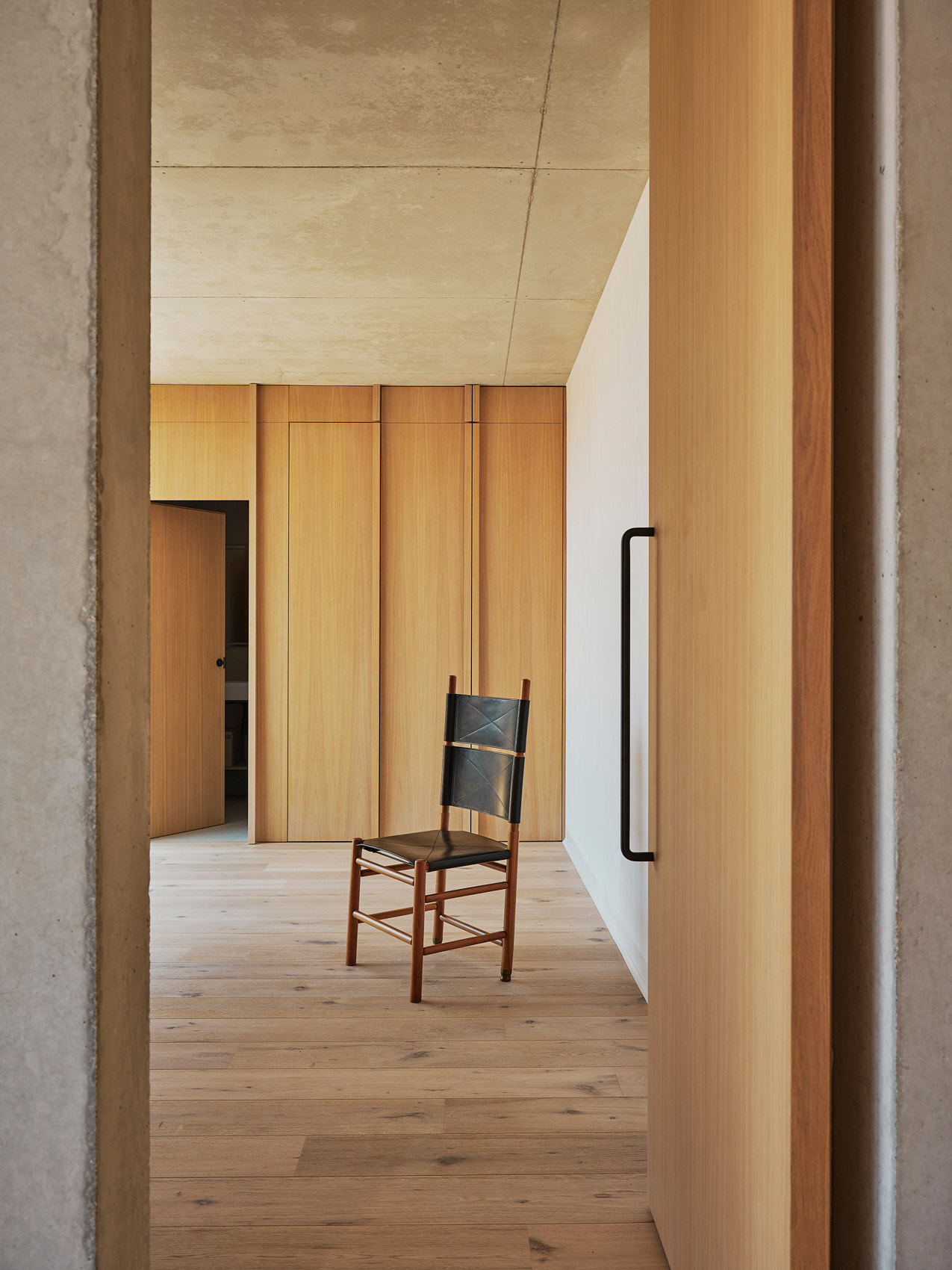
Inside, Sánchez’ flexible, free-flow approach to layout unfolds. “There are no proper main and secondary rooms, nor corridors. The house is conceived as a succession of spaces without hierarchy; in fact, there is not a single way to reach the rooms, you can access them in different ways,” he says. Rooms are formed by the spaces left between solid blocks that contain storage, bathrooms or the kitchen, and because these blocks are staggered rather than aligned, this eliminates traditional corridors.
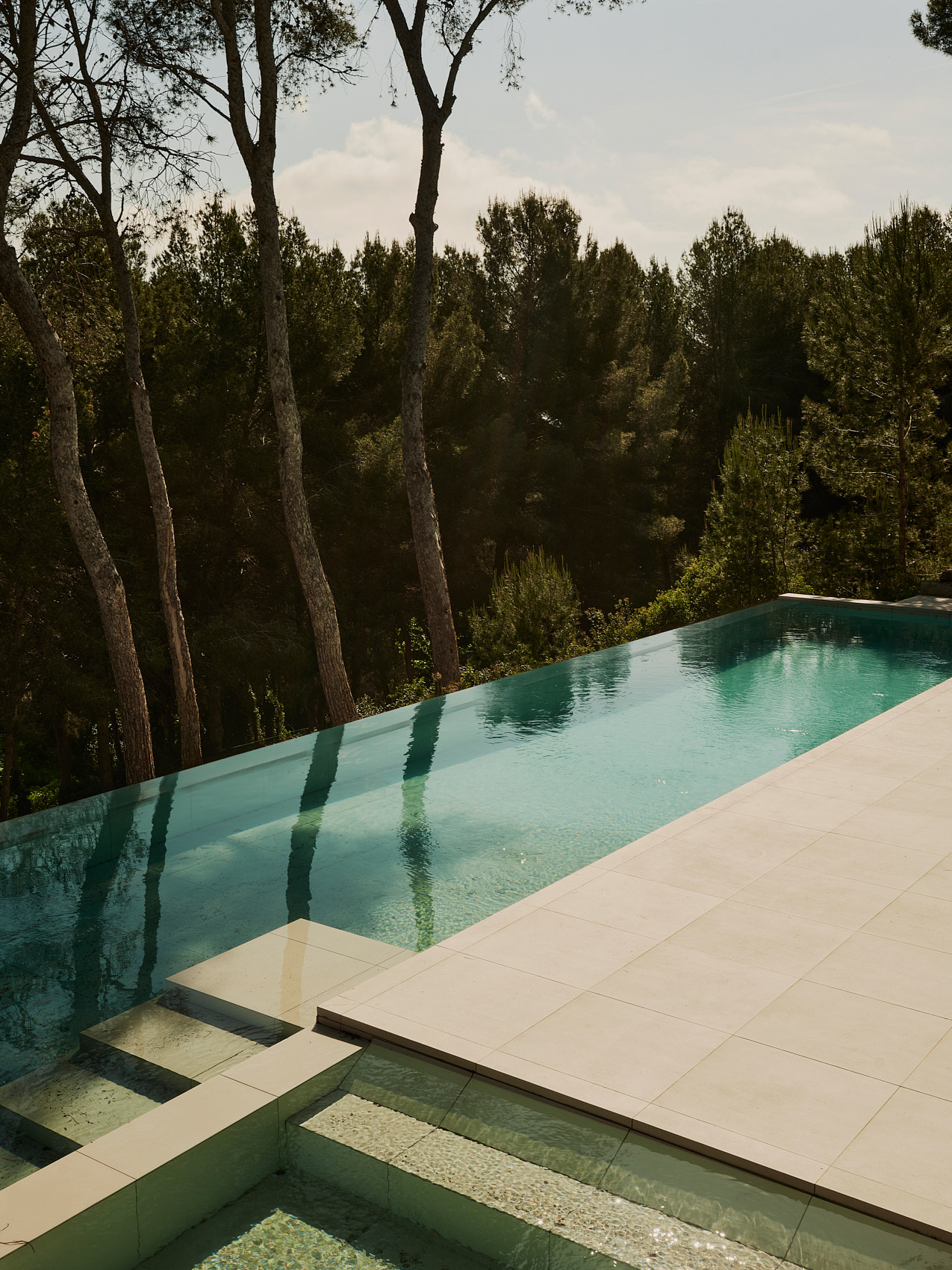
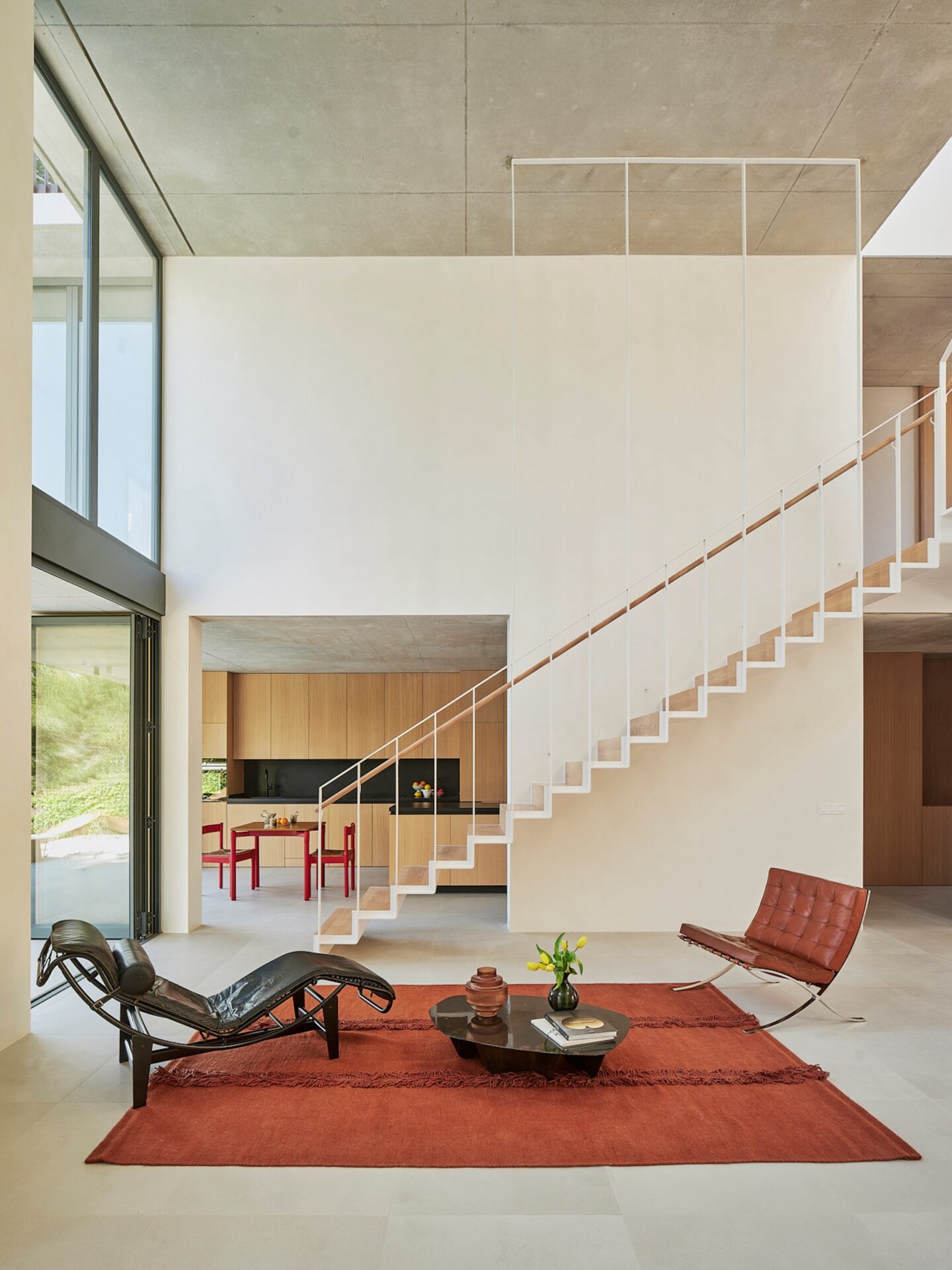
The main living room is a double-height, top-lit space that feels more like a grand hallway or atrium, thanks to the dramatic metal staircase that hugs its white walls. A kitchen sits to one side, and both these rooms have open views to the wider landscape of pine trees, sunk into a ravine; a terrace leads to a path that drops down to a lower area with an infinity pool, nestled right against the trees. The upper floor has three bedrooms (each with a bathroom), while the basement level houses a playroom, an additional bedroom and storage.
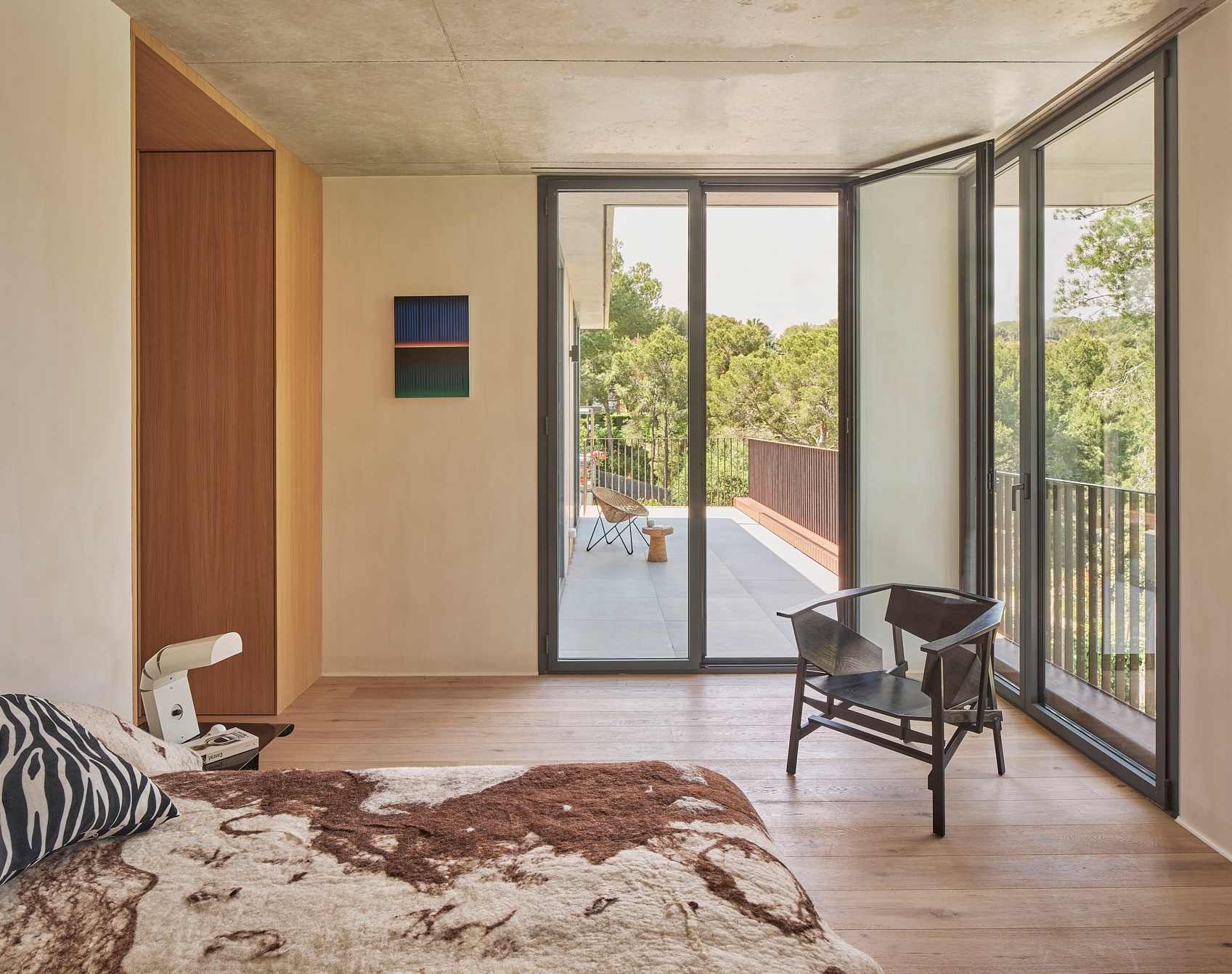
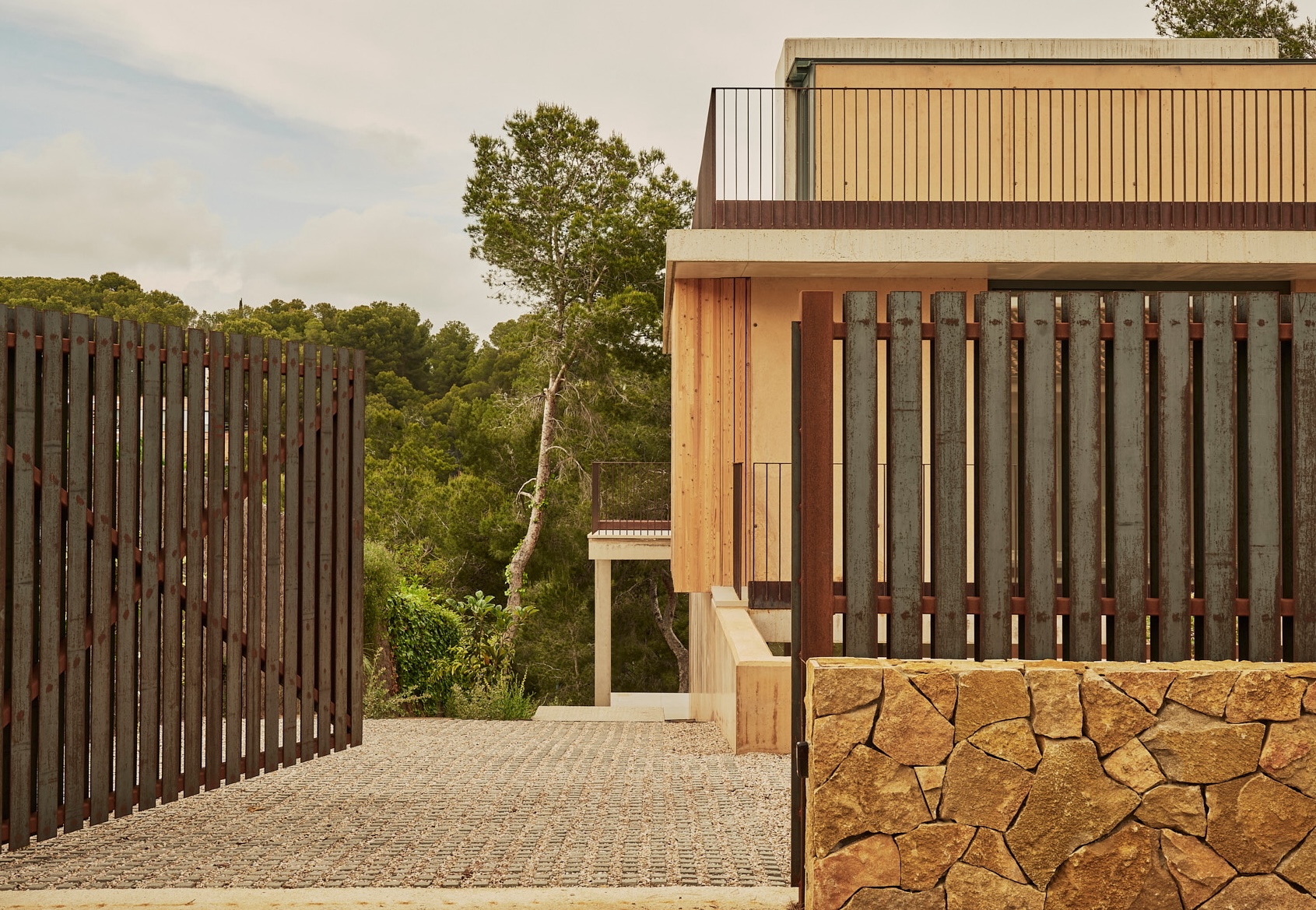
Cantilevered balconies defy gravity and massive planes appear to hover effortlessly above voids, delivering a sense of paradox – it’s heavy, yet light. This isn’t an unforgivingly solid building with no domestic warmth. Sustainably sourced larch softens the concrete, both inside and out. The exterior features vertical slatted sections that provide shade as well as privacy from neighbours when they conceal windows that face neighbouring houses. Larch joinery creates minimalist storage and panelling inside, with oak used for the flooring.
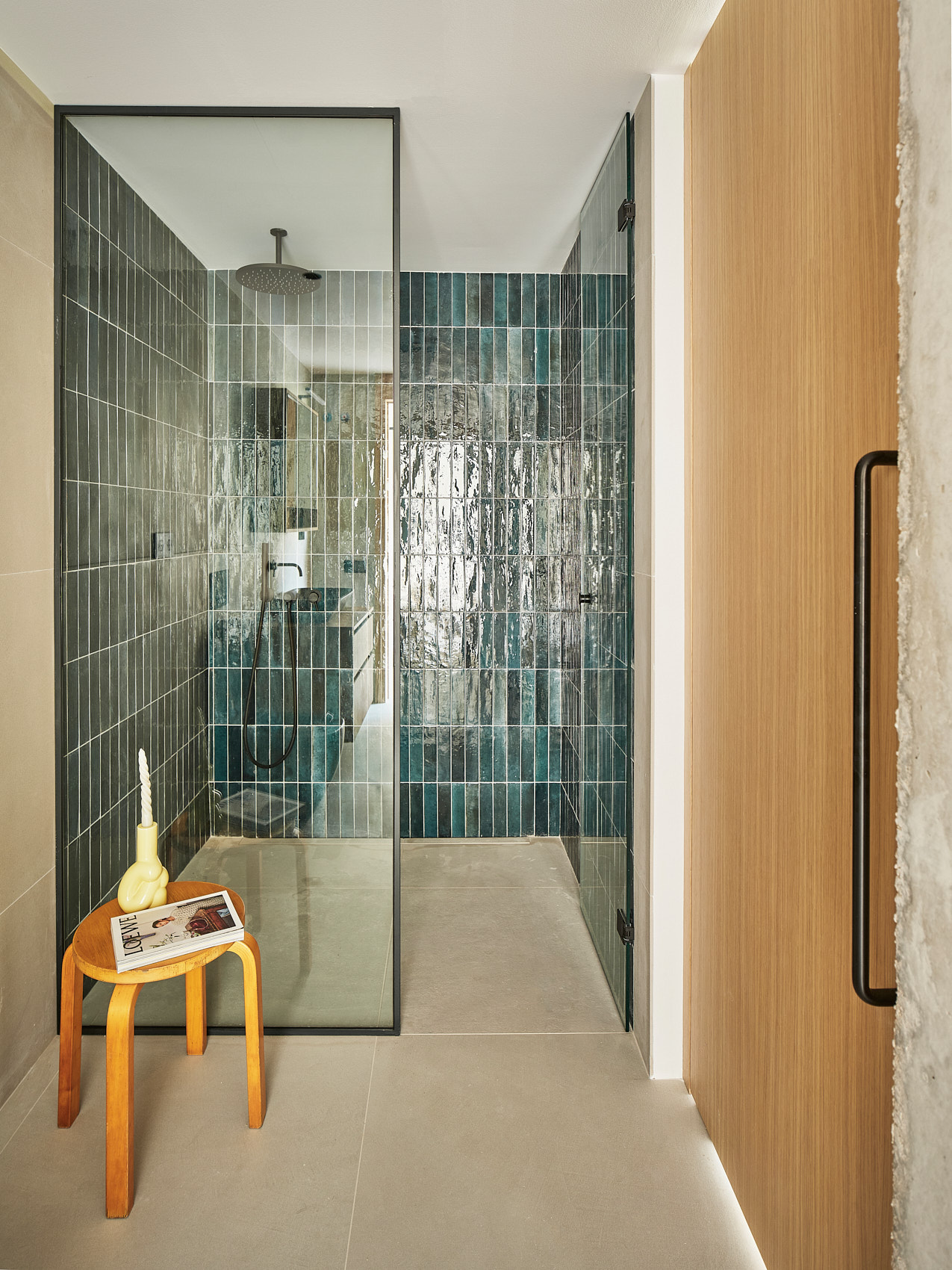
Sánchez describes the “strange familiarity” he tries to imbue into his projects – an idea he says he takes from Michelangelo: “In his work, you always notice something you already know, but at the same time, it is something you have never seen before.” In the house at Cala Tamarit, the solid becomes poetic, and Sanchez creates something that feels both timeless and new.