Traces of Time
At Chesa Marchetta, Artfarm’s latest hotel project in the Swiss mountains, architect Luis Laplace performs a near-invisible intervention, while world-class art creates a provocative counterpoint
In the pages of its very first printed issue, Design Anthology UK featured Switzerland’s picture-perfect Engadine valley as the disruptor of Europe’s art scene. A winter stop for travelling art show Nomad and home to the contemporary art institution Muzeum Susch, it’s also where several top galleries have an outpost. Hauser & Wirth opened in St Moritz in 2018, in a former retail space updated by the gallery’s serial collaborator, architect Luis Laplace. Now, they have another project to unveil: Chesa Marchetta, a 13-bedroom hotel that sits under the wing of Hauser & Wirth’s hospitality arm, Artfarm.
The property already had the right pedigree: in its previous incarnation as a guesthouse and restaurant, the likes of Gerhard Richter and Jean-Michel Basquiat gathered, drawn by the town of Sils Maria’s incredible scenery and quality of light. Laplace is the master of fostering a sense of place – whether at Hauser & Wirth’s Somerset farmhouse or the 18th-century hospital buildings of its Menorcan island – and here it’s no different. “The guiding principle was restraint: intervene where necessary for longevity and comfort, but retain the textures and traces that give the building depth,” says Laplace.
The guiding principle was restraint: intervene where necessary for longevity and comfort, but retain the textures and traces that give the building depth
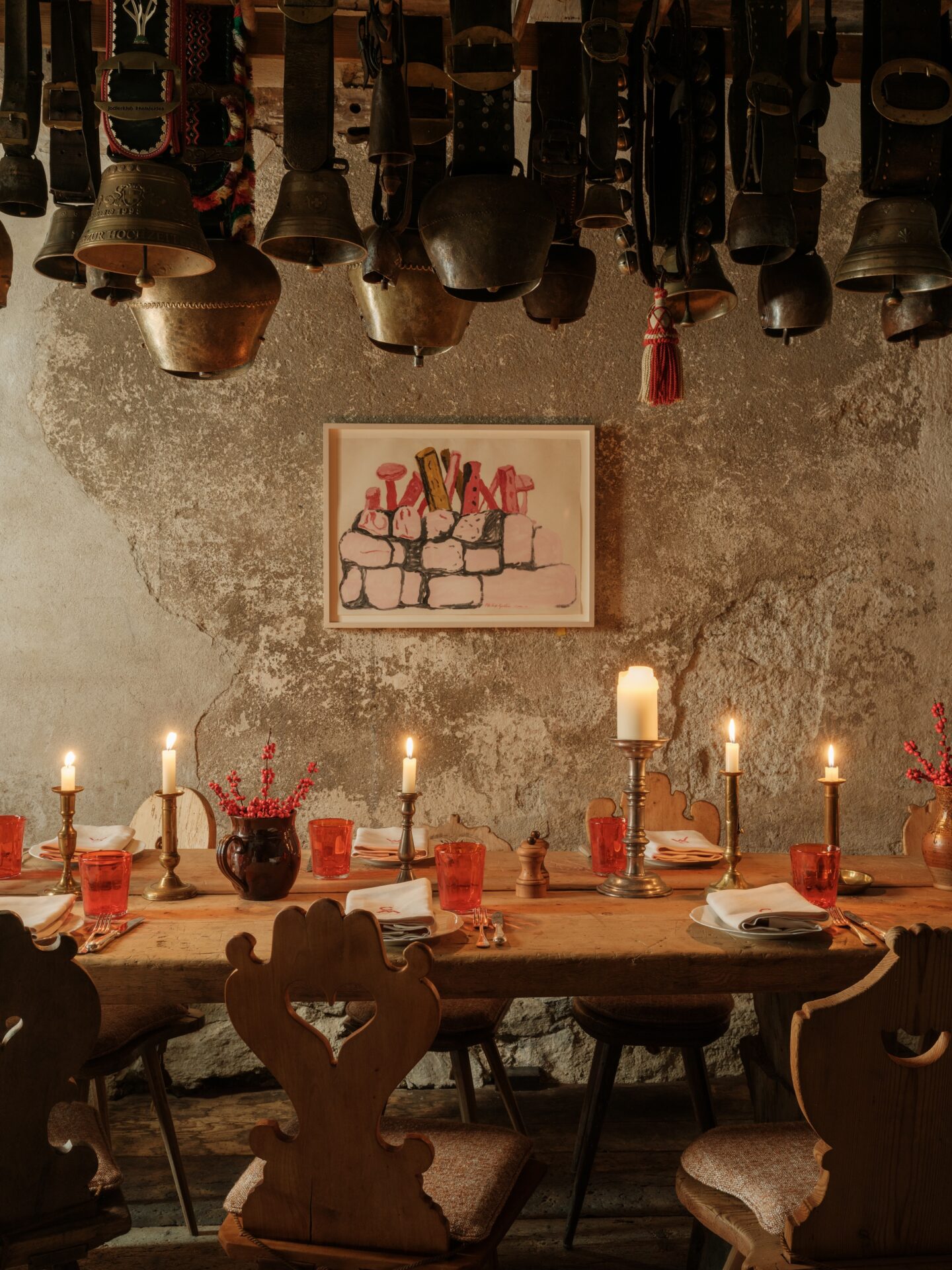
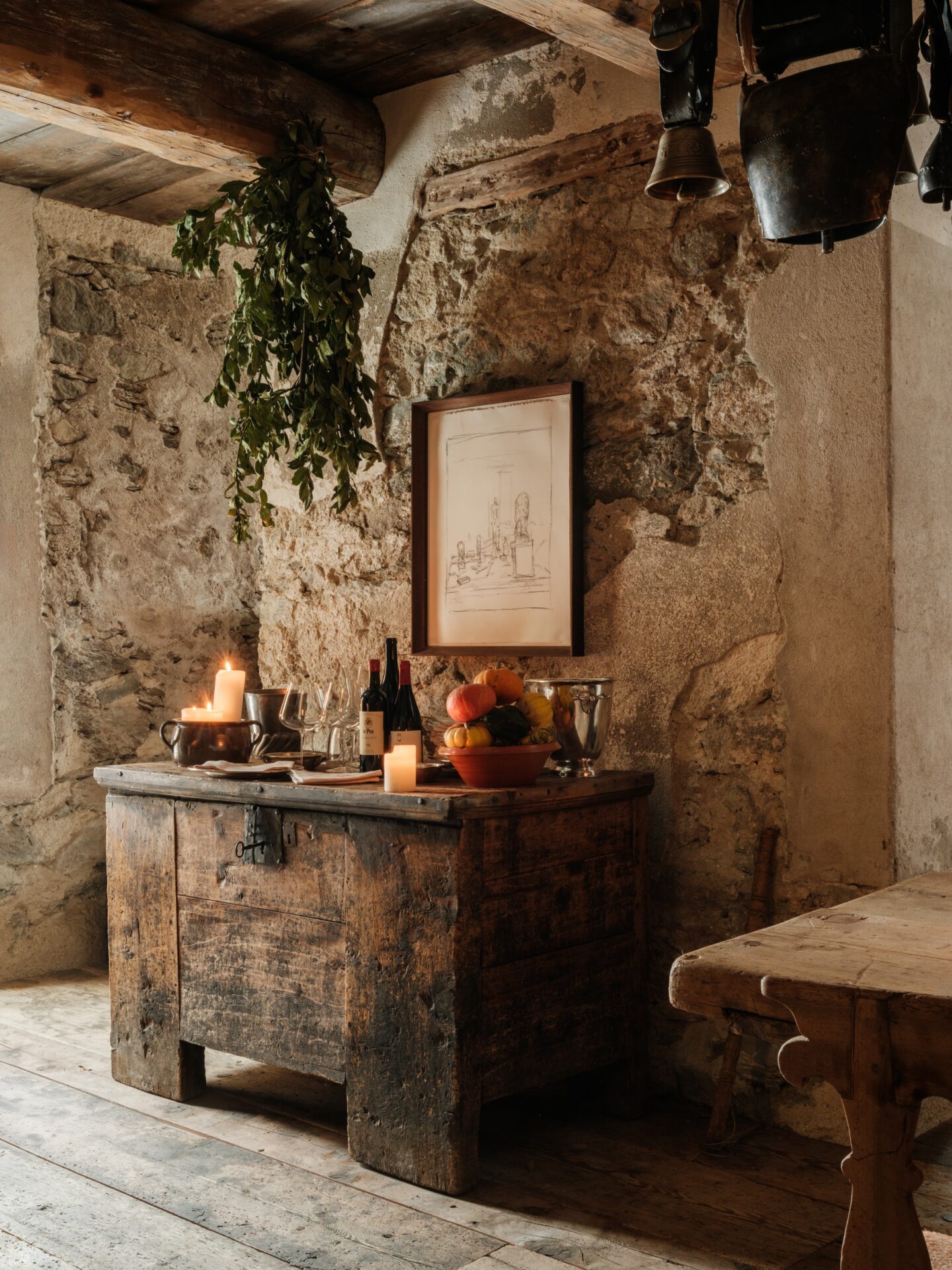
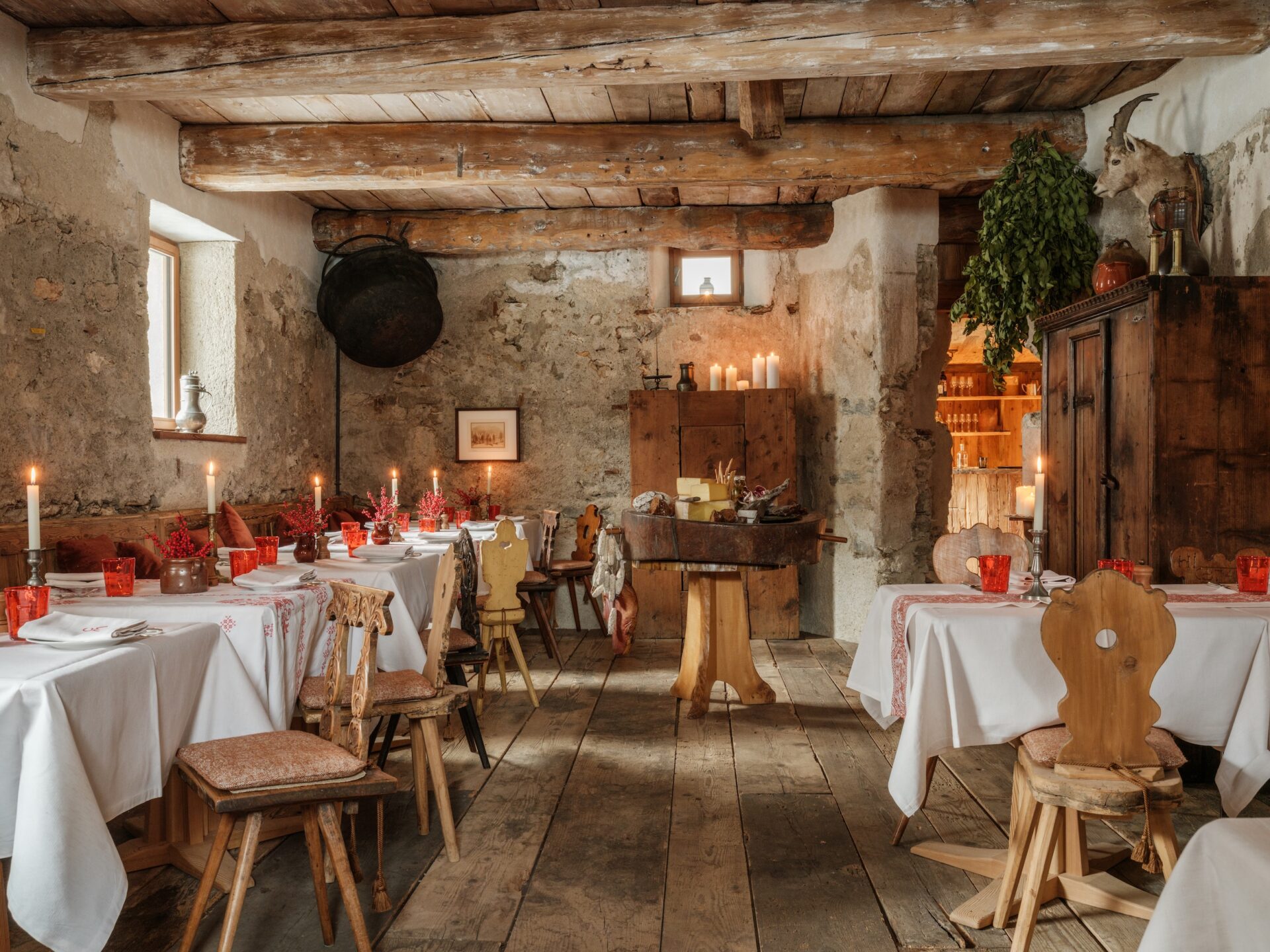
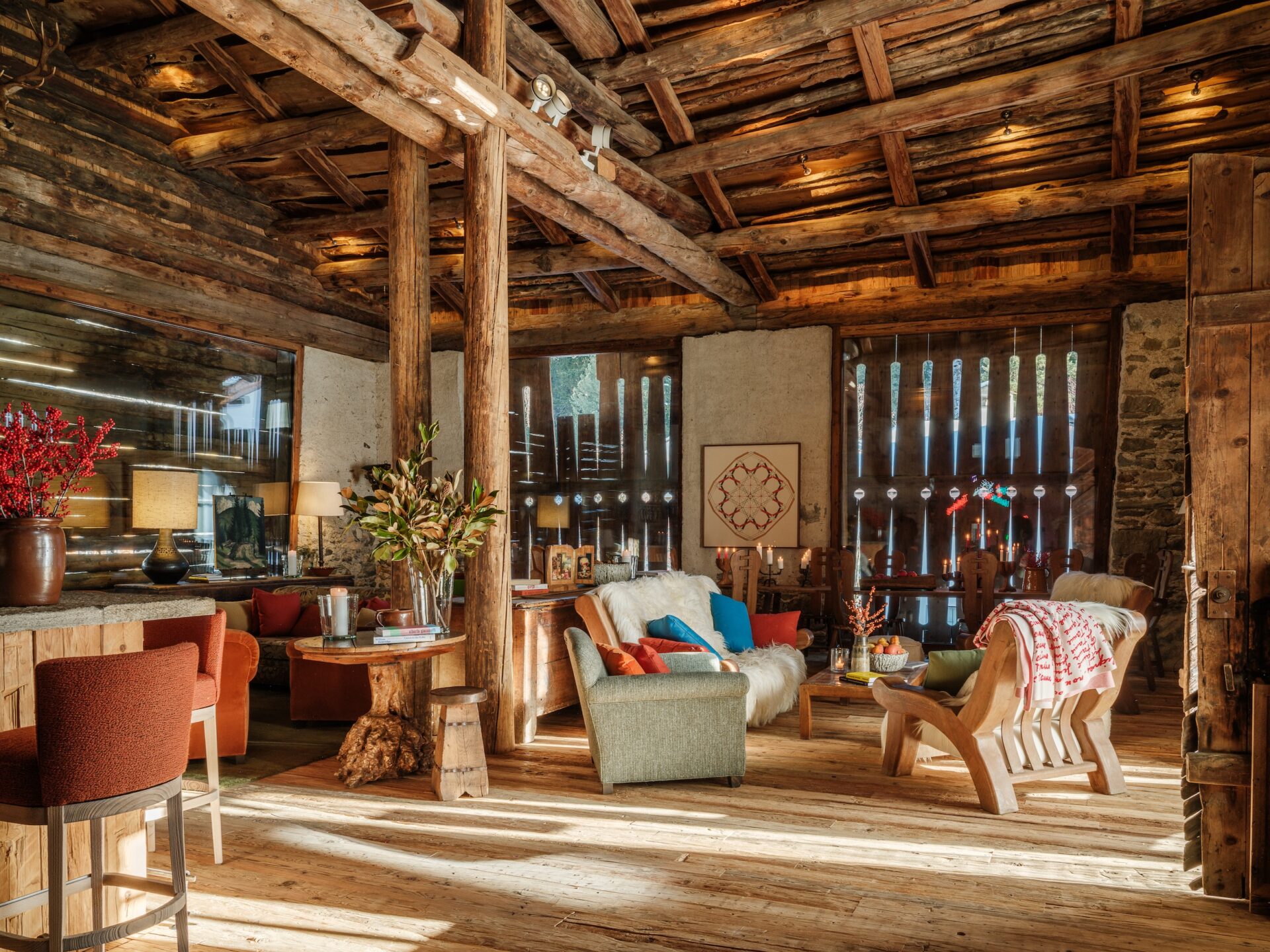
In the restaurant, broken plasterwork on the walls is stabilised, suspended in time, while rustic beams in the lounge bar show every crack, knot and grain. These deeply textured surfaces work wonderfully well in combination with the Engadin’s famous natural light, which rakes over them atmospherically and changes as the day progresses.
“We approached the project as a continuation rather than a reinvention, allowing contemporary elements to appear only where they felt like a natural evolution of what was already there,” says Laplace. “The result is not a new stylistic layer, but a quiet deepening of the existing one.” Local artisans contributed sgraffito work, embroidery and antique textiles, and the mountains’ distinctive timber vernacular furniture has been reused wherever possible.
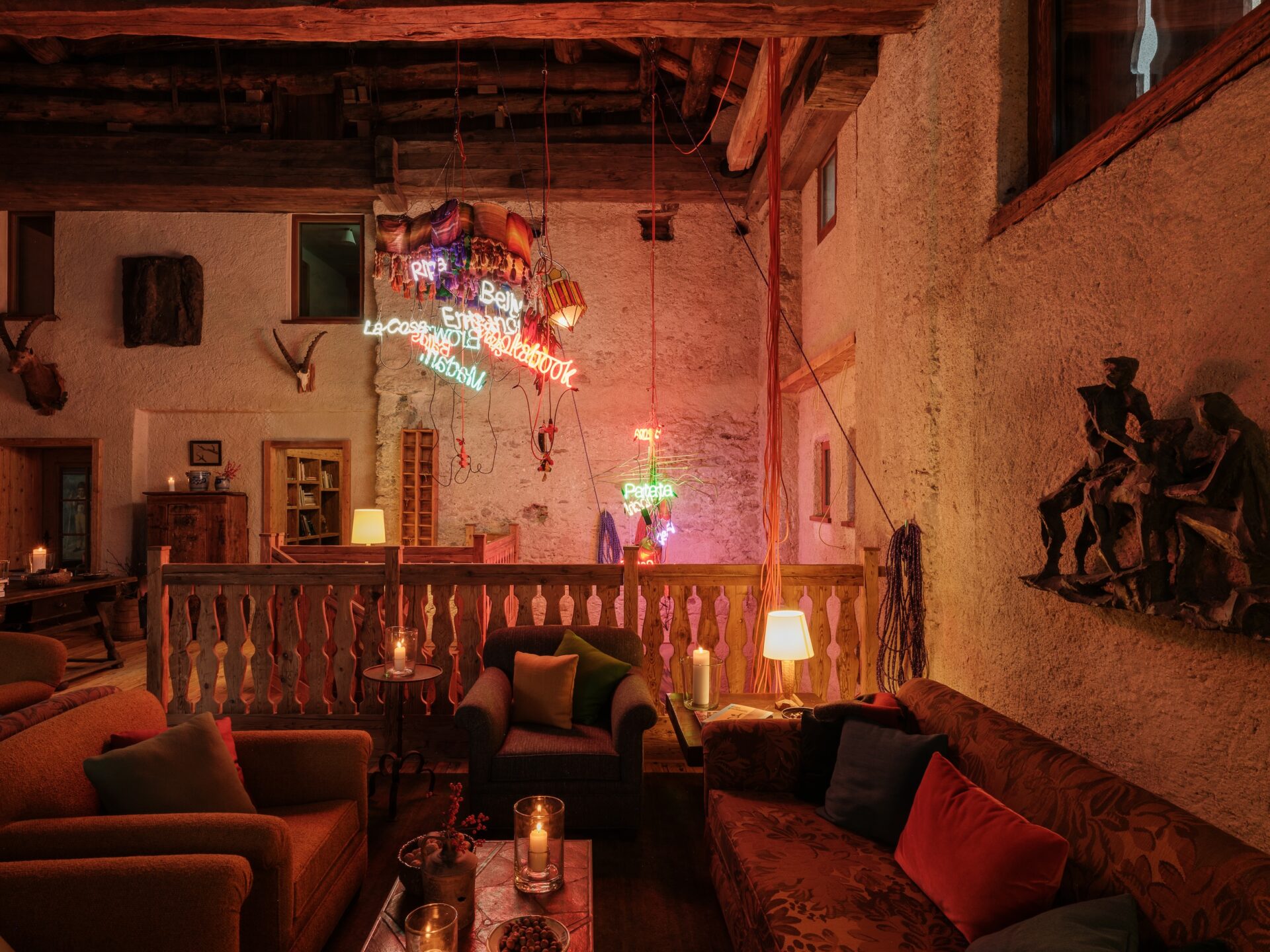
The art installed throughout is, of course, sublime, layered with the time-worn building and sometimes offering thought-provoking contrasts. The neon from Jason Rhoades’ Pussy Trilogy chandeliers casts an almost ghastly glow in the cocktail bar, where Louise Bourgeois’ Spider II also climbs the wall; while Paul McCarthy’s Santa Long Neck with its bulbous and distorted bronze figure stands outside.
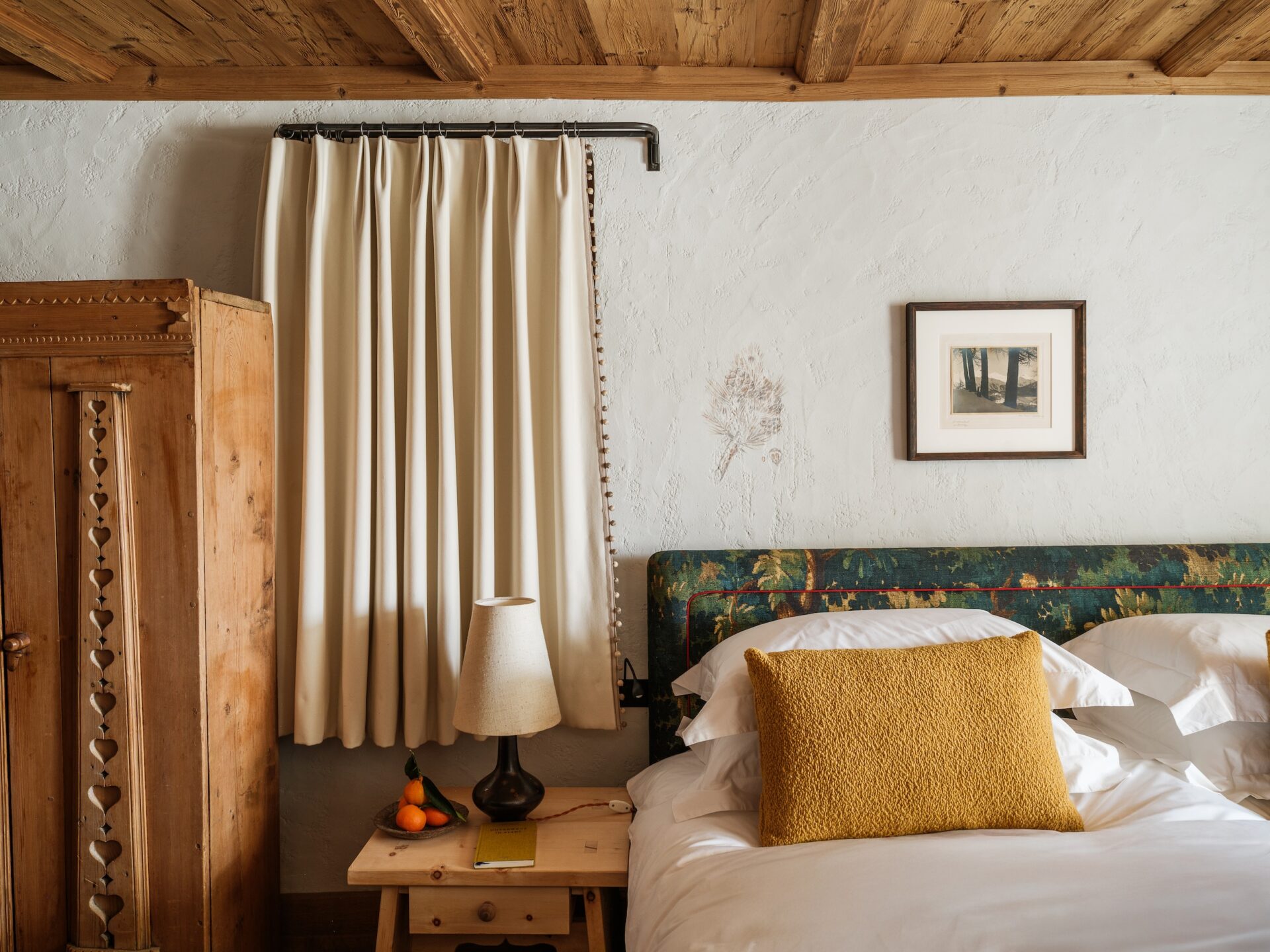
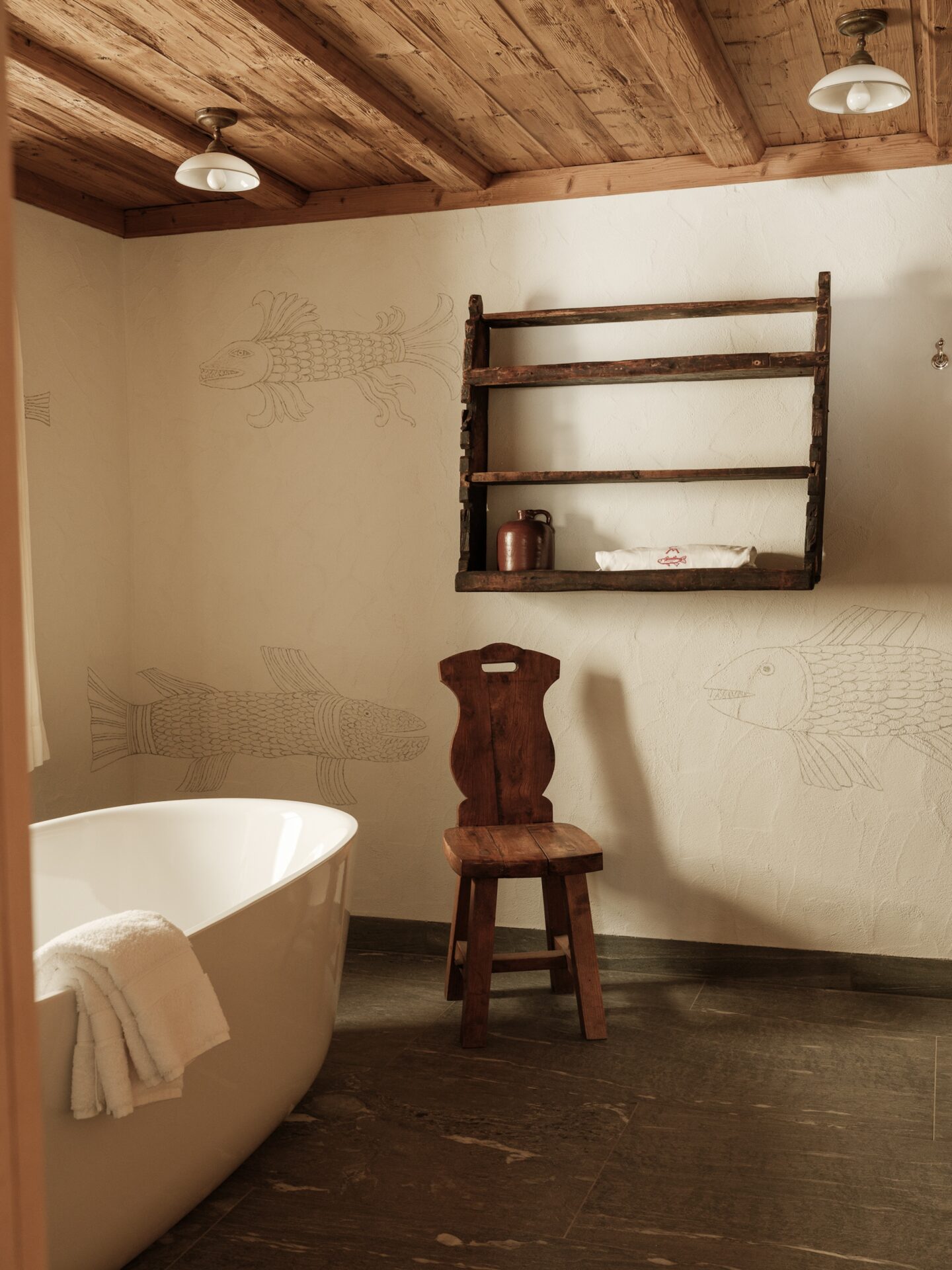
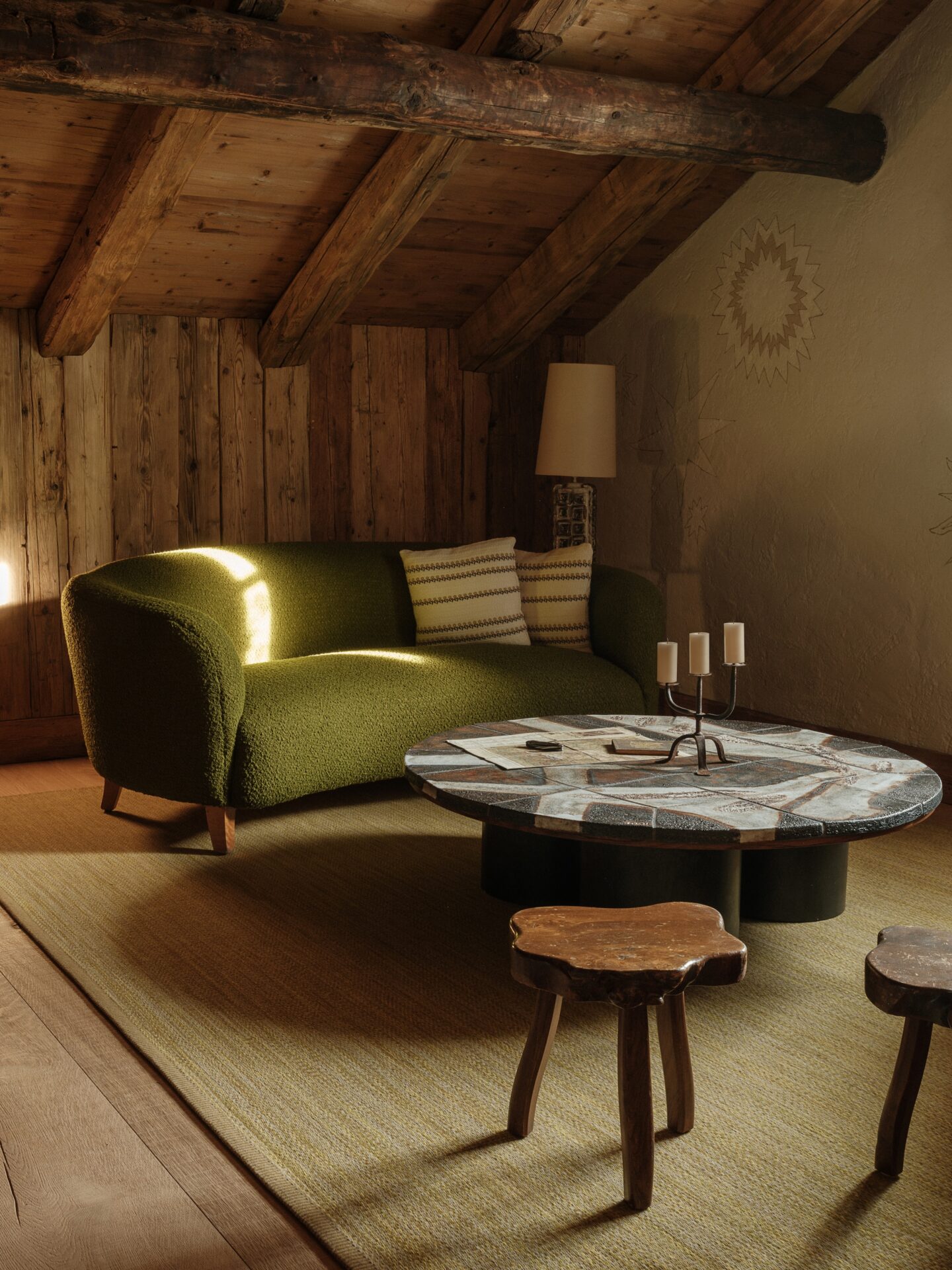
Each of the 13 bedrooms is different, but Laplace says that they “share a common material vocabulary: natural wood, plaster, textiles, and regional furniture.” British-German artist Corin Sands painted delicate murals in a gently faded style that make them look as if they have always been there, complemented by further works by local artists hung on the walls.
Laplace says that his aim for Chesa Marchetta’s guests is that they are meant to feel “a sense of calm continuity, as if they have entered a place shaped slowly over time. The atmosphere encourages attentiveness and connection: to history, to landscape, and to the quiet rhythms of the Engadin.
“The aim is not spectacle, but immersion.”