Strength in Connectivity
Workstead’s transformation of a SoHo loft turns daylight into a design language, allowing it to flow through spaces elegantly partitioned with glass and meticulously crafted joinery
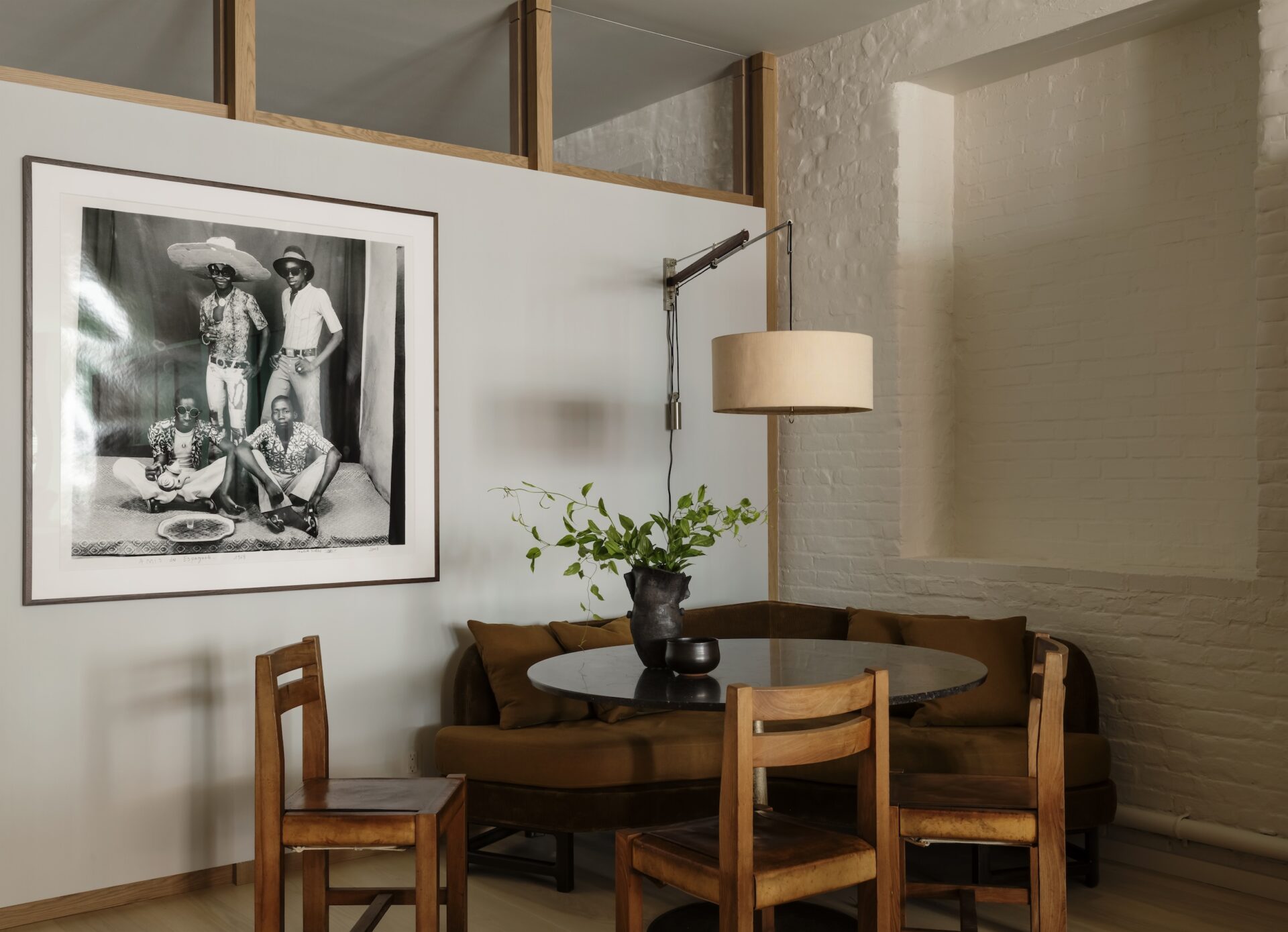
SoHo in New York City pretty much invented loft living in the 1970s and 80s. Needless to say, today’s elevated luxury conversions have come a long way from the messy, artist-led live-work units that first filled the vacuum made when manufacturing moved out. However, what hasn’t changed are the practical challenges that can come from carving out a home from a warehouse or factory. In this project, design studio Workstead has sought to avoid some of the clichés, and concentrate on finding the perfect flow when it comes to light and space.
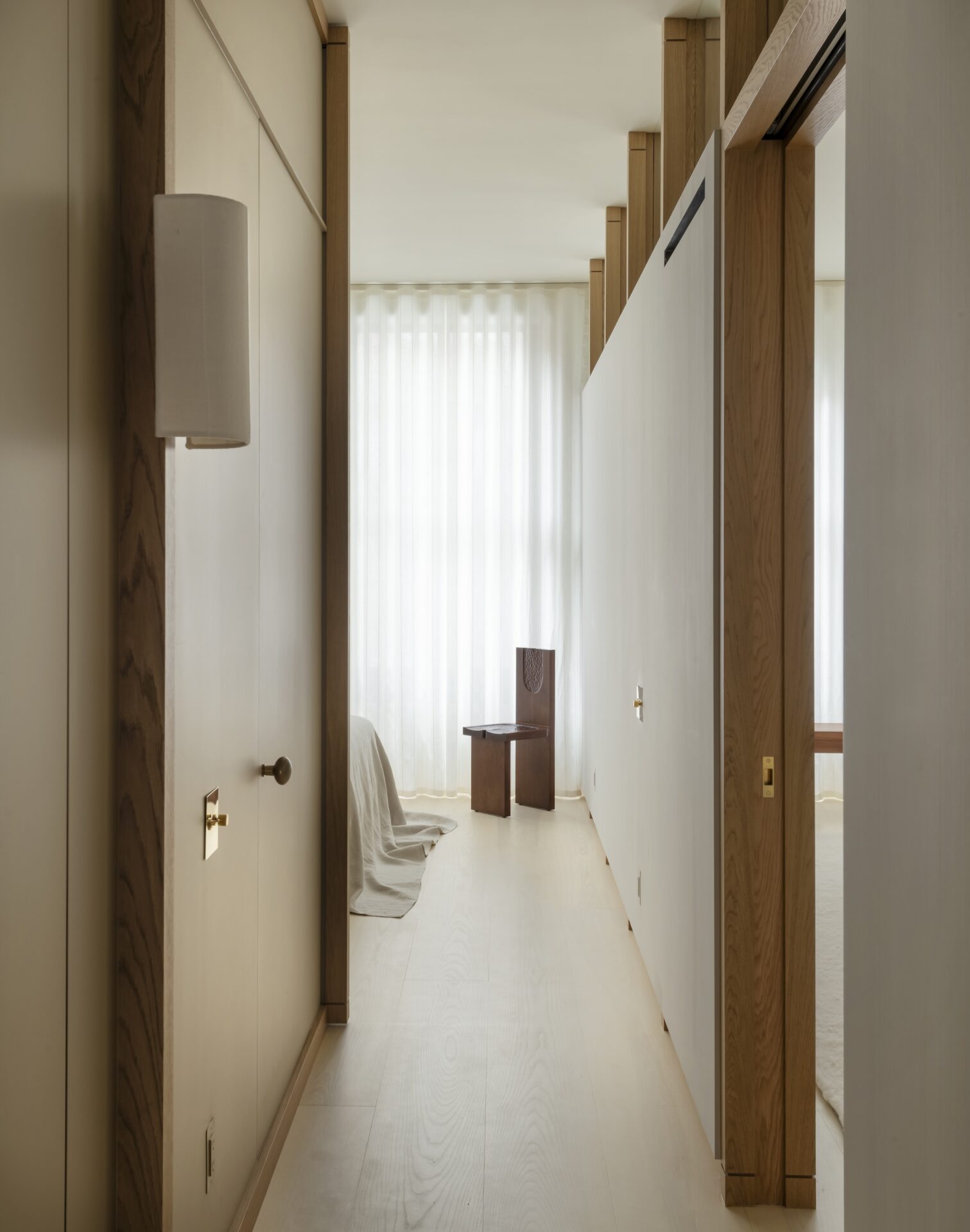
The apartment belongs to long-time client Mark Berryman, whose brief was to Workstead was to “have fun”. Before any fun could happen, however, there was a problem to solve: typical for these buildings, the space had a large floorplate, taking up the whole floor, but only four tall, narrow windows, concentrated on its east and west elevations. Devising a new layout that made sure that daylight flowed around the apartment – without simply leaving it as a giant open space – became the priority.
“Rather than inserting conventional drywall partitions, we wanted to preserve the purity and volume of the space,” says Ryan Mahoney, the studio’s partner and creative director. His colleague, design director Nadine Lynch, explains how “we used transoms, pocket doors and a single corridor aligned with the primary windows to allow daylight to filter through the full depth of the home. Living spaces and bedrooms were prioritised along the window line, while secondary functions occupy the interior. The result feels open and continuous, even where privacy is required.”
Living spaces and bedrooms were prioritised along the window line, while secondary functions occupy the interior. The result feels open and continuous, even where privacy is required
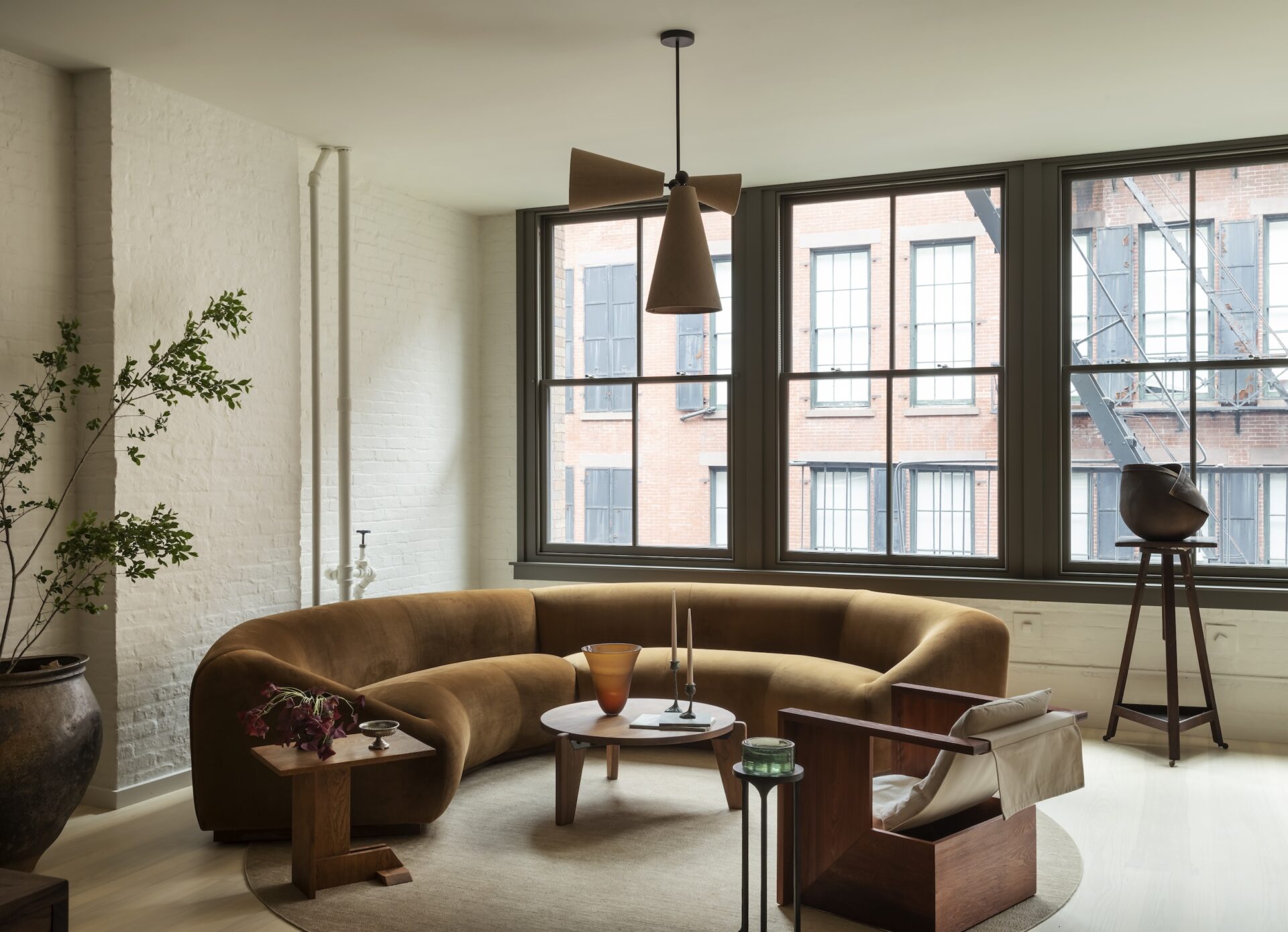
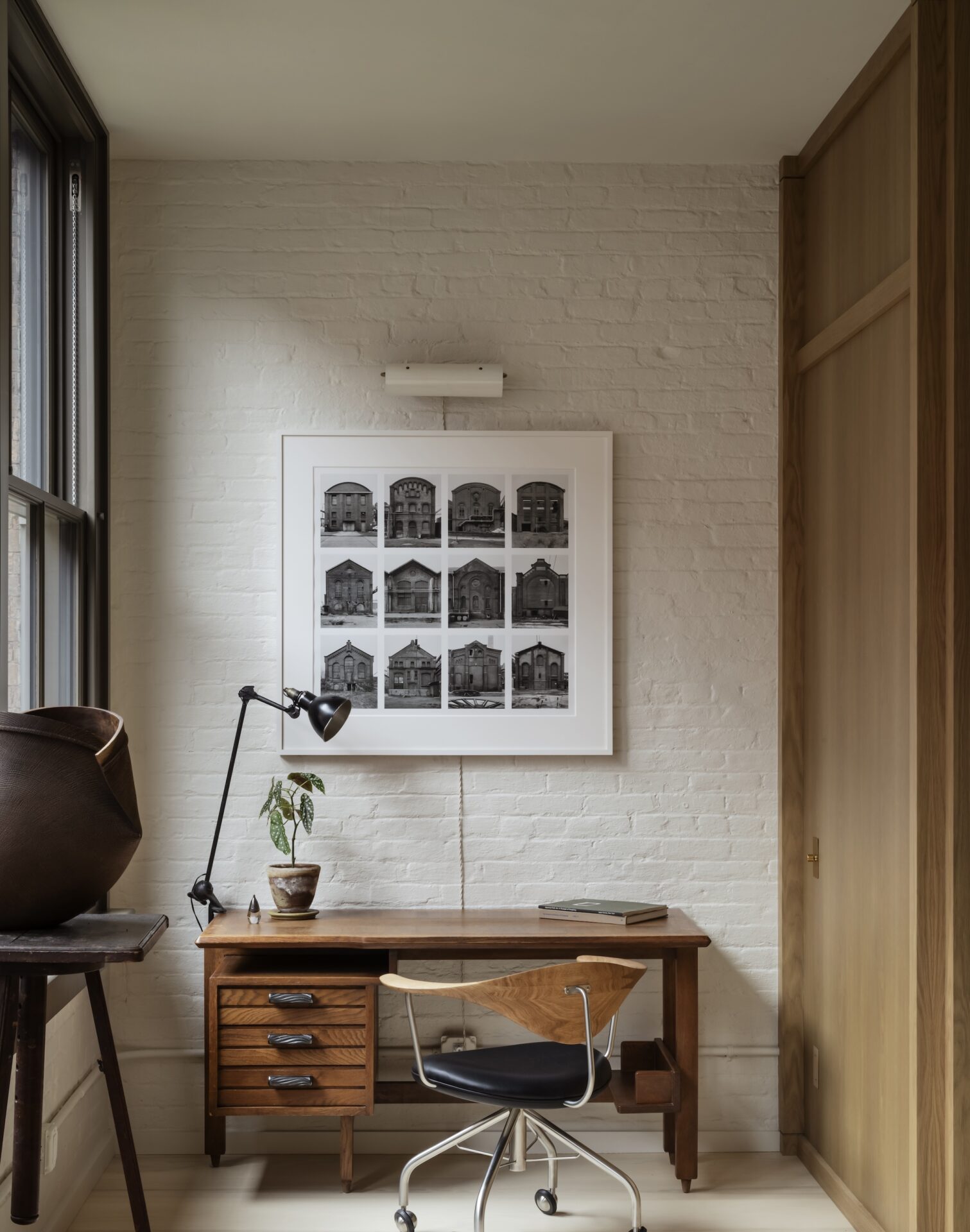
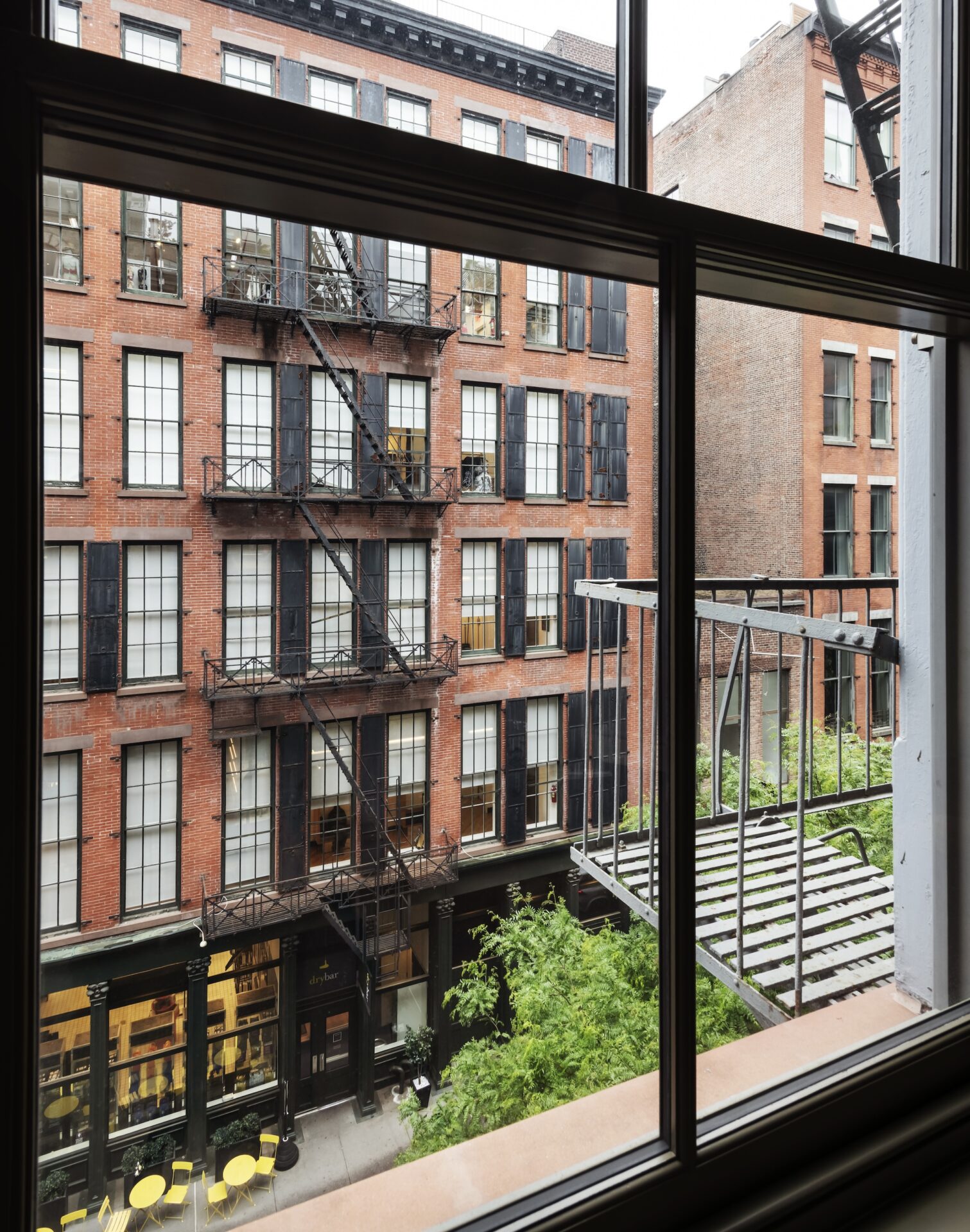
The high-level runs of windows, and the datum they create, became the signature feature of the project, beautifully framed in oak and delicately filtering the light. They are also part of a wider design system of slim upright ribs that was inspired by the city’s ubiquitous scaffolding (the result of stringent facade-inspection safety laws). “The system allows variation in infill – painted panels, glazed sections, transoms – that create a flexible framework that is both structural and expressive,” says Lynch.
Supplementing the flow of daylight is a thought-through lighting plan of the sort you would expect from a design studio that is just as well known for its lighting products. “Artificial lighting was kept very strategic and restrained,” says senior project manager Maria Harmon. “Integrated lighting at the transoms activates the architecture at night, reinforcing that sense of glow and continuity. Decorative fixtures are intentionally soft and diffuse, including fabric shades and rounded forms, helping to temper the harder architectural materials and maintaining warmth throughout.”
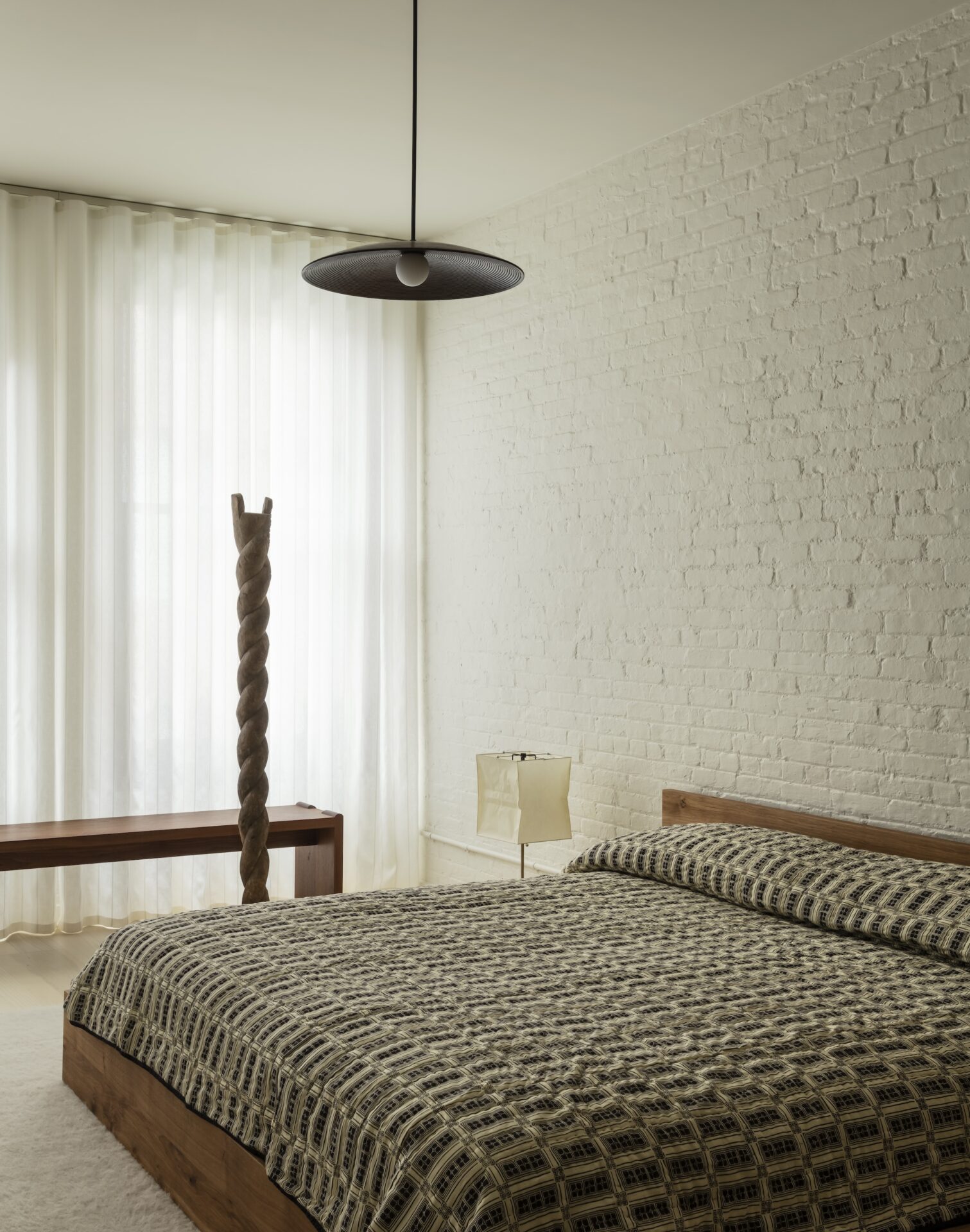
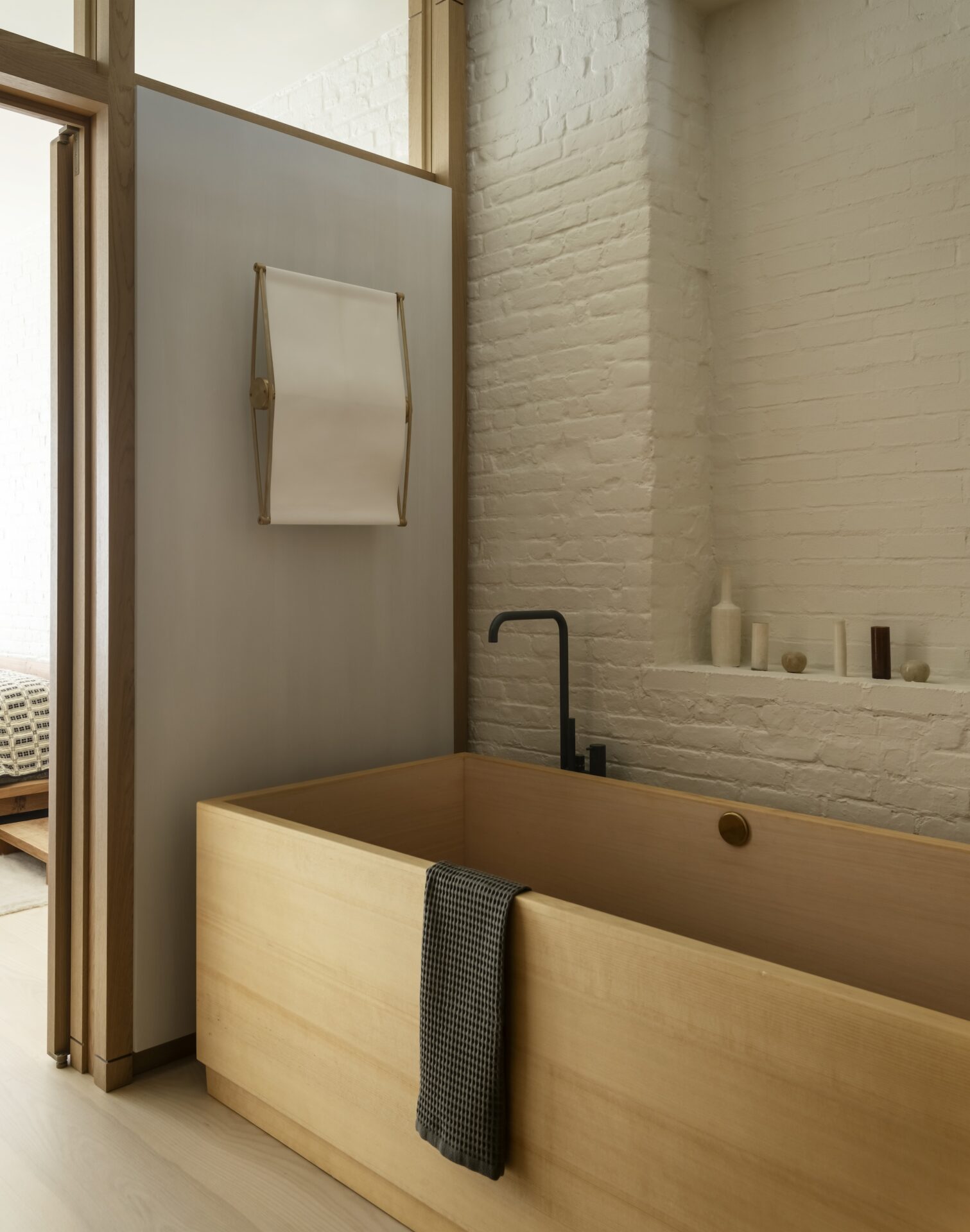
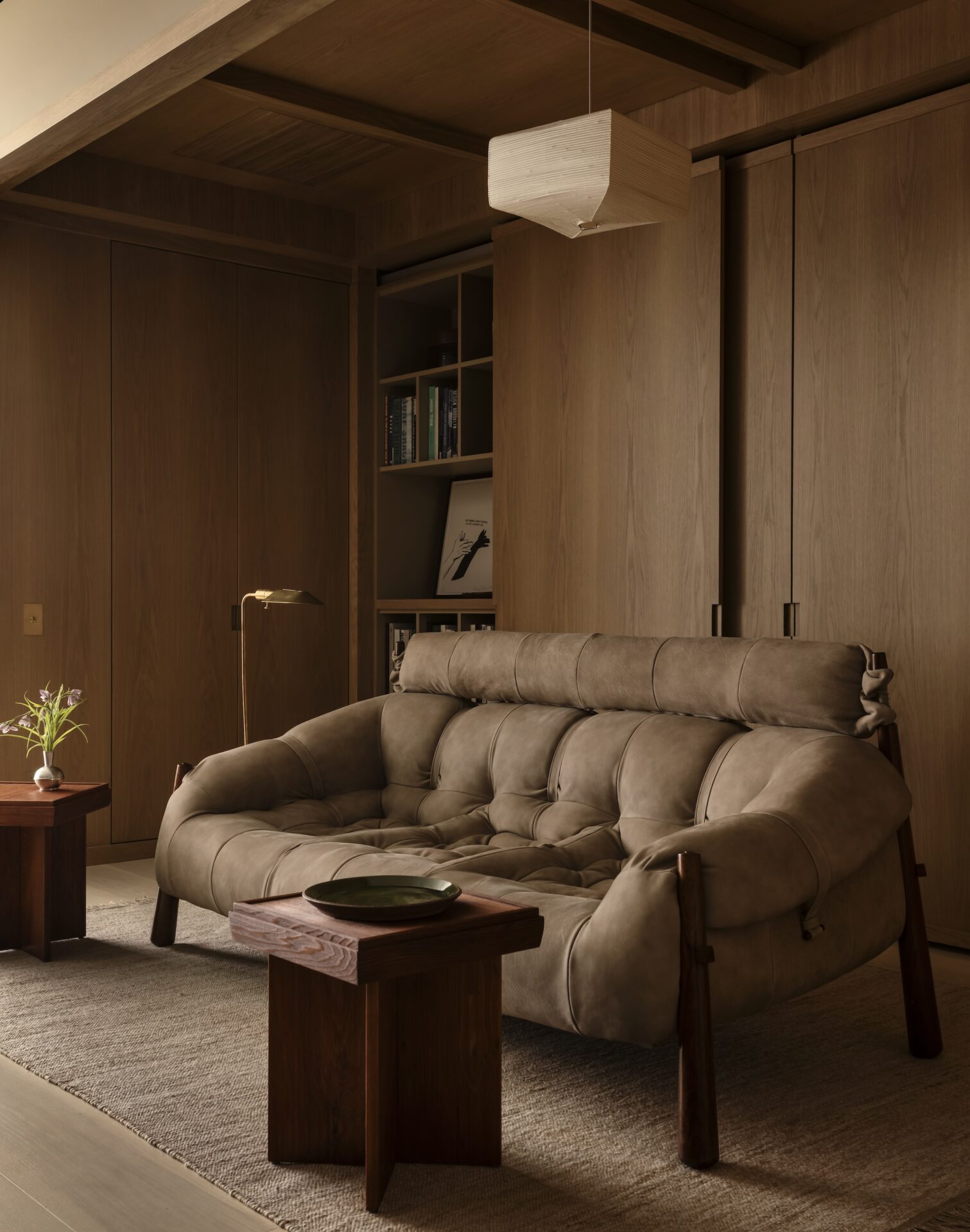
Harmon describes the interiors as having a “utilitarian undercurrent” – there are painted brick walls, and risers and pipes have been embraced rather than disguised. That said, there is an abundance of warmth, too. “Nearly everything was reupholstered in rich, tactile fabrics, which lends softness and quiet luxury. Vintage exists with new, and mid-century furnishings sit alongside more utilitarian pieces,” says Ryan Mahoney.
Stahl + Band’s Pouf Arc sofa curves its way around the main living space (topped by a three-light Workstead Pendolo pendant), while the less formal snug area features a vintage slouchy leather sofa. Other vintage finds include the dining chairs, sourced from Morentz, which sit around a table from Black Creek Mercantile. A Japanese influence can be detected, too, including an angular hinoki (Japanese cypress) bath, low-level beds and paper-shaded lights on the bedside tables.
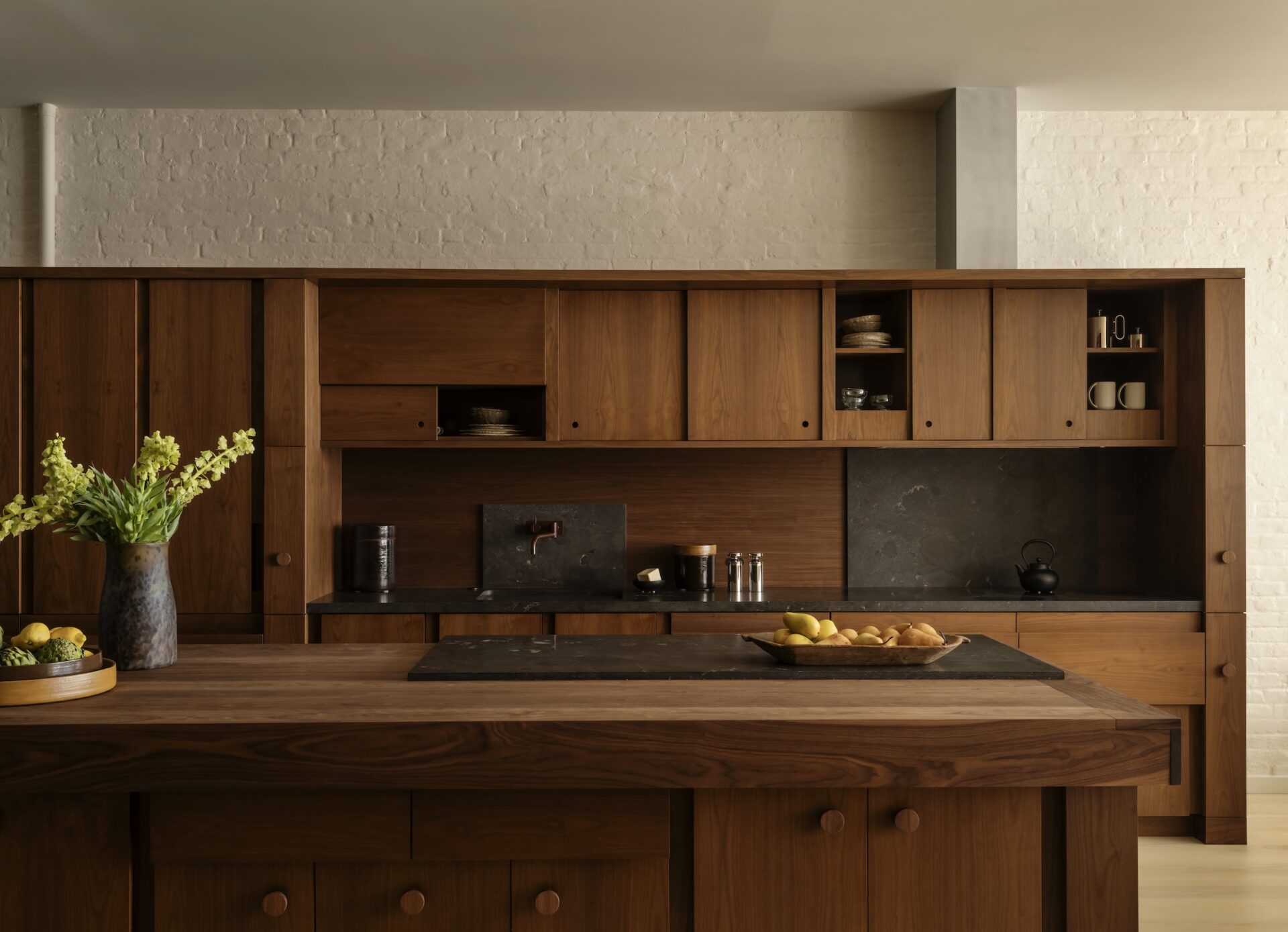
The oiled walnut kitchen is a further showcase of craftsmanship in wood. “We often look to vintage cabinetry for cues in joinery and proportion, and this design borrows from that lineage of slightly unexpected configurations and varied drawer and door sizes,” says Ryan Mahoney. Black limestone has been used strategically and sparingly for food-prep areas and splashbacks, leaving as much walnut as possible. With its rich timber, idiosyncratic proportions and finger-holes as opening mechanisms for sliding storage, it has elements in common with artist Donald Judd’s preserved home and studio on nearby Spring Street, also a former industrial building.
The kitchen seems to sum up all that this project is trying to do – introduce a level of informality and avoid anything overtly industrial or “warehouse style”, while remaining architecturally rigorous and crafted with the utmost care.


