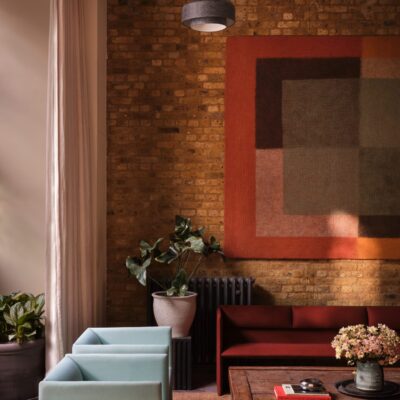
Róisín Lafferty Q&A
The Irish designer talks about a penthouse apartment at London’s Embassy Gardens created with design platform Artemest, why she’s always championed Italian craftsmanship, and her treasure house of a Dublin gallery
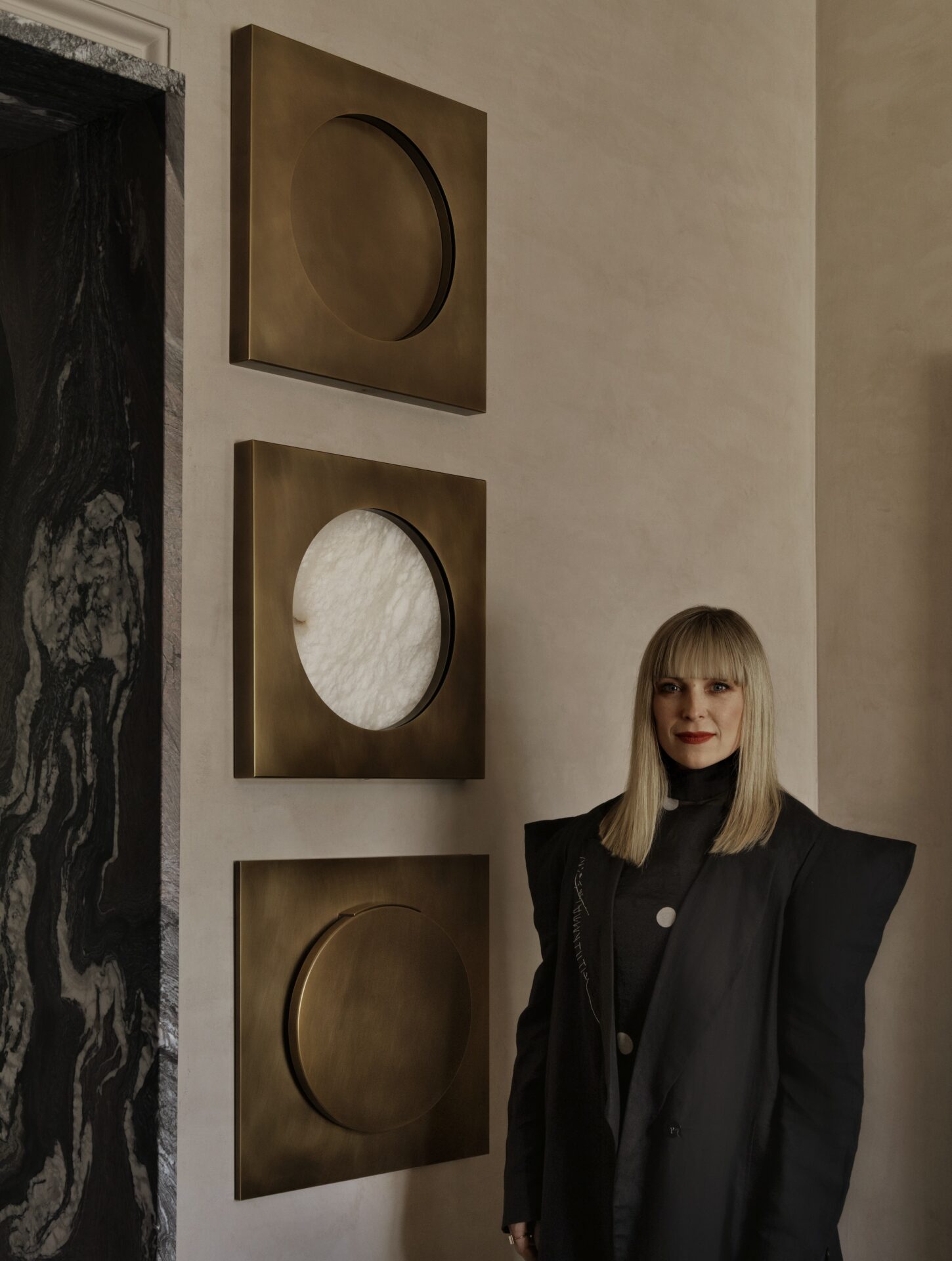
DESIGN ANTHOLOGY UK: How did the commission come about to design Embassy Gardens with Artemest?
RÓISÍN LAFFERTY: Through [the developer] Ballymore, an existing client. When the opportunity arose, we chose to collaborate with Artemest as we felt they were the perfect partner for the project: we already had a strong relationship and had spoken about working more closely with developers in the London market.
With Artemest, we share a similar appreciation for materiality and for pieces that carry a real sense of story and presence. The intention was never to create something staged, but a home that simply happens to be filled with beautifully made objects. Everything aligned very naturally, and it turned into a really positive and rewarding process.
DA: What was your brief, and how would you describe the look and feel of the finished result?
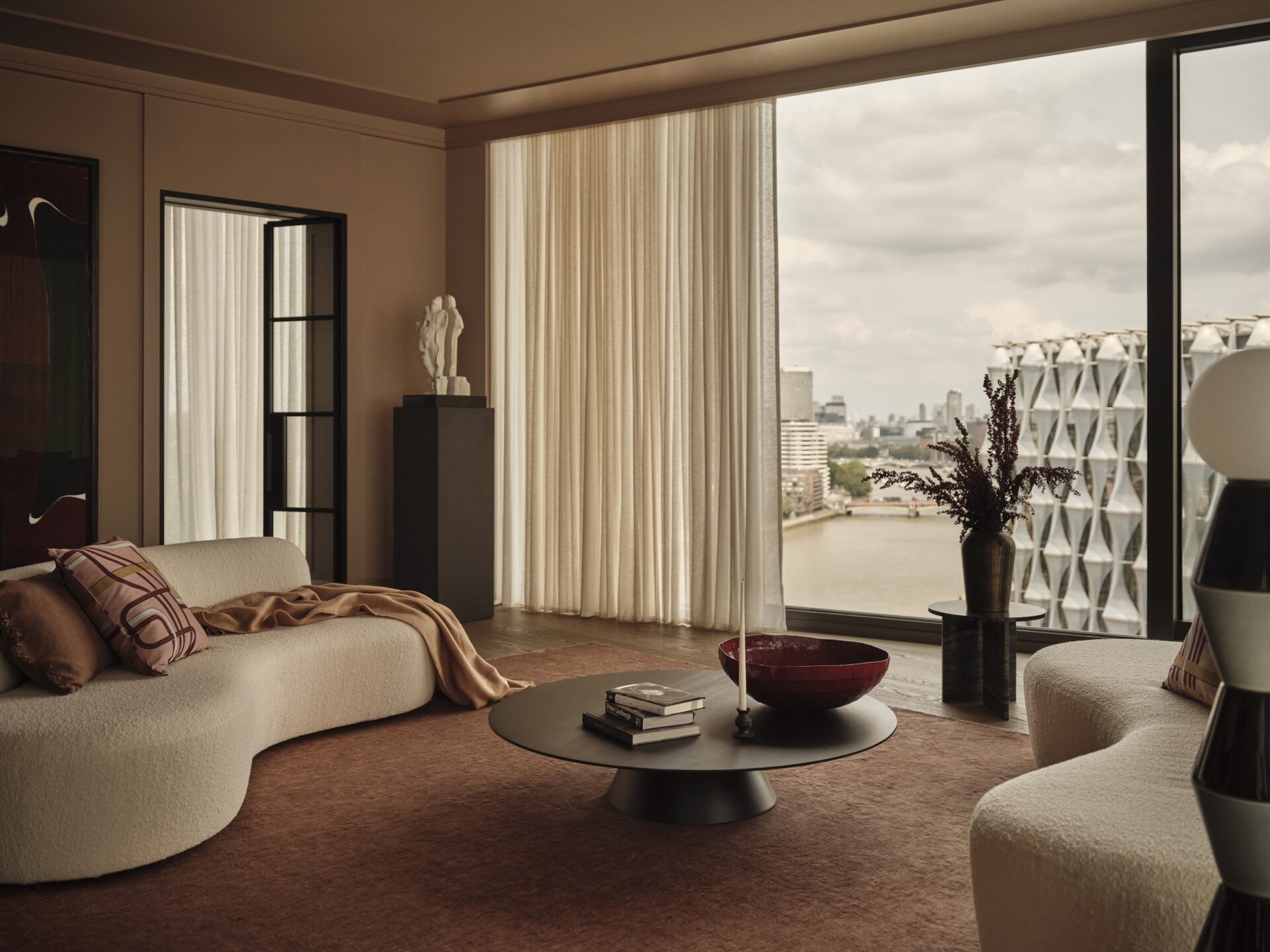
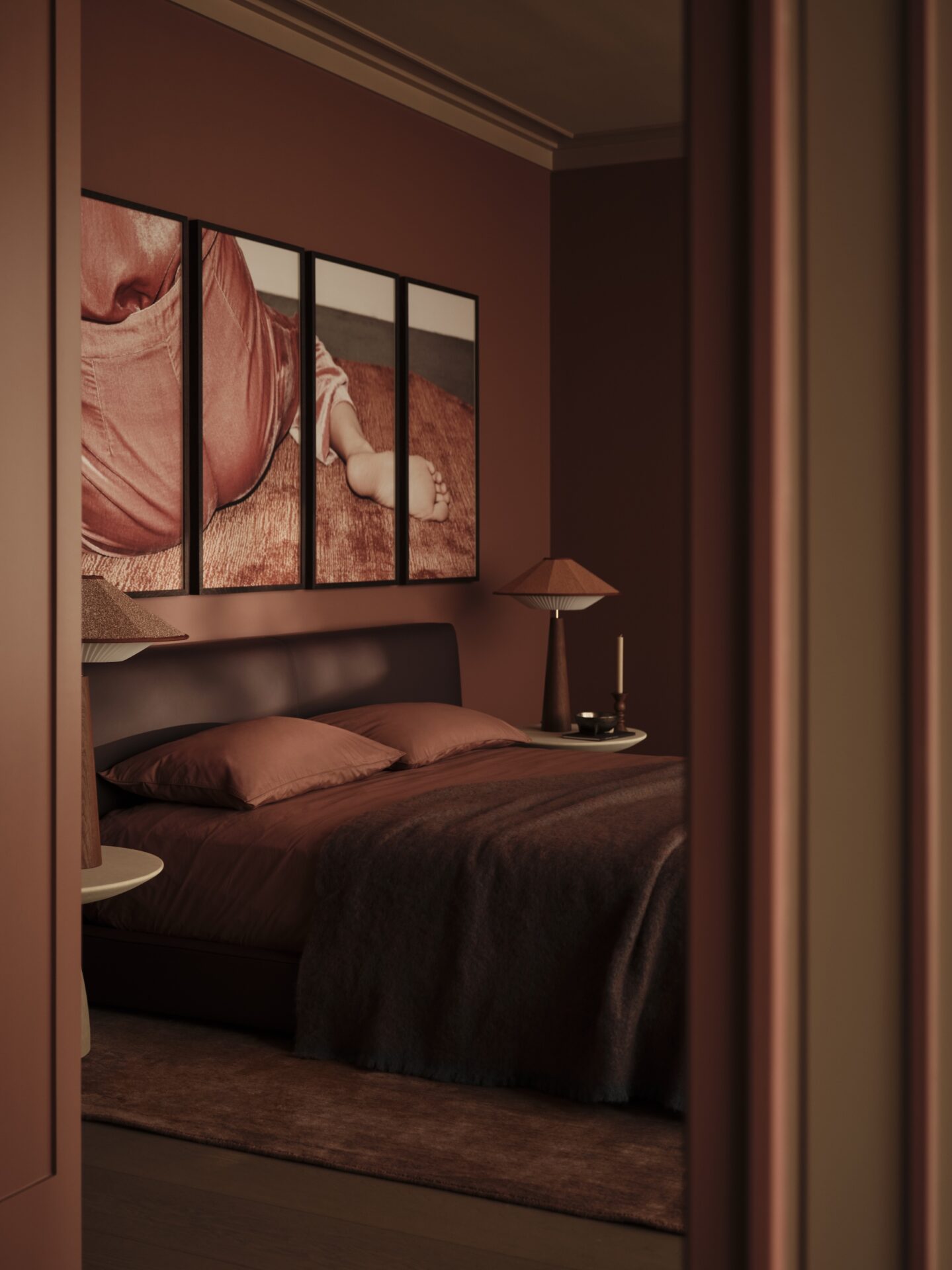
RL: Our design concept was to create a sanctuary above the city that felt warm and inviting. We wanted to transform the apartment and give it a new lease of life, as it previously felt quite unloved.
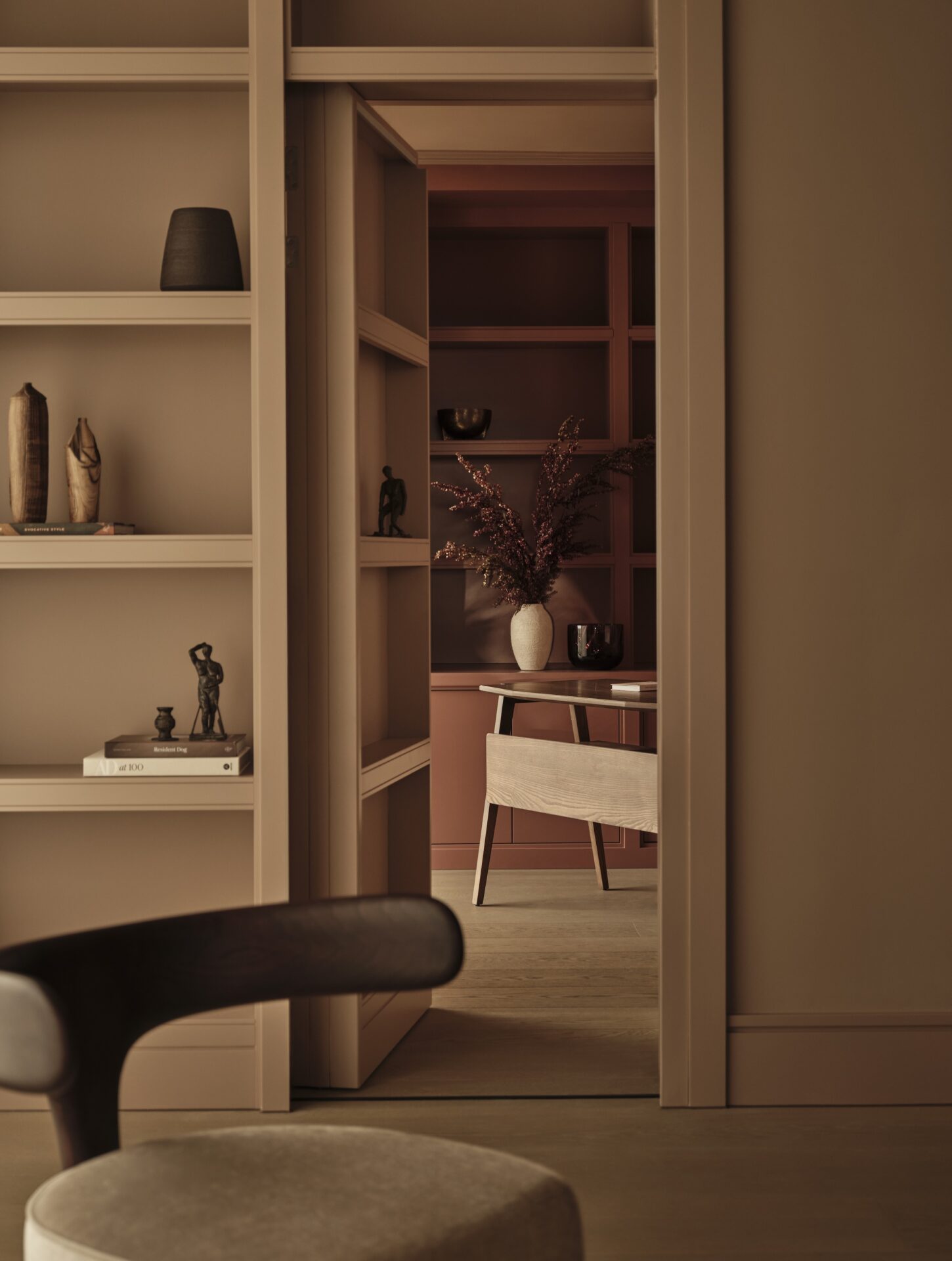
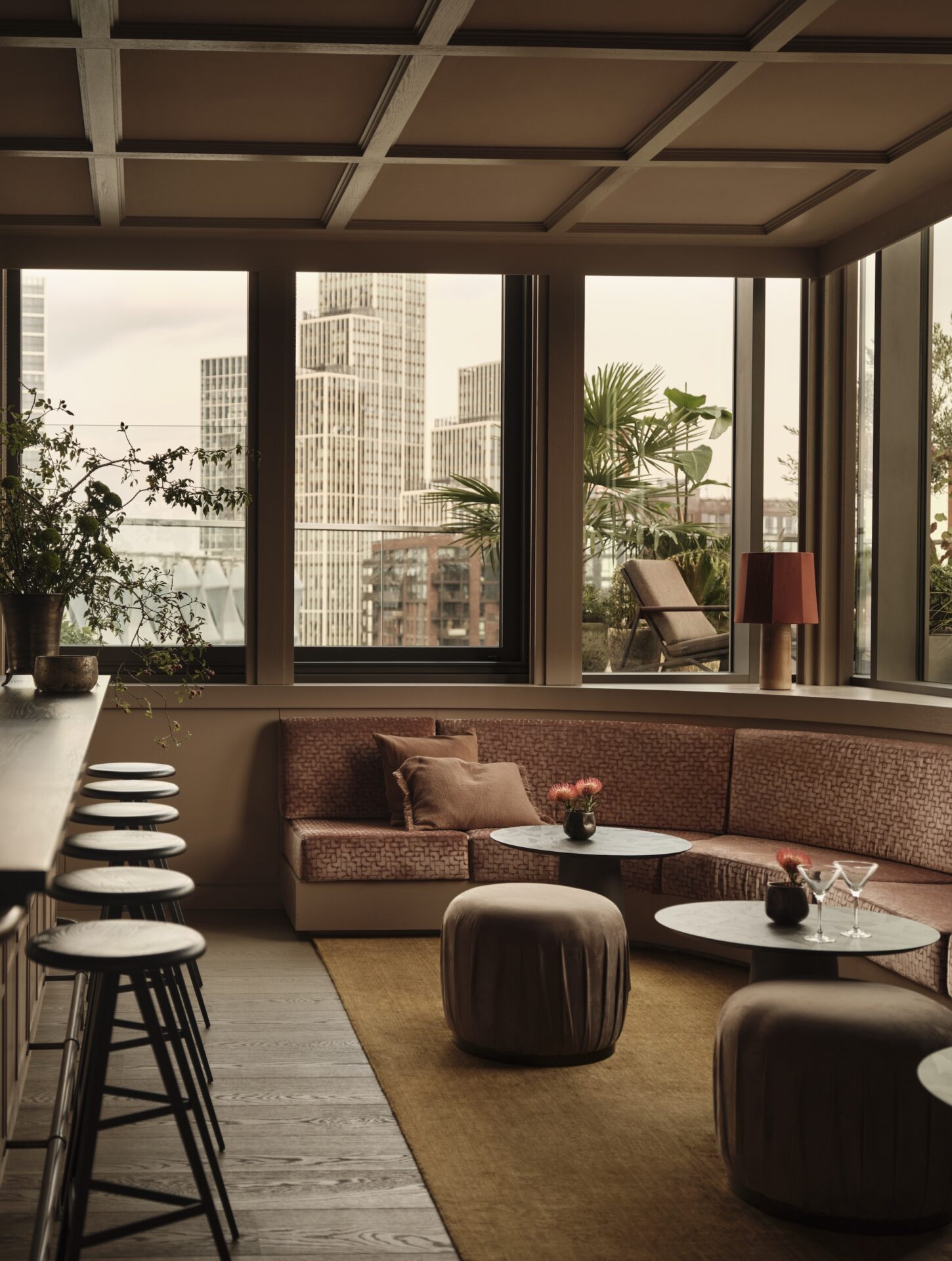
We wanted the apartment to feel like a place where you could really slow down and exhale. Natural light plays a huge role in the design, shifting throughout the day and animating surfaces while strengthening the connection between the interior and the skyline beyond. Drawing on the soft colours of the sky and the constantly changing light outside, the palette moves gently from room to room, with walls and ceilings wrapped in warm, earthy tones that create a strong sense of cohesion.
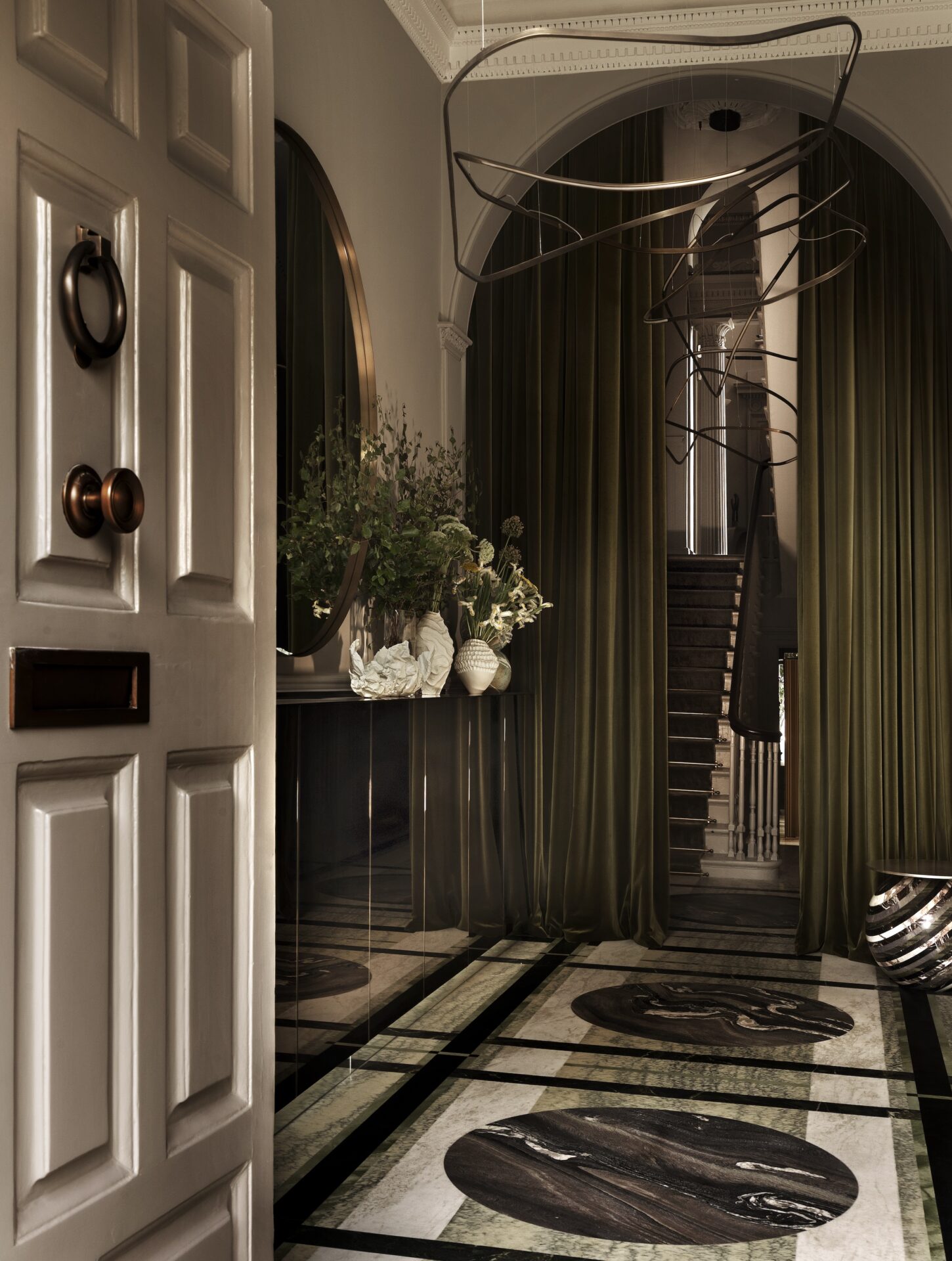
Sculptural pieces were introduced to bring presence and scale, but they are always balanced by refined joinery and carefully considered lighting that helps define different zones within the open-plan layout. Rich timbers, soft bouclé fabrics and artisanal finishes sourced through Artemest add warmth and texture, while masculine materials are softened through rose tinted tones and organic forms.
DA: Are there any particularly special pieces from Artmest’s stable of Italian makers that stand out for you?
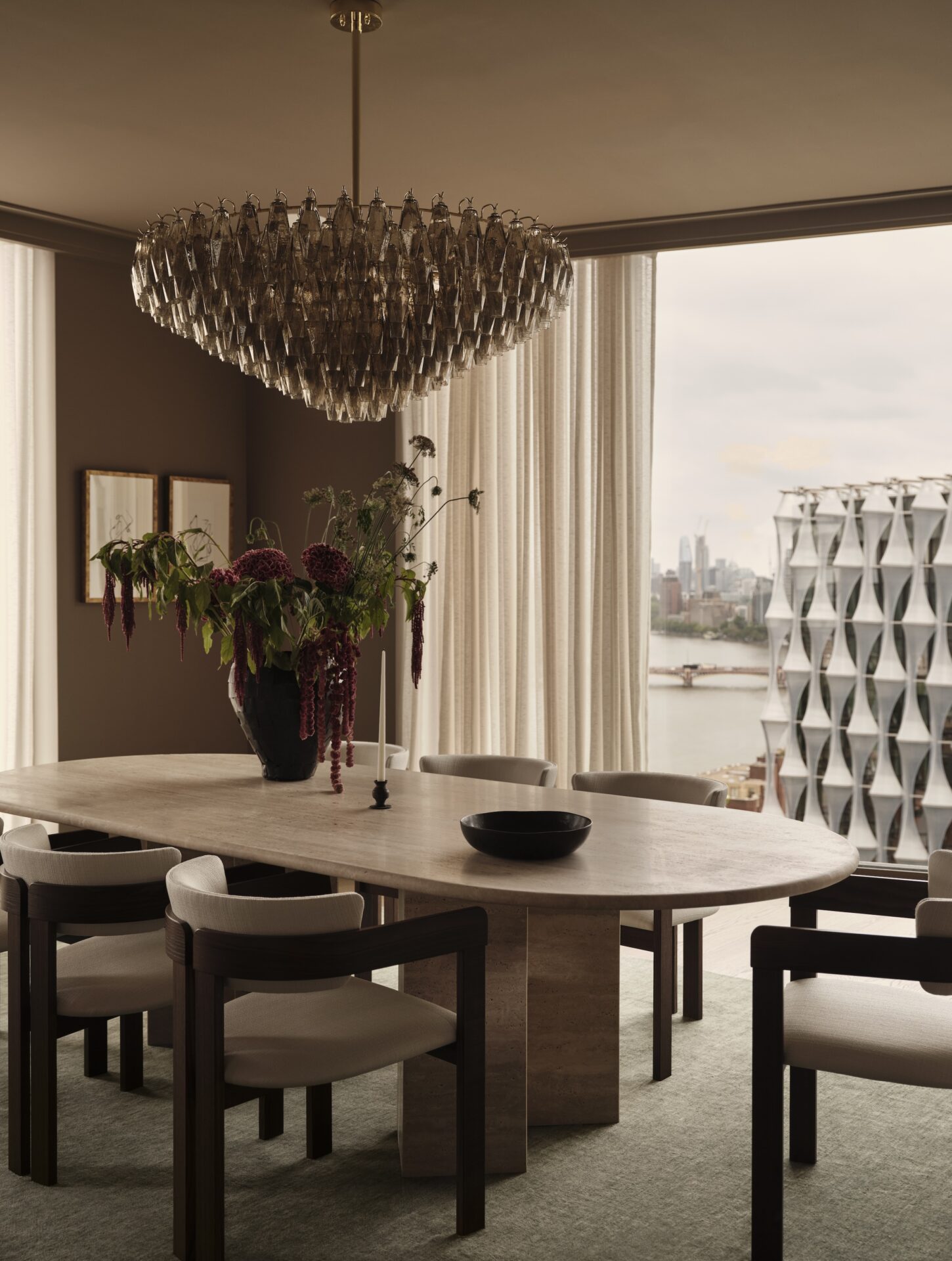
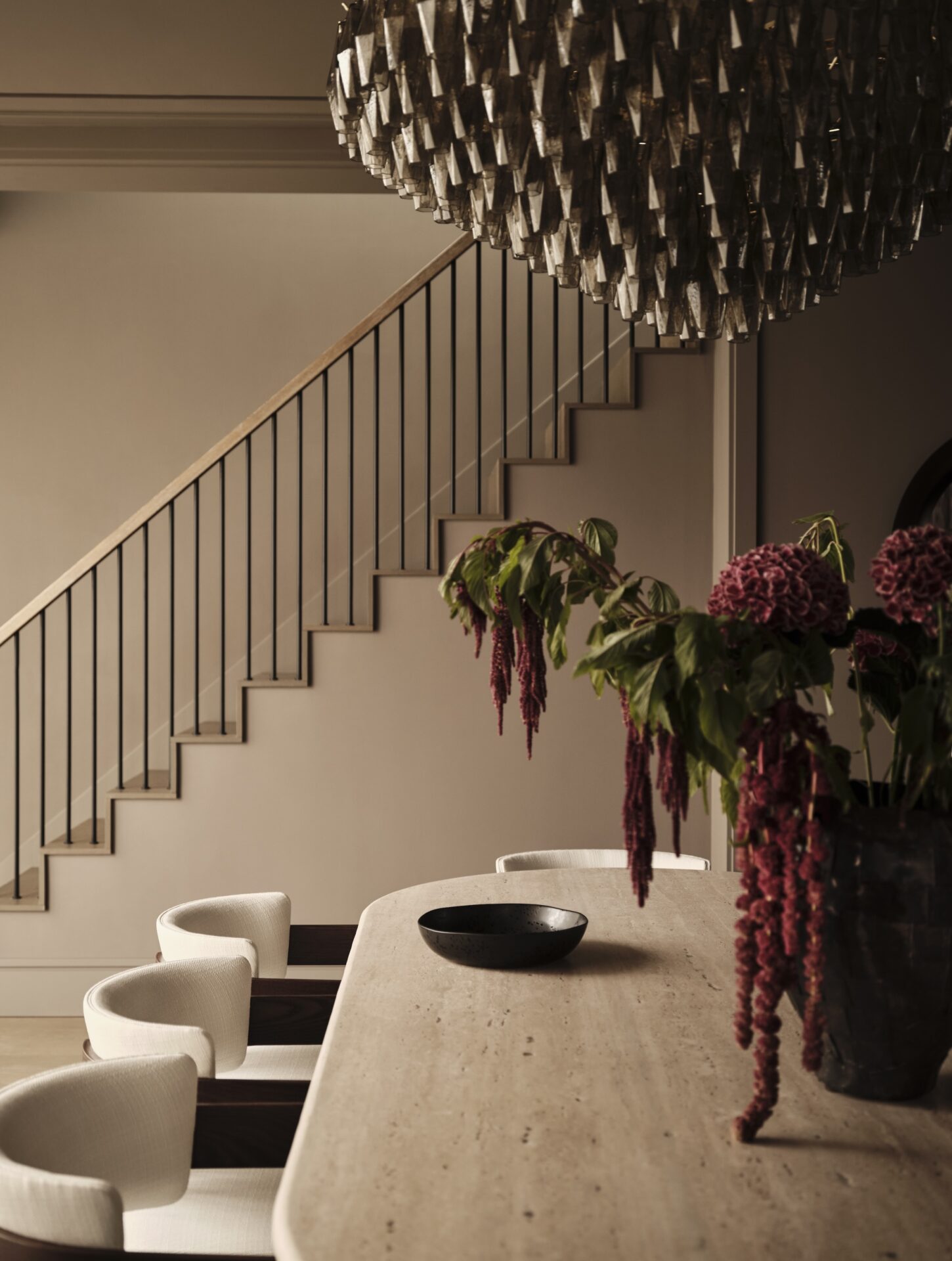
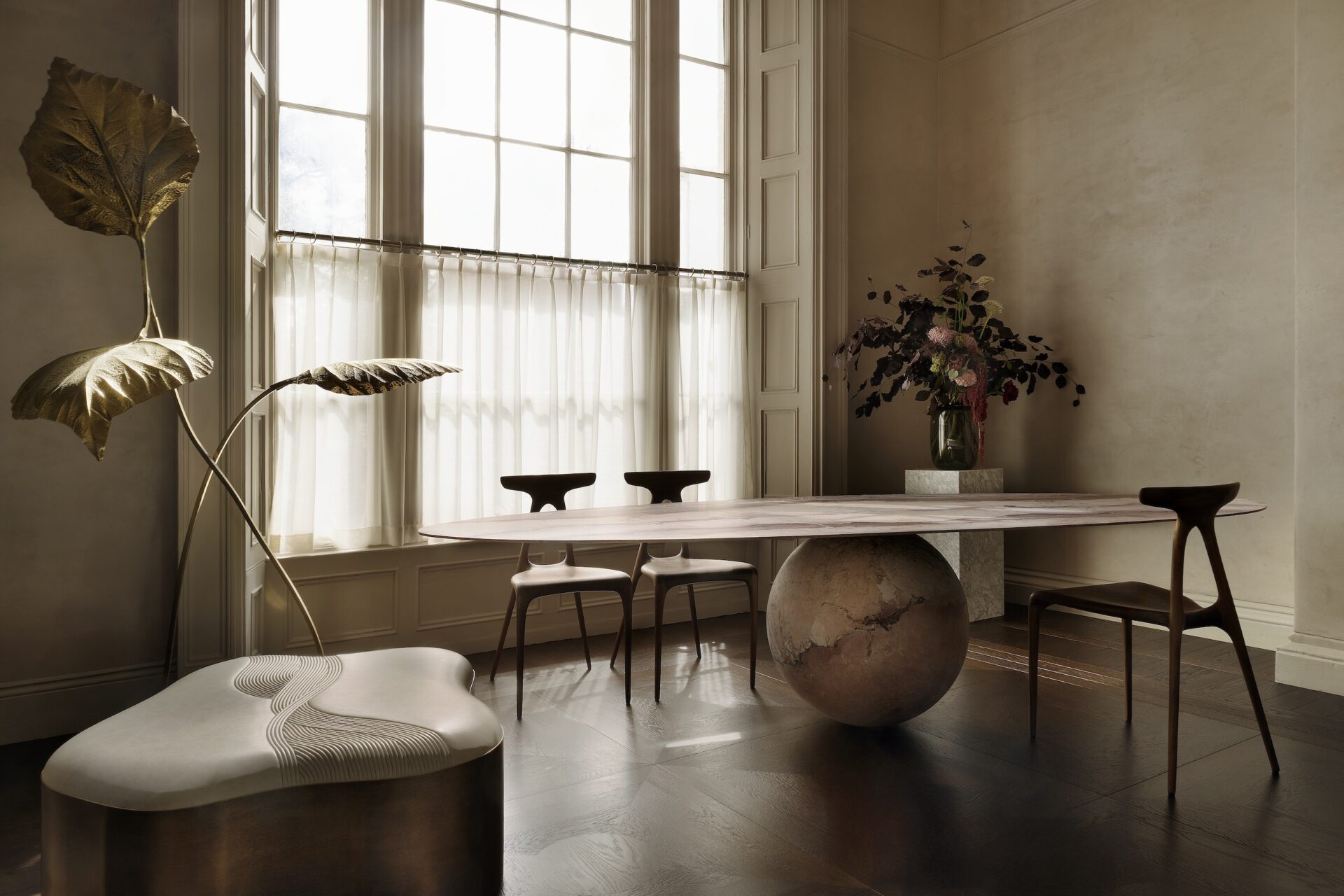
The dining area stands out for me. The custom travertine dining table by Monitillo 1980 has a beautiful sense of weight and permanence; it’s paired with the Geometric smoke brown glass chandelier by Bottega Veneziana, which creates a strong focal point.
We also worked with an incredible artist, Vincenzo Muratore, whose carved marble sculptures are placed throughout the apartment. His work brings a real sense of craft and depth to the interiors, elevating the space in a subtle but powerful way.
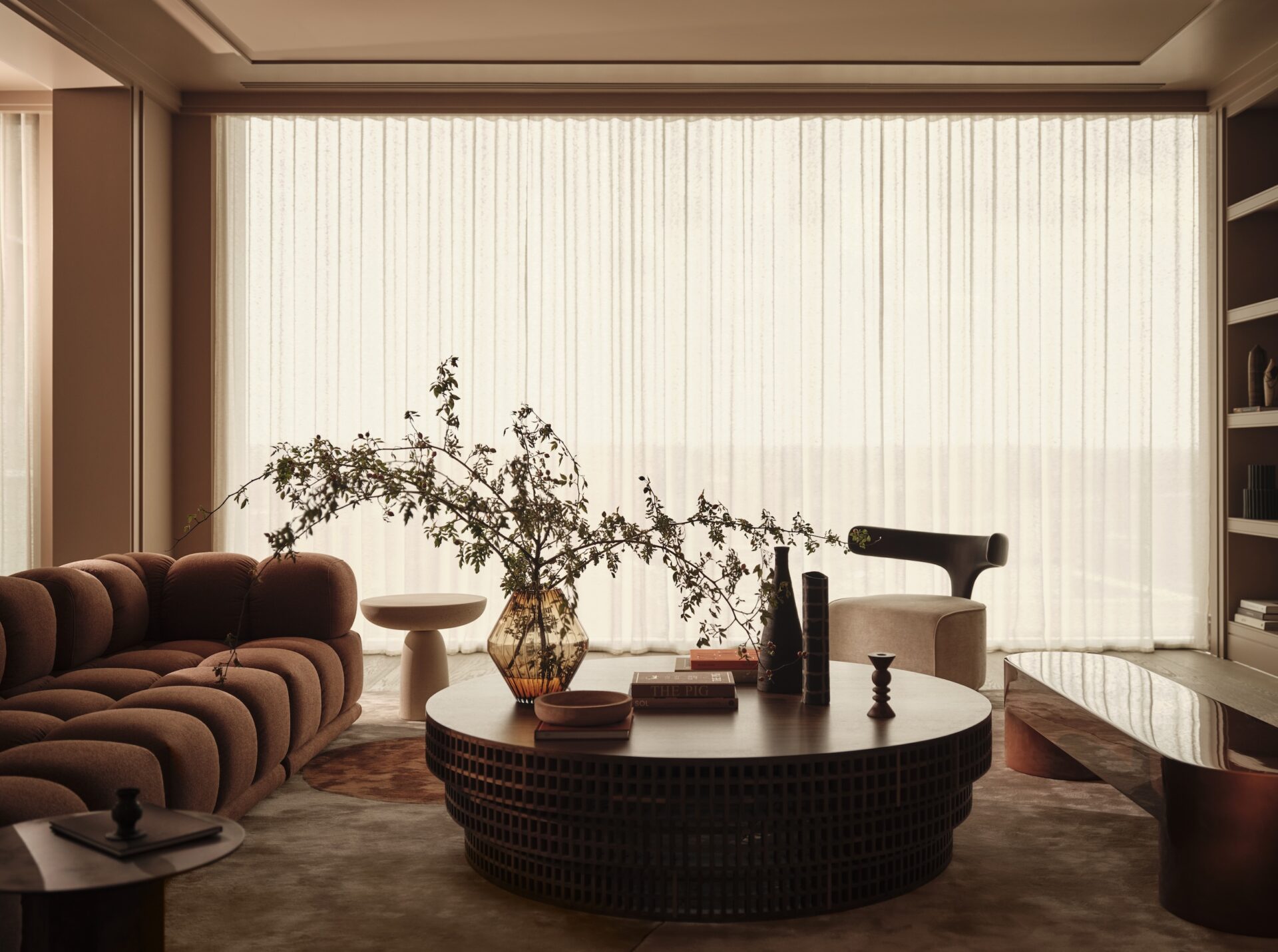
Another key piece is the Carabottino coffee table by Medulum. Handmade from Canaletto walnut, it has a beautifully light structure formed from fine wooden slats, with an interplay of crossed lines and negative space. It brings a softness and delicacy to the living area while still feeling sculptural.
DA: Is Italian design is a strong influence on your aesthetic? What does this project say about where Italian design is today?
RL: Italian design has always been a strong influence on my work. There is an effortlessness to it, but beneath that lies an extraordinary level of craftsmanship, attention to detail and a sense of luxury that feels inherent rather than applied.
What feels particularly relevant today is the renewed focus on material honesty and artisanal techniques, expressed in a more contemporary and restrained way. Platforms like Artemest play an important role in this, having carefully cultivated relationships with generational companies and makers, ensuring that these skills are not lost. This project reflects that moment in Italian design, where heritage and innovation coexist, resulting in pieces that feel thoughtful, enduring and quietly luxurious.
Italian design has always been a strong influence on my work. There is an effortlessness to it, but beneath that lies an extraordinary level of craftsmanship, attention to detail and a sense of luxury that feels inherent rather than applied
DA: You launched your own appointment-only gallery in Dublin in summer 2025: can you explain more about it?
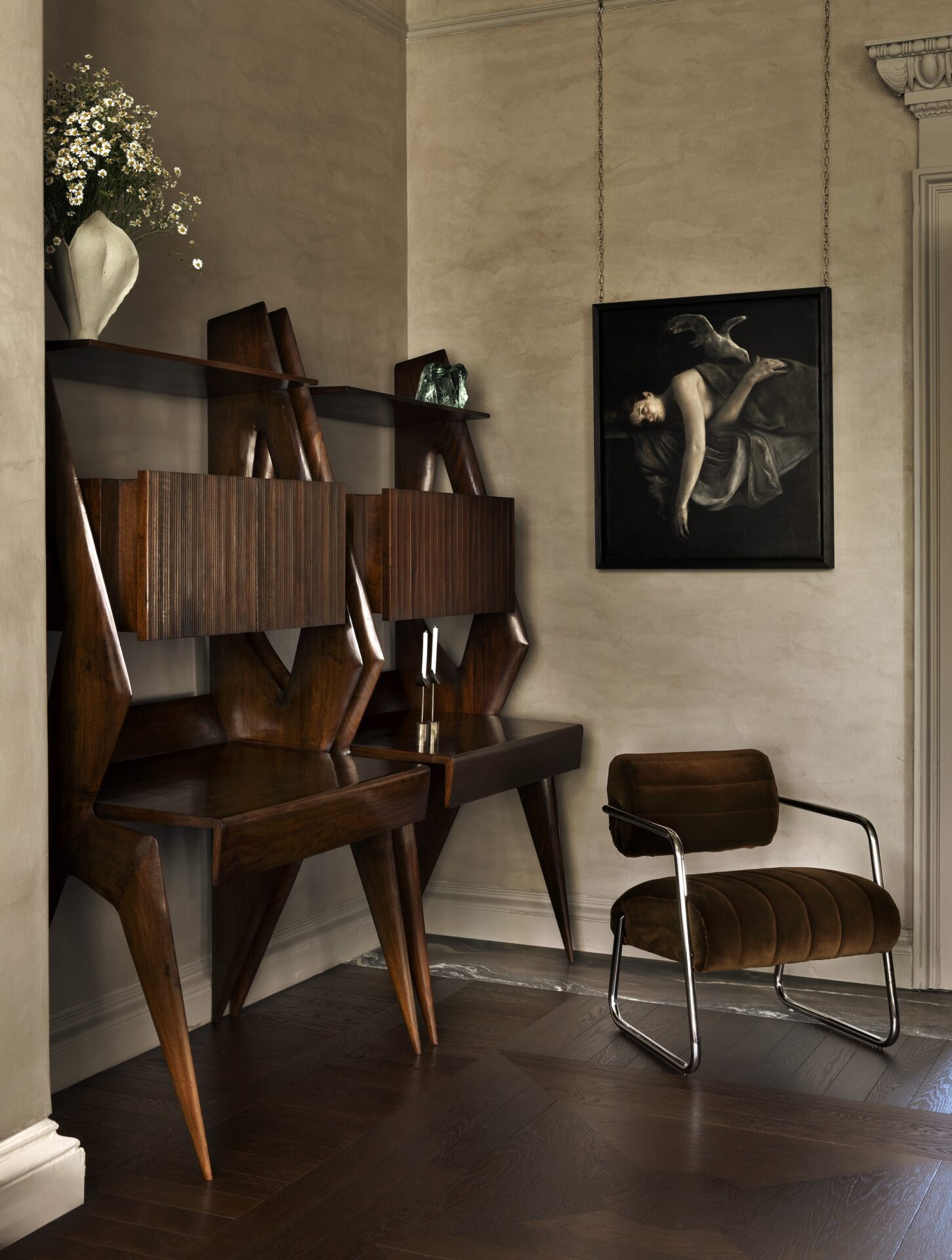
RL: The gallery is an ever-evolving space, filled with collectible furniture, lighting, art and design alongside rare vintage pieces, and it has opened up new opportunities for creative collaborations and intimate events. We now represent an incredible group of artisans, craftspeople, artists and designers whose work we deeply admire. We have also been lucky to introduce some truly special vintage furniture and lighting pieces into the space in collaboration with collector Domhnall O’Gairbhí.
A particularly important moment for me last year was the launch of my own Sphere furniture collection, a limited-edition series in marble, alongside Moonface, my first lighting collection. The gallery has also been the home for the first release of the Bosca collection, a series of marble and natural stone plinths made from stones that have featured across our projects for many years, allowing materials from our interiors to exist beyond the spaces themselves and be lived with at home. We are really excited to develop and celebrate these further in 2026.
DA: What else do you have planned for 2026?
RL: Looking ahead, the focus is on building on the momentum, developing collections alongside our architectural work, and continuing to push ideas forward while staying deeply connected to material, process and storytelling.