Framing the Horizon
A new addition to Dungeness’ otherworldly landscape, Hollaway Studio’s Westview Cottage is a light-filled retreat that blends with its surroundings and pays respect to the building that came before it
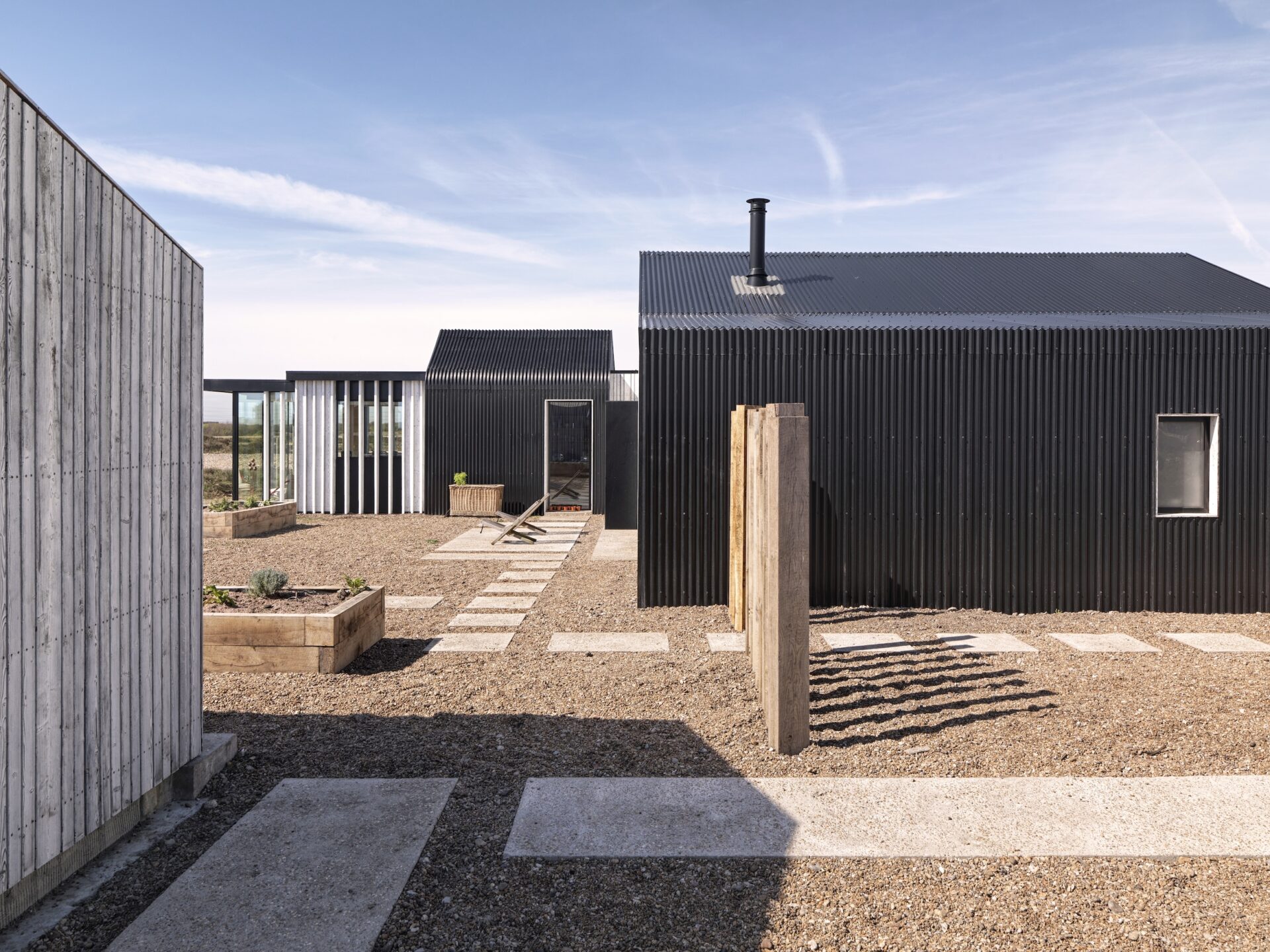
Already a magnet for ‘architourists’ in search of experimental house design, the shingle promontory of Dungeness in Kent has a new contemporary building to admire. Hollaway Studio’s Westview Cottage – which replaces a mock-Tudor home that was past its best – adheres to strict planning policies that say that new dwellings must retain the scale, form, mass and footprint of the original.
Rather than treating this as an unwelcome limitation, Hollaway Studio deftly works around it, resulting in a home with the same ad-hoc, evolved feel but with a vastly improved connection to its unique, ecologically protected surroundings.
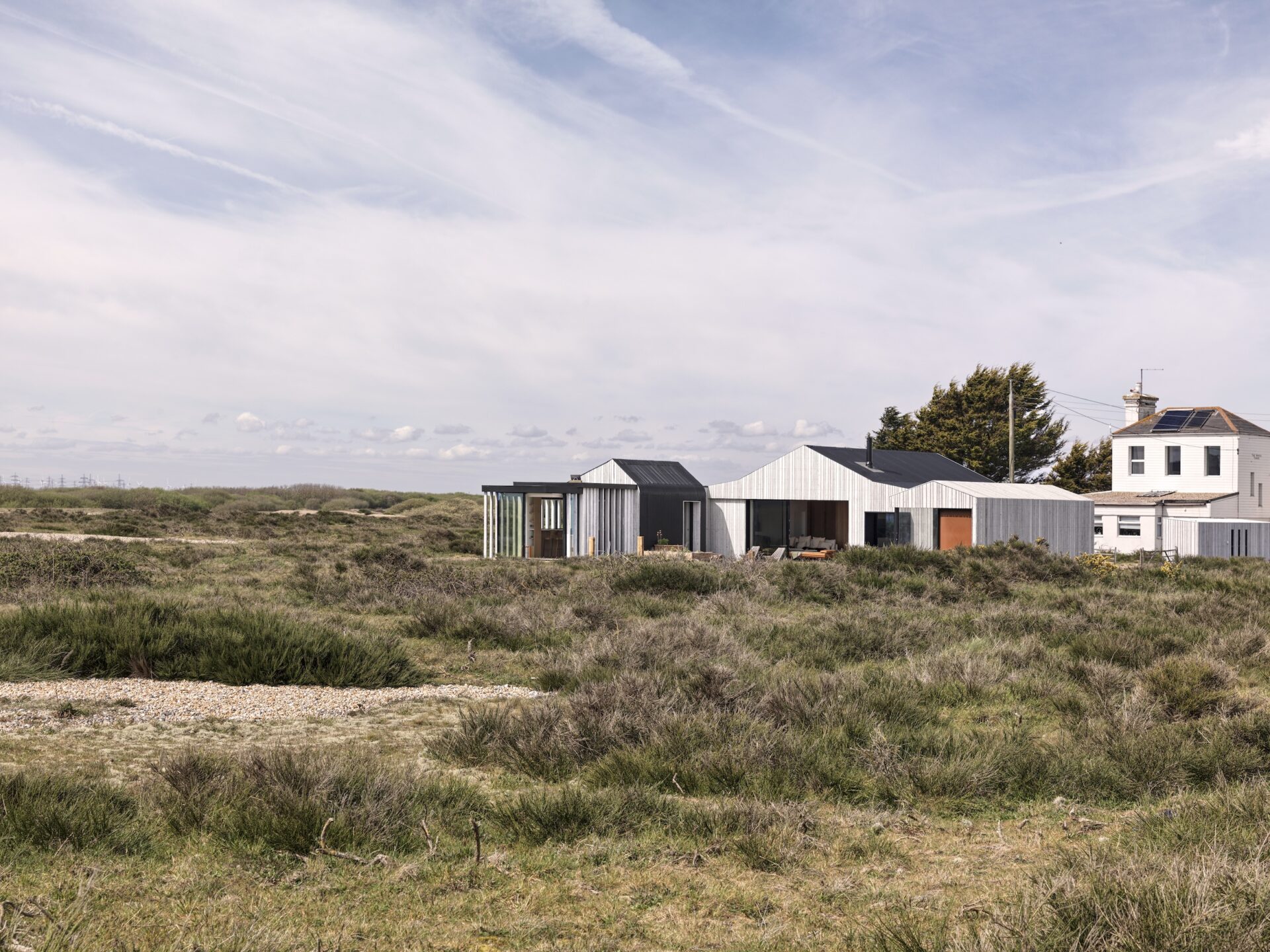
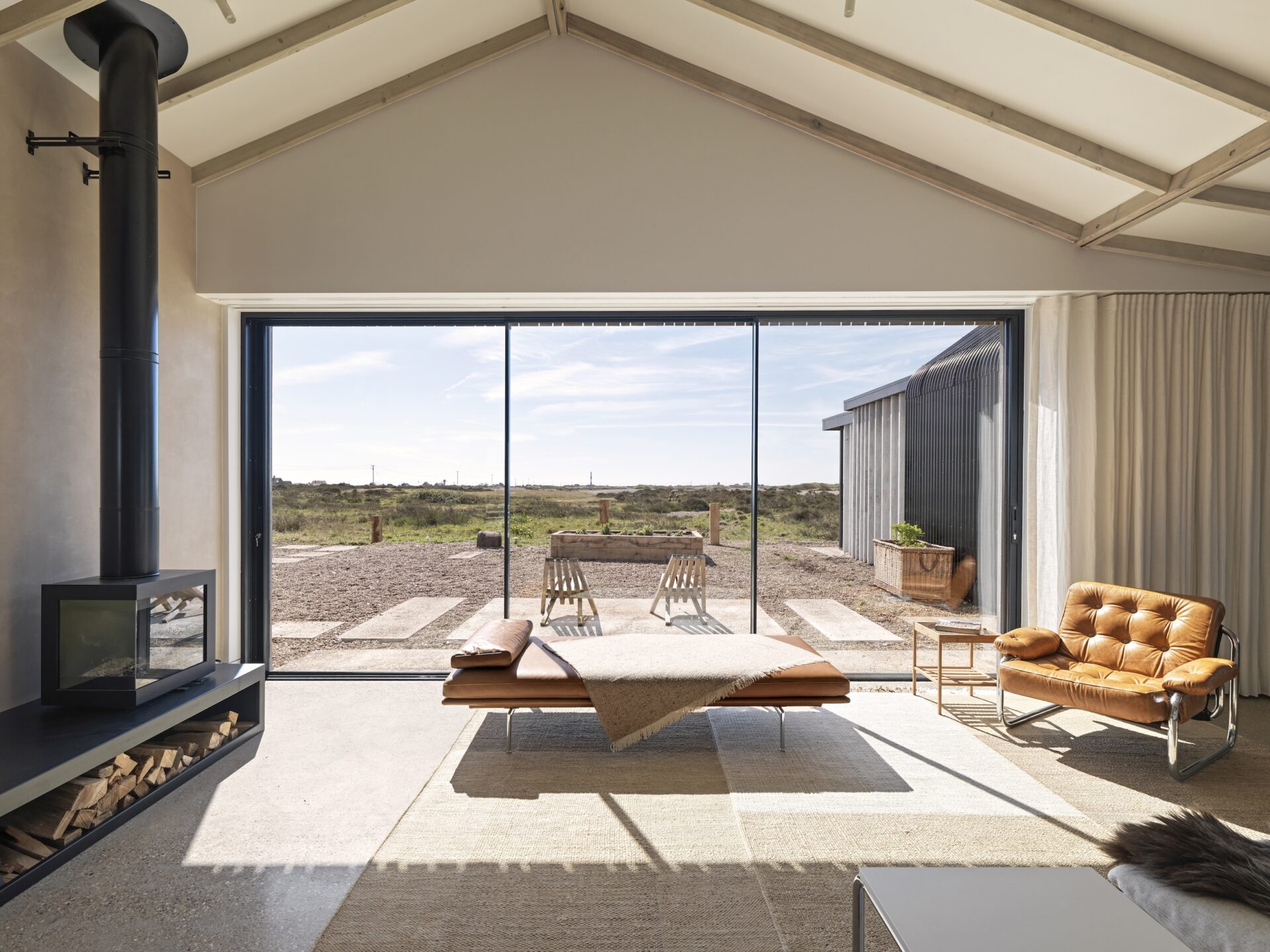
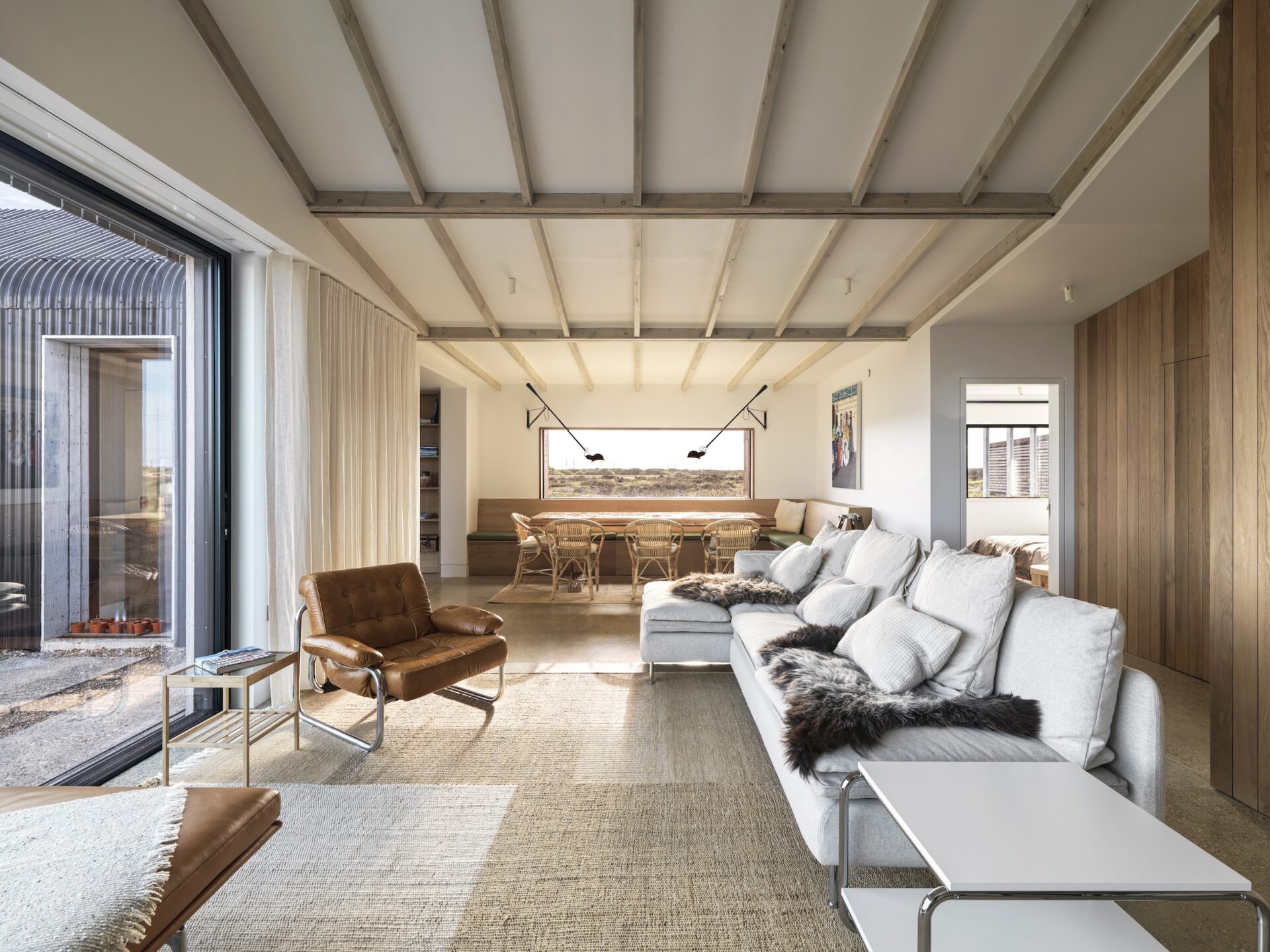
“The relationship with light and the surrounding views to the landscape was one of the primary drivers of the project,” says architect Guy Hollaway. “Despite being called Westview Cottage, the original property had no visual connection to the west. The new house is designed around a sequence of framed views and changing light conditions throughout the day.”
Dungeness has a history of idiosyncratic buildings (and homeowners, too, looking for escape from the mainstream world). Improvisation and adaptive reuse are recurring themes, and there are several homes built around railway carriages – a phenomenon that came about in the 1920s when Southern Railway’s workers were allowed to purchase old rolling stock to turn into informal holiday shacks, Dungeness then being the end of the line, where they could be towed to.
“That history of improvisation, adaptation and reuse has created a very particular architectural character that feels layered and informal rather than formally designed,” says Hollaway. “Today, the architecture continues to evolve in response to both that history and the harshness of the surrounding landscape and climate. For us, Westview needed to respond to that sense of individuality.”
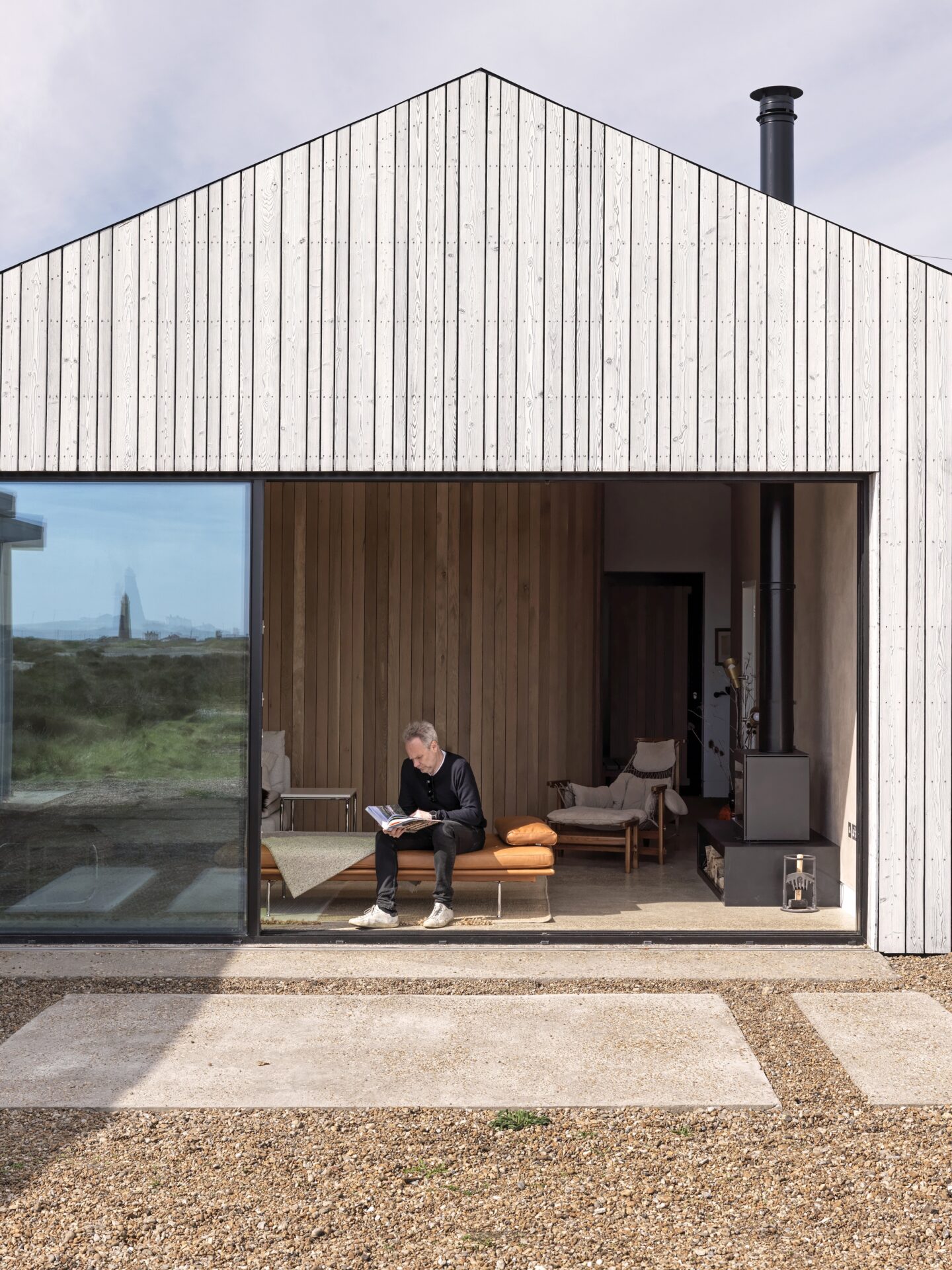
Westview’s footprint is idiosyncratic, reflecting what was here before: a rectilinear building with a single long, skinny extra wing that houses the kitchen. Together with an outbuilding opposite the kitchen wing (containing storage and an additional living area), it forms a three-sided courtyard that provides the focus for a landscaped outdoor living space, which segues into scrub and shingle all around.
That history of improvisation, adaptation and reuse has created a very particular architectural character that feels layered and informal rather than formally designed
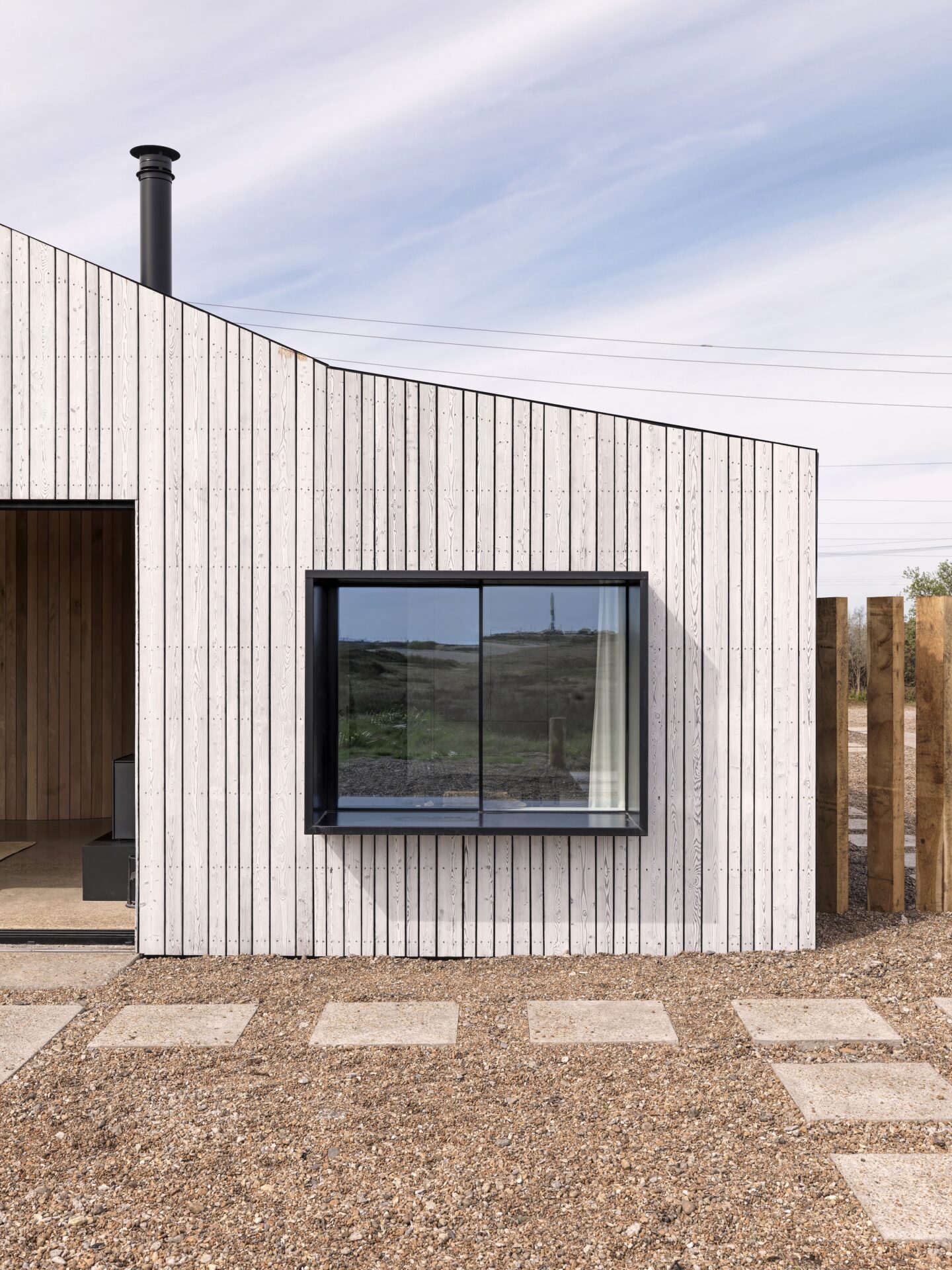
The previous house’s black and white mock-Tudor detailing has been honoured in its replacement. “White painted, charred timber creates a hardened grain while continuing the contrasting effect into the new design, and black corrugated aluminium and stabilised Corten steel reference the industrial remnants and abandoned objects found throughout Dungeness,” says Hollaway. These are tough materials designed to withstand the elements, and their contrasting shades serve as decorative detail in an otherwise minimal design, protecting it from the elements as much as for aesthetic reasons.
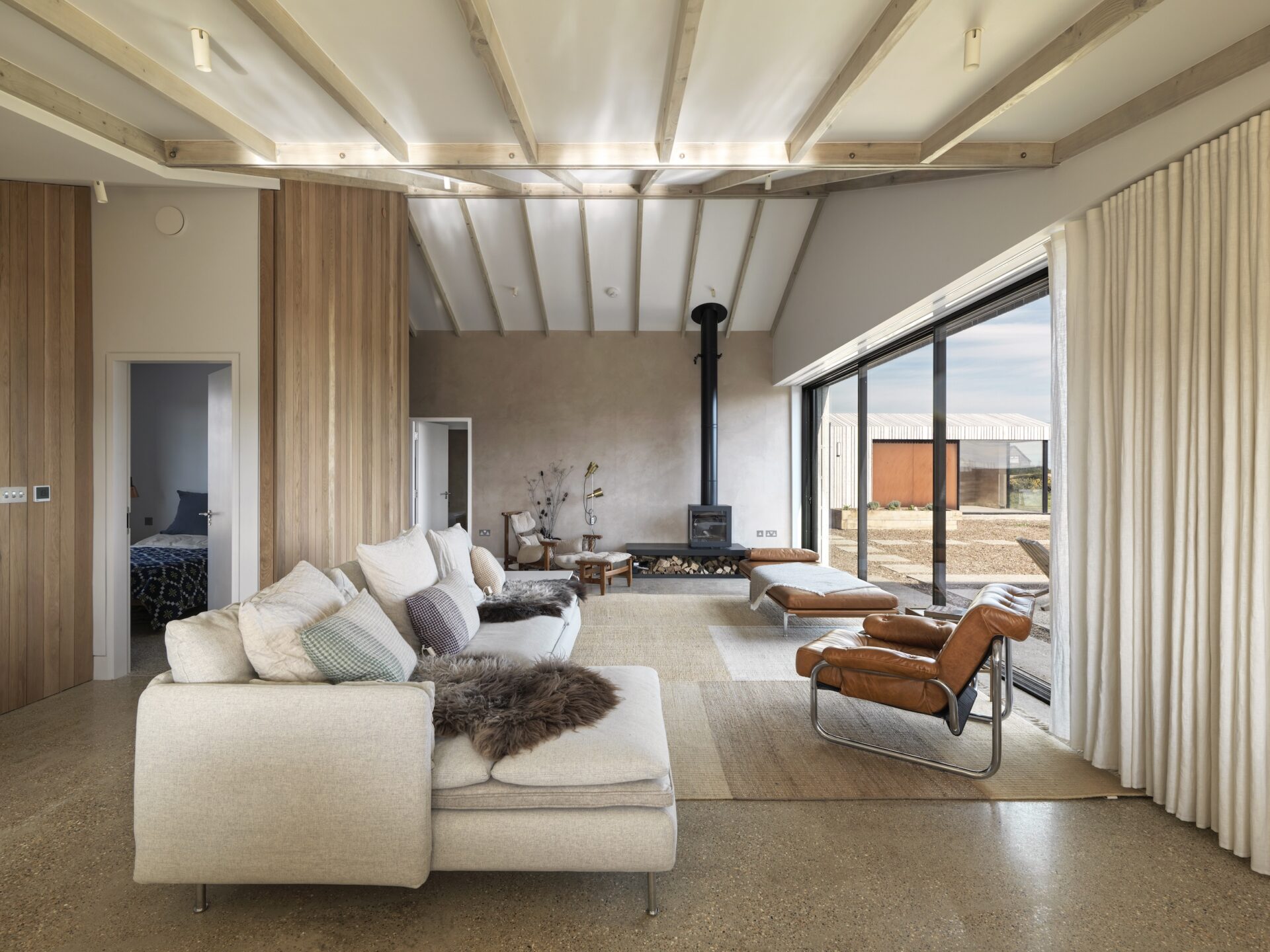
The building is single storey, with a pitched roof that gives the main living space an open and airy feel. Inside, the polished concrete floor has been made with local aggregate to echo Dungeness’ famous shingle beyond.
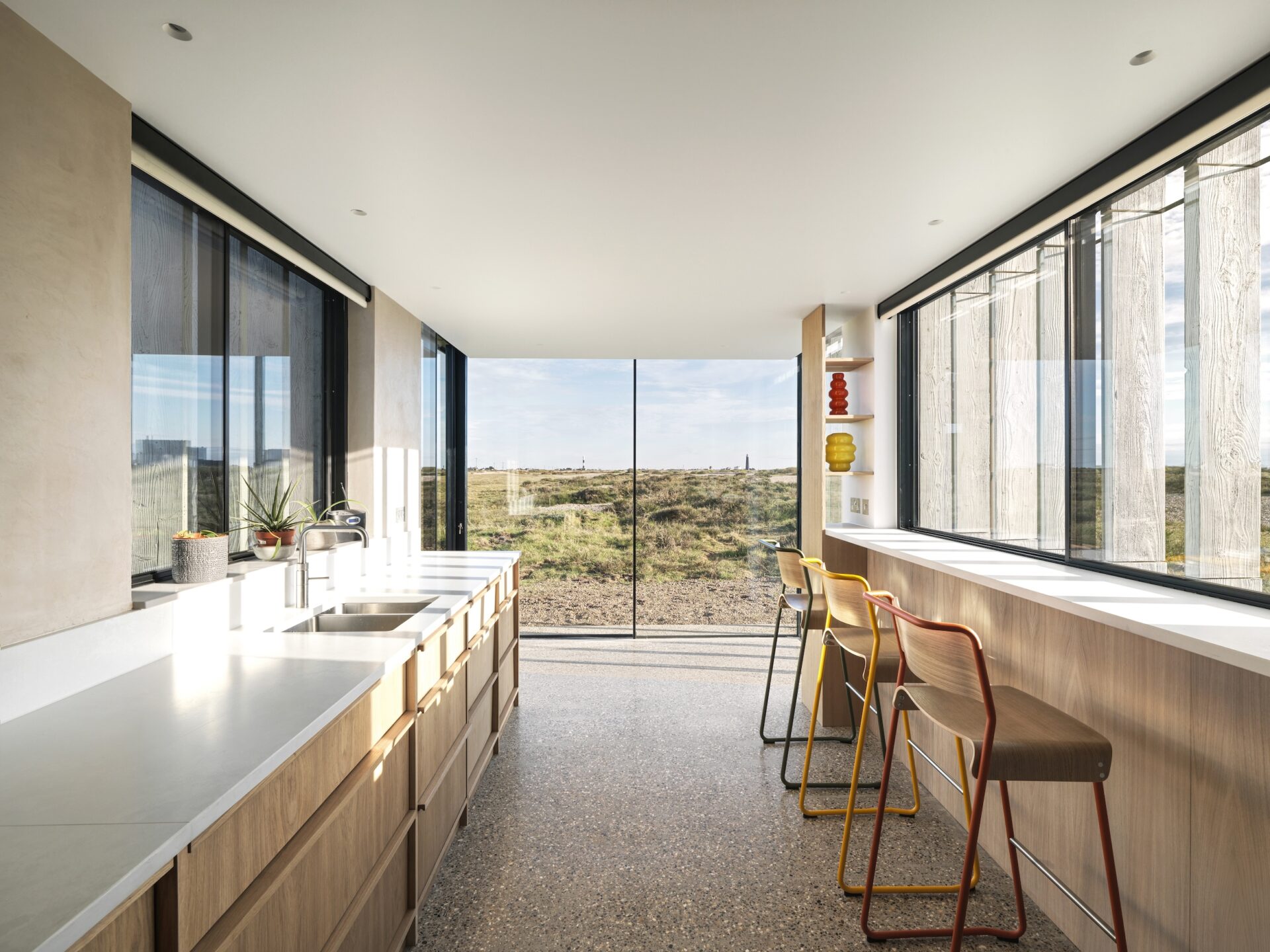
There are modest window openings on the side of the building facing the road (containing two bedrooms, with a bathroom between them), with carefully framed views elsewhere – a horizontal window in the dining area captures a perfect snapshot of scrub, with a row of pylons stretching off poetically into the distance; while the long, slim kitchen is punctuated by a fully glazed end wall with slim-framed sliding door. Dungeness lighthouse (one of several on the site, but the only working one) sits in the distance, its black and white concrete rings offering a pleasing echo of the architects’ external palette for the house.
This is not Hollaway Studio’s first Dungeness venture (2014’s Pobble House came first, clad in Corten steel, larch and fibre cement). Nor is it the last, since the practice is currently building a new dwelling around one of the area’s railway carriage homes.
As for the restrictive planning policies that affect all of these homes, Holloway feels that they lead to a more creative approach, and a better result. “Whilst restrictive on paper, those constraints force you to think much more carefully about the space, volume, light and materiality,” he says. “Rather than simply expanding outward, the architecture has to work harder to make use of the space and the way it responds to the landscape.”