Work Social
Interior designer Isern Serra transforms a Barcelona factory loft into a materially led workplace, designed around gathering, connection and the feeling of home
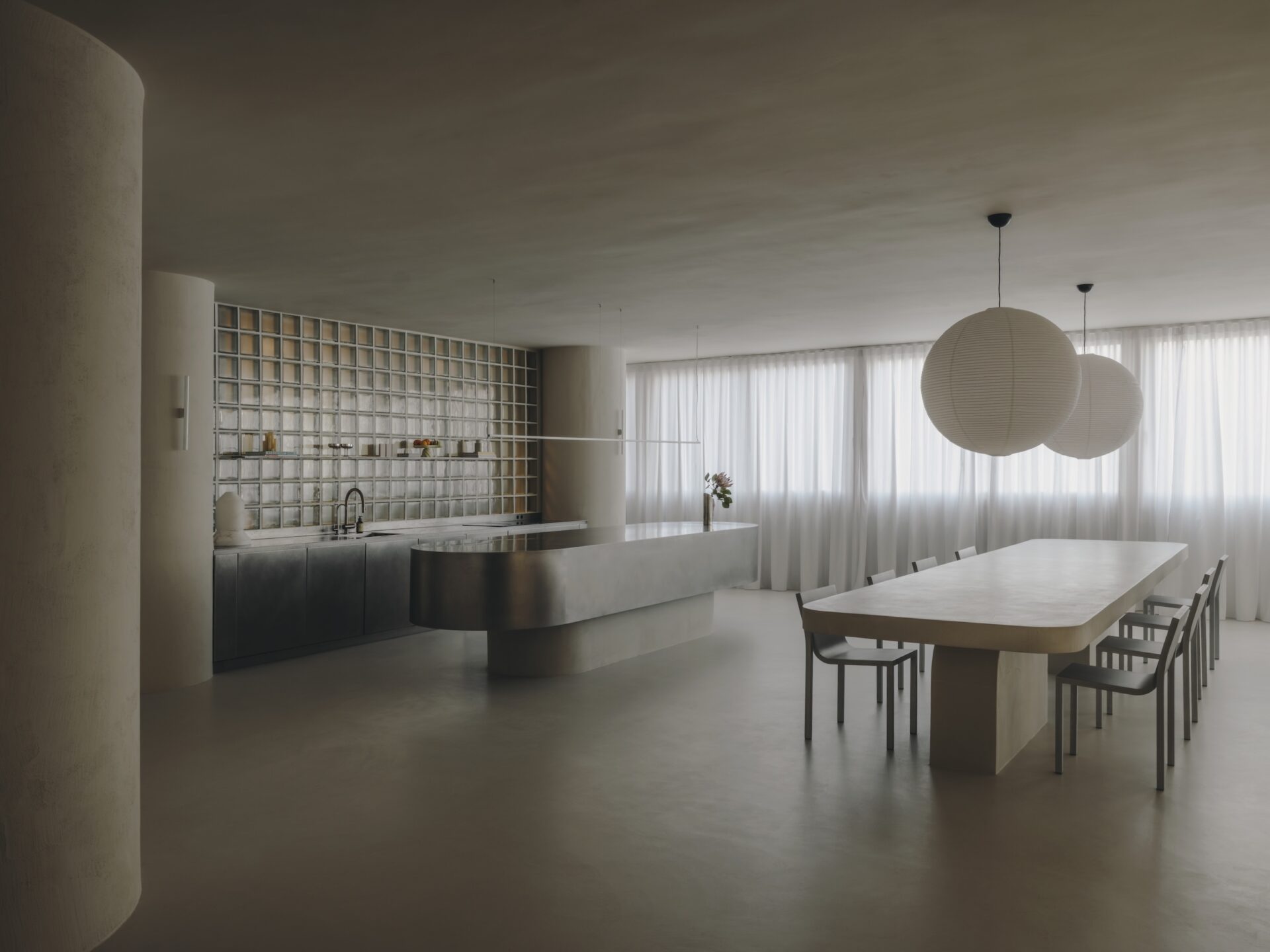
Best known for its playful paper vases that slip over the top of an ordinary glass, Barcelona-based Octaevo makes homewares that are eye-poppingly bright and bold. So it’s a surprise to see the direction that founder Marcel Baer took when it came to the brand’s own workplace and studio, Casa Octaevo. There are sculptural curves in warm-toned microplaster, glass-block walls, sheer white curtains and a bespoke stainless-steel kitchen island that acts as the scheme’s communal heart.
It’s a long way from Octaevo’s graphic lines and bold hues, but as Baer points out, that’s sort of the point. “Our products are often colourful, so I like the idea of keeping the space itself calm and understated,” says Baer. “It gives them room to stand out and bring in the colour and personality.” He adds that it also reflects his personal style, which leans more towards the minimal.
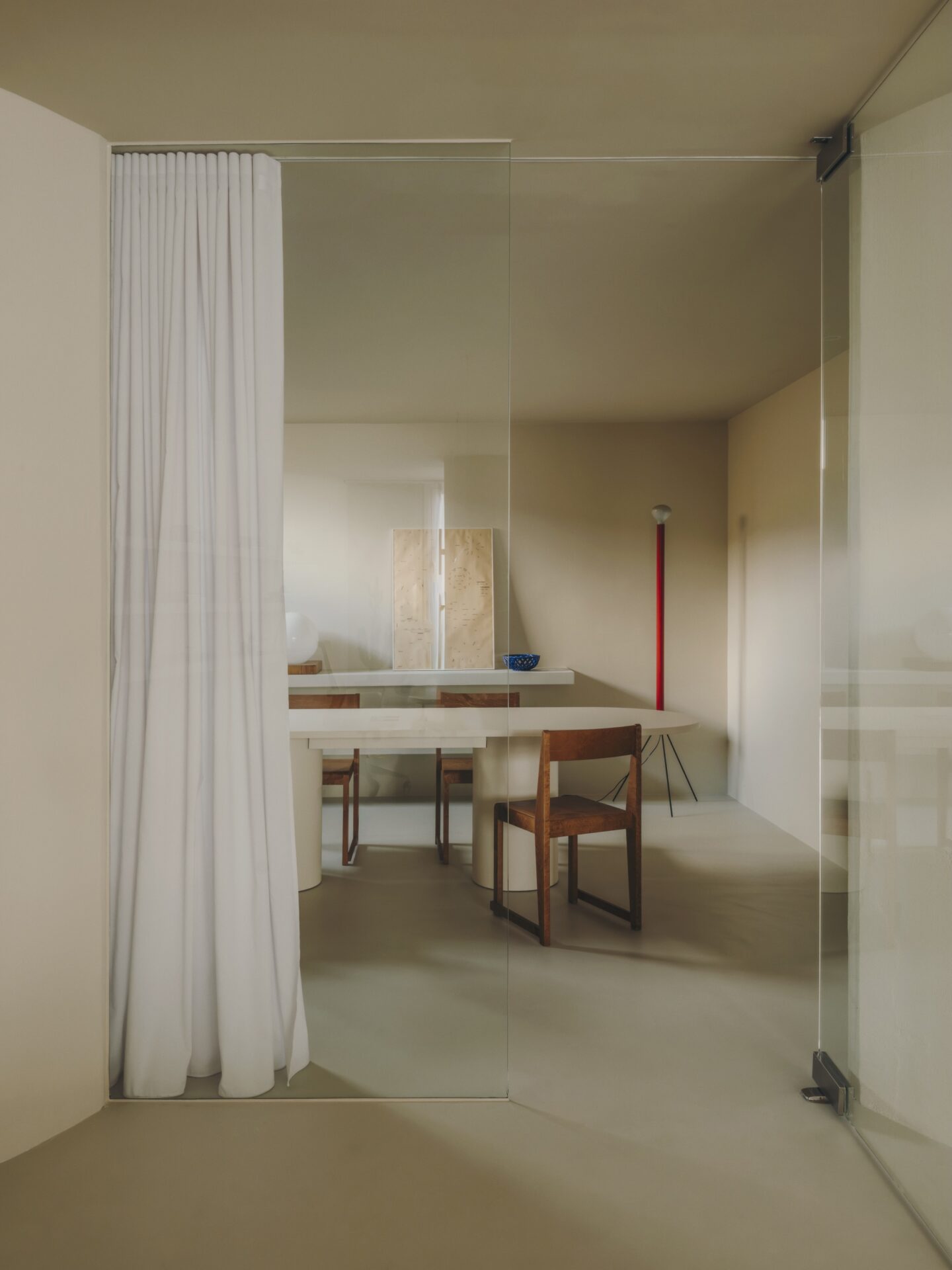
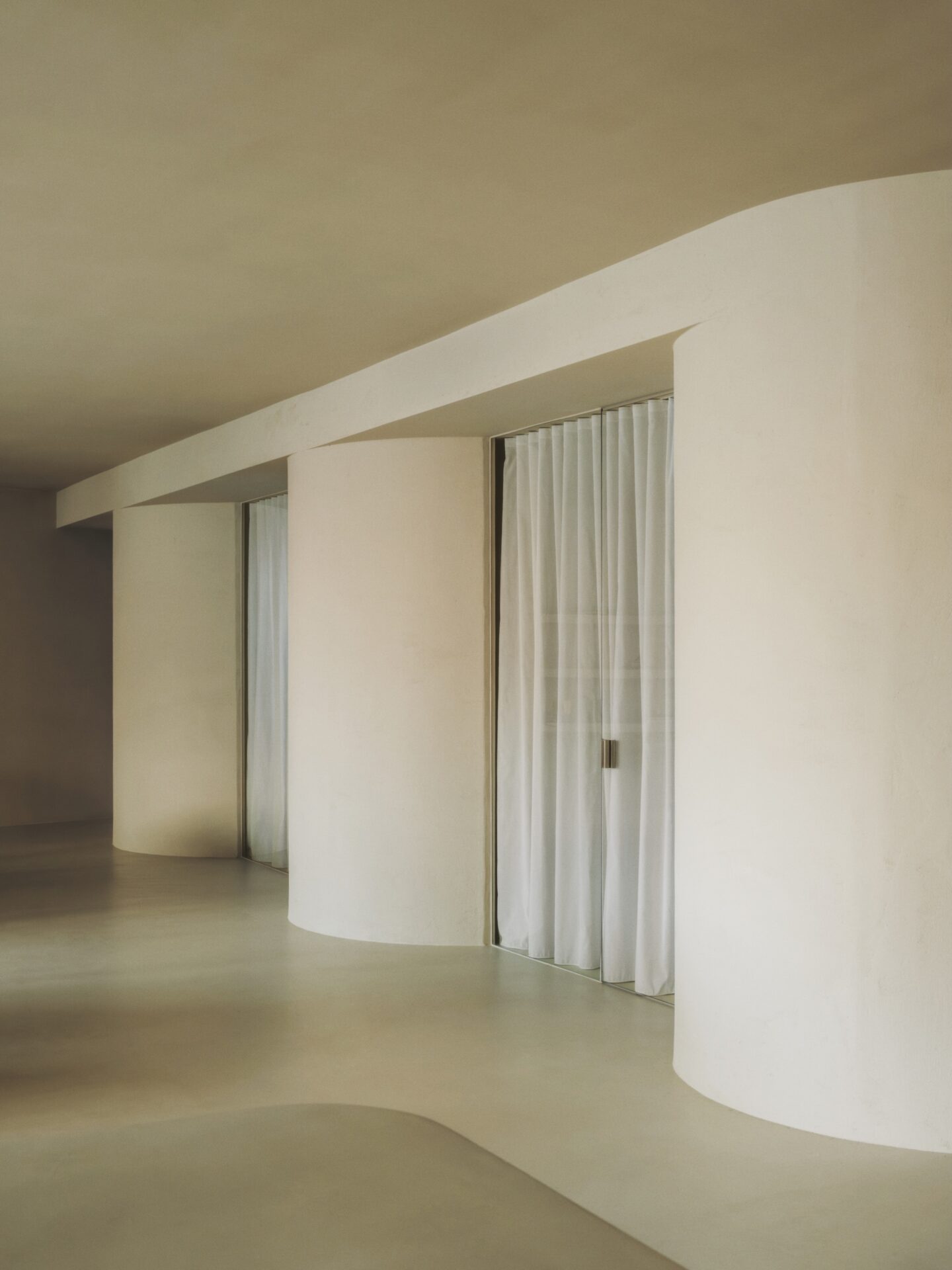
Baer asked an interior designer he had known for a while, Isern Serra, to work on the project. The raw material was a converted loft in a former acrylic factory that had fallen into disrepair, and the brief from Baer was fairly simple: two meeting rooms, a warehouse and a big kitchen. Serra saw the chance to “introduce a more domestic way of inhabiting an industrial setting. Rather than looking for an existing architectural identity to preserve, we saw it as an opportunity to create a new one, almost to give the space a soul.”
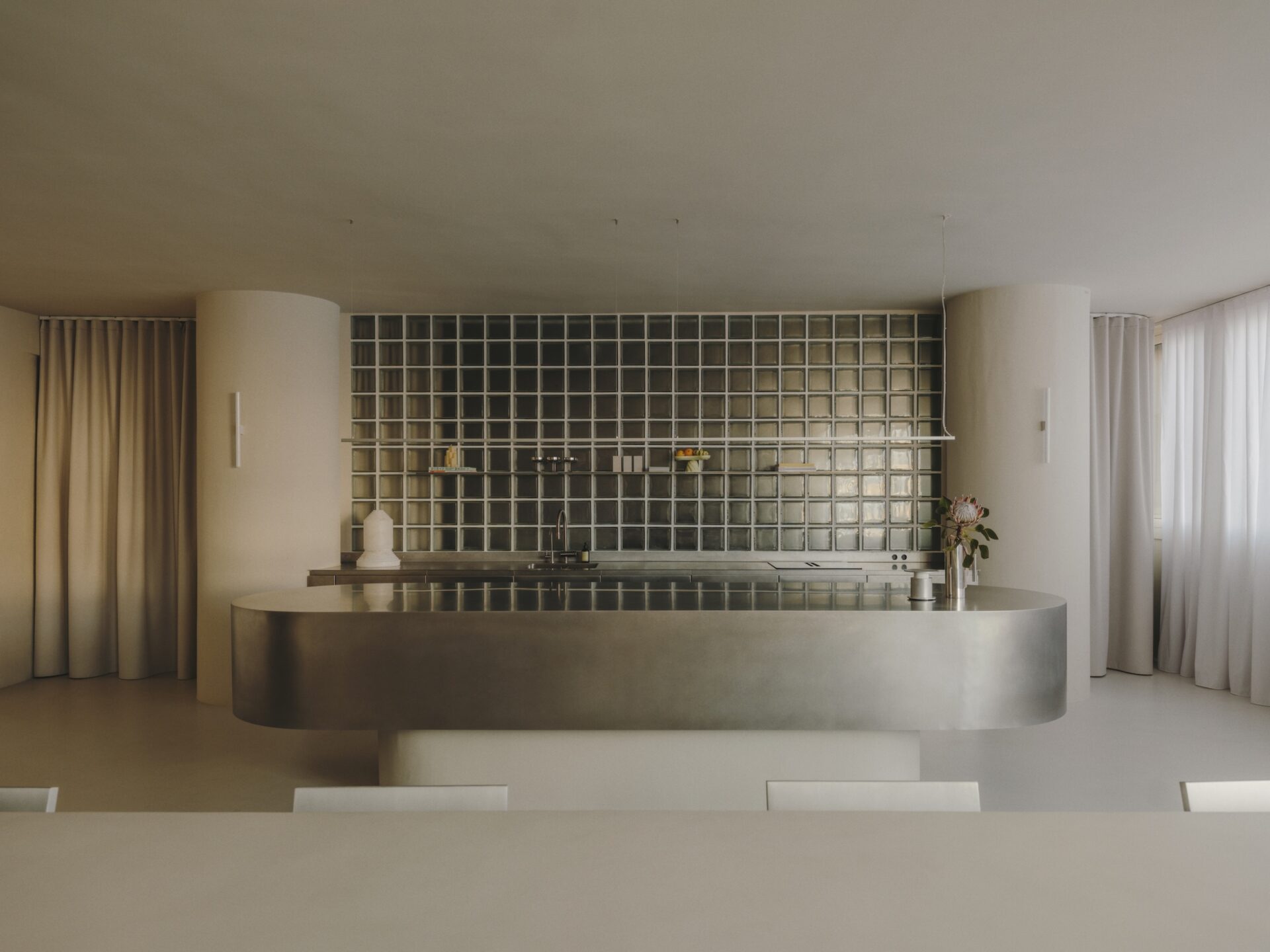
Serra explains how Casa Octaevo’s curved walls, glass blocks (which allow light to penetrate into an area for photography) and sculptural elements “became a new architectural landscape within the existing space. I was interested in the contrast between the rawness of the original architecture and the softness of the new interventions. I wanted the space to feel simple and natural, almost as if it had always been there, with a quiet presence rather than a strong or imposing gesture.”
I wanted the space to feel simple and natural, almost as if it had always been there, with a quiet presence rather than a strong or imposing gesture
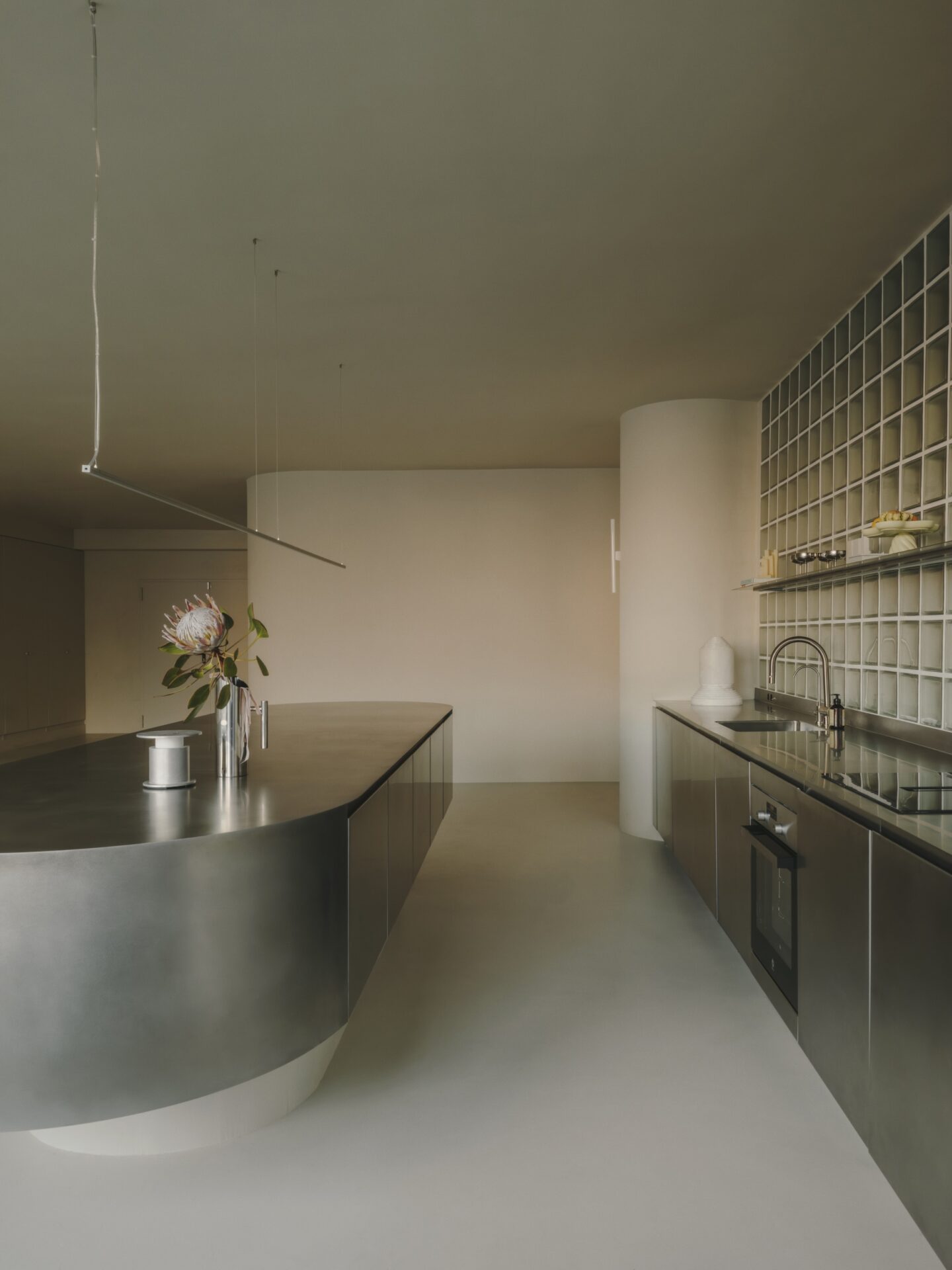
Baer says that he always wanted a workplace where the team could cook and host events, and the space has more of a feeling of a laid-back loft than an office. The kitchen was the starting point for the whole project, establishing the kind of workplace this would be – somewhere for connecting over an informal coffee, where human connection is the priority.
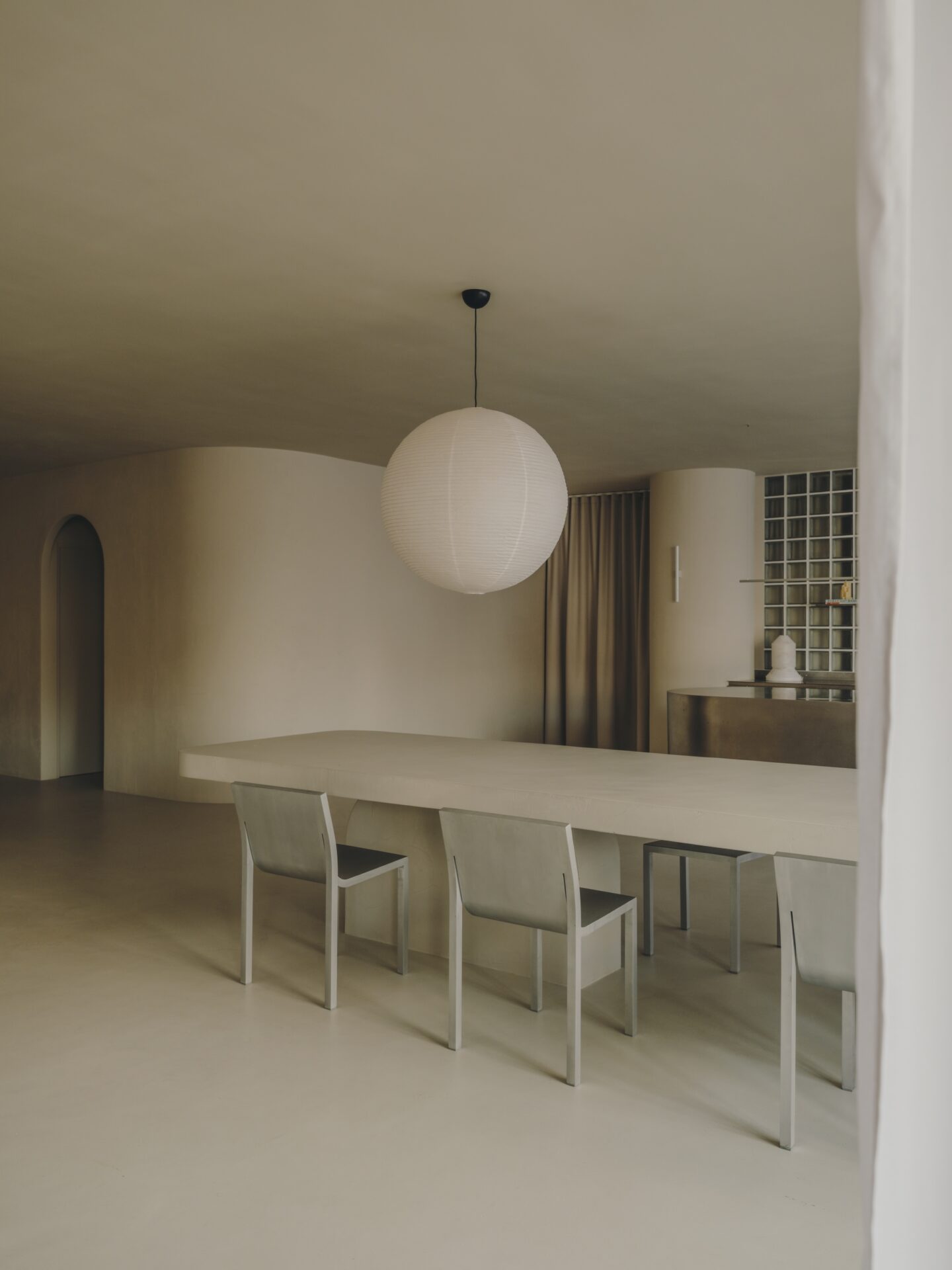
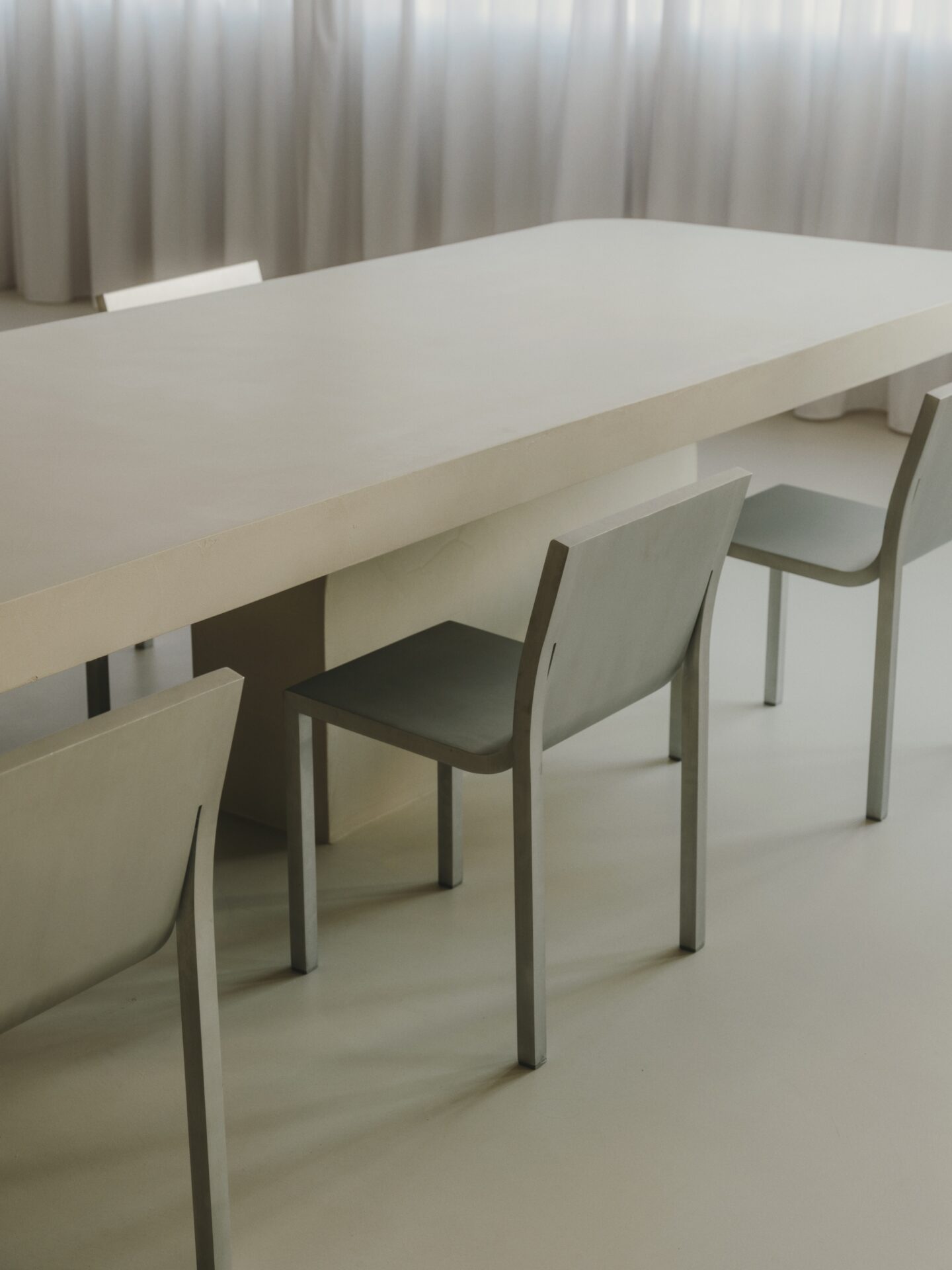
Next to the island, there is a large communal table for gathering – “I wanted it to feel almost like a permanent piece of architecture, something around which everyday life naturally unfolds,” says Serra – surrounded by Sabine Marcelis’ Stedelijk chairs by BD Barcelona, with outsized paper globe pendants hanging above.
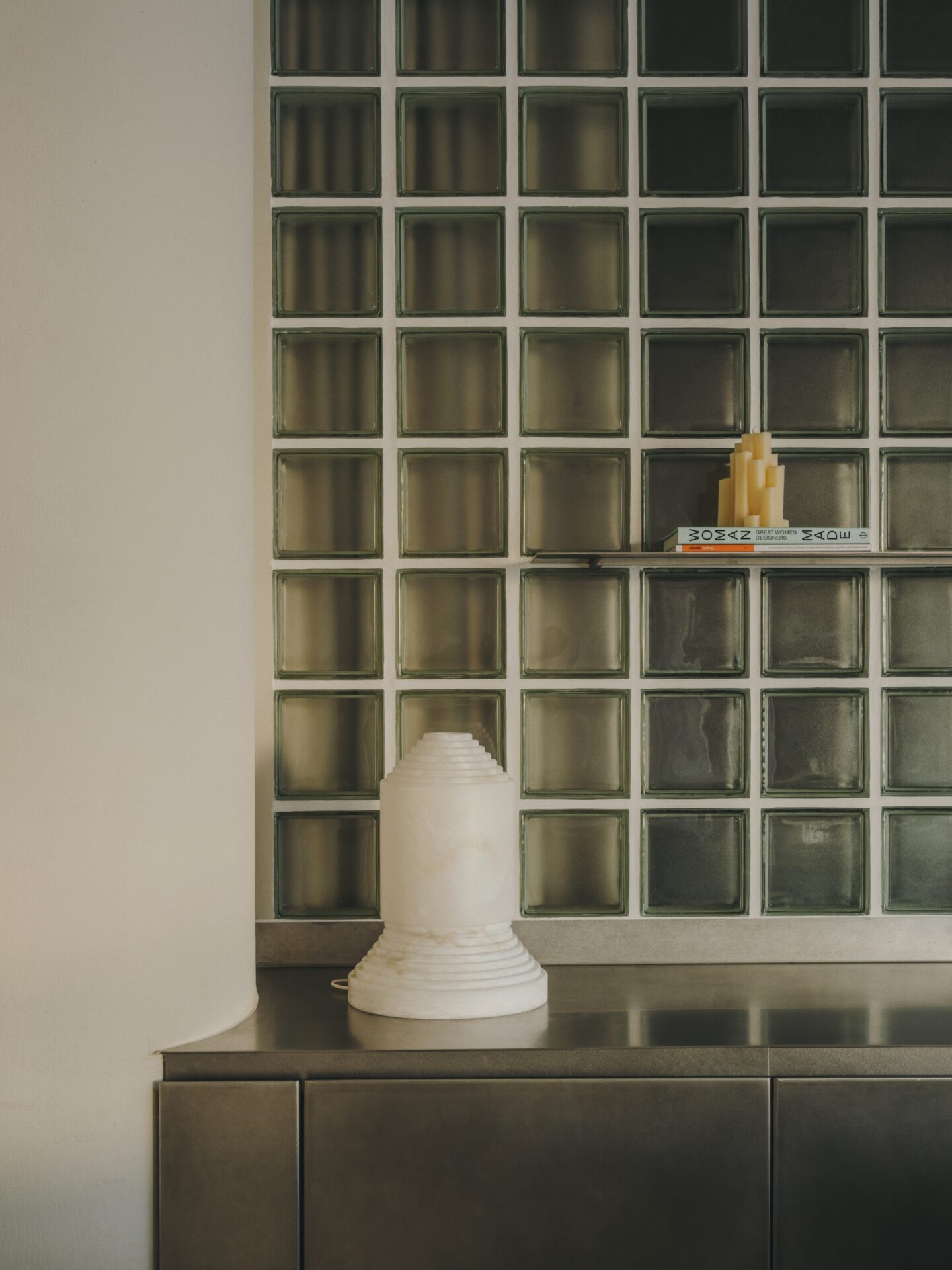
Casa Octaevo needed to be flexible – not just to accommodate the switch from work to social mode, or juggle Octaevo colleagues’ product developments and meetings – but because it can also be hired out as a photography and video studio, or for corporate events. Accordingly, Serra has not presented a blank canvas, but something that can still absorb different identities.
“I like the idea that architecture can be both present and discreet: strong enough to give a place its own character, but generous enough to allow other things to happen within it,” he says. He explains how the curtains help to accommodate these different functions: “They allow spaces to open up or become more intimate, changing the atmosphere without the need for rigid divisions.”
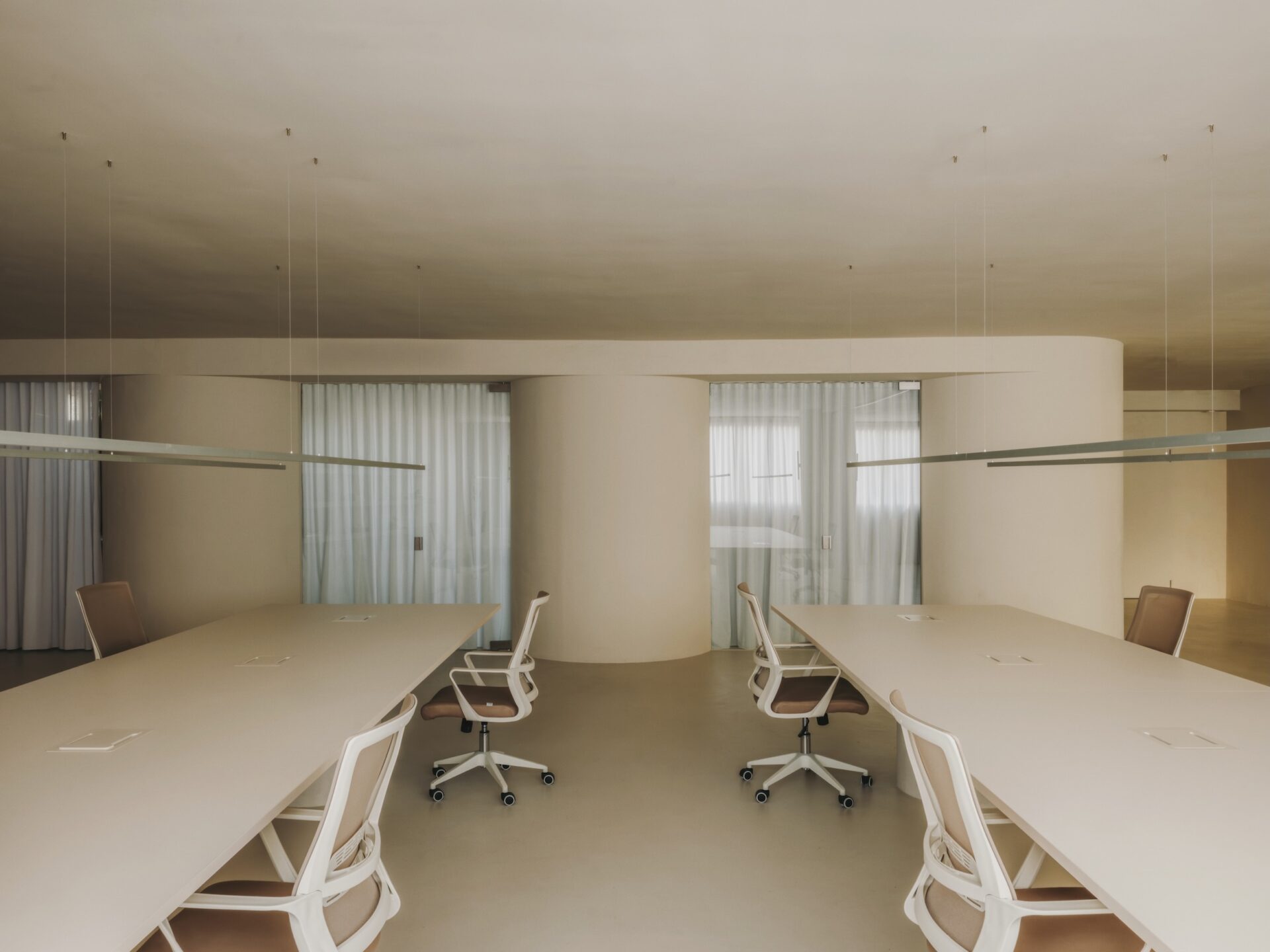
For Baer, Casa Octaevo and its quiet, honest aesthetic mark a maturation. “Our old studio had a lovely creative chaos, but this space feels much calmer and more open. It felt like the right next step for us,” he says. “It works exactly as we’d hoped. We can work, have meetings, cook and host events, and the space adapts easily to everything we do. Most importantly, the team really enjoys being here.”
Serra, meanwhile, muses on how workplaces can move away from the purely functional and become places that can take on the atmosphere of home. “Residential architecture has always had to respond to more intimate questions: how we feel in a space, how light enters a room, how materials age, how we gather and how we find moments of quiet. I think these qualities are becoming increasingly relevant to workspaces, particularly creative ones.
“For me, the intention is not to make an office look like a home. It is to bring into it some of the qualities that make a home meaningful: warmth, intimacy, a sense of belonging and an awareness of the human scale. Ultimately, good architecture should make us feel something. It should offer more than a place to perform a function; it should create the conditions for life to happen.”