Gothic Fantasy
The story behind the Regency reboot of Yarlington Lodge, The Newt’s new country-house escape, sensitively restored by Richard Parr Associates
The Newt in Somerset has long been ahead of the curve when it comes to the defining trends of the modern English country-house hotel: reverence for historic architecture tempered by more playful interiors, regenerative farming and hyper-local dining, and cultural cachet in the form of its garden history museum and full-scale Roman villa. With its latest addition, Yarlington Lodge, The Newt is embracing another hospitality shift: luxury serviced accommodation.
“It’s a new concept,” explains architect Richard Parr, who has been working on The Newt’s wider buildings for the past 12 years for his clients, the hotel’s South African-born owners, Karen Roos and Koos Bekker. “You can tap into every asset that the estate has, but equally you can hunker down and have 100% privacy.”
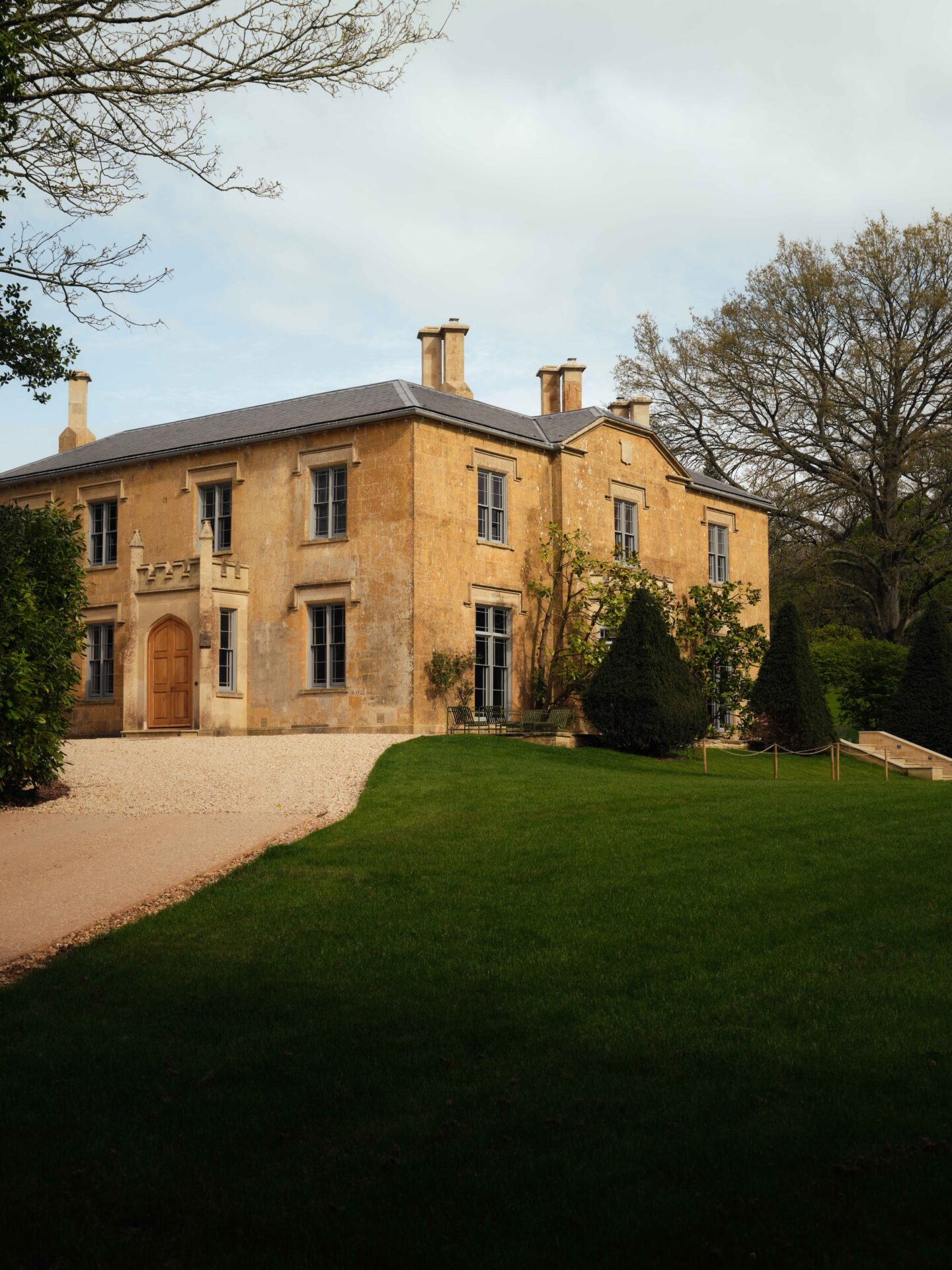
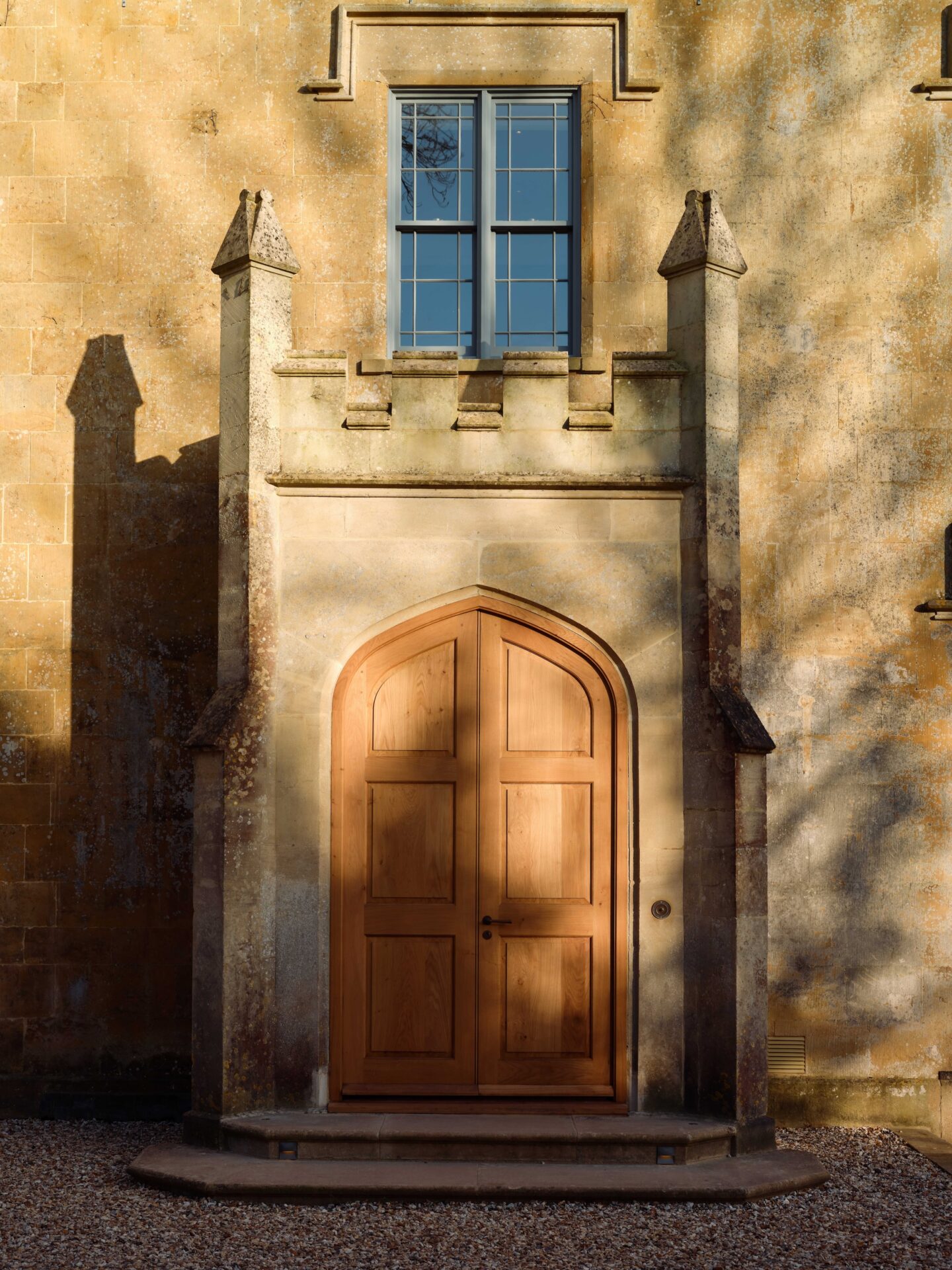
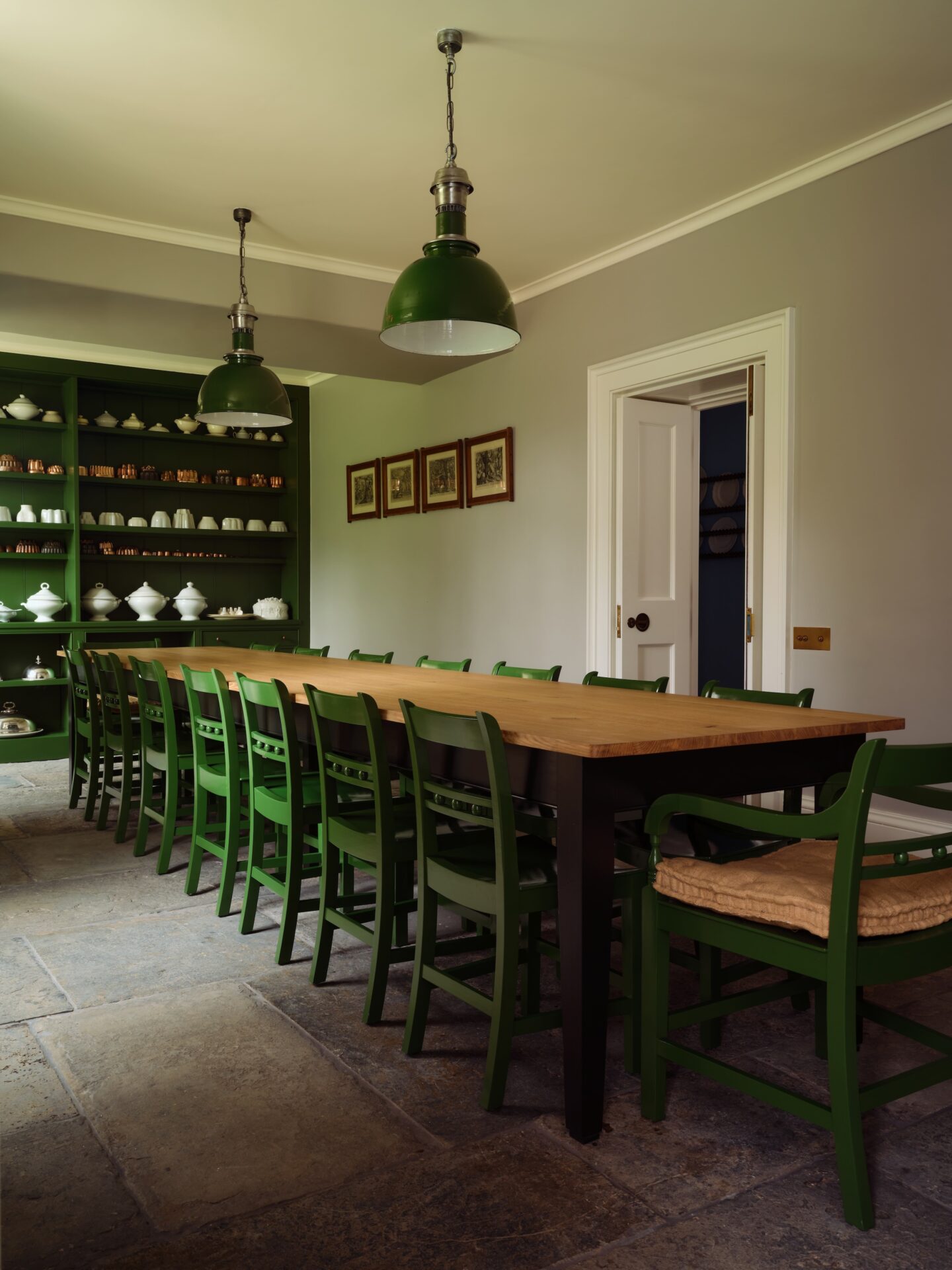
Yarlington Lodge is the collective name given to the Lodge plus the smaller Coach House and Cottage in the Wall, sleeping 32 guests in total and set within 12 acres of quiet countryside. The main house – which probably started life as a parsonage – is a handsome Regency gothic structure built in local warm-toned limestone.
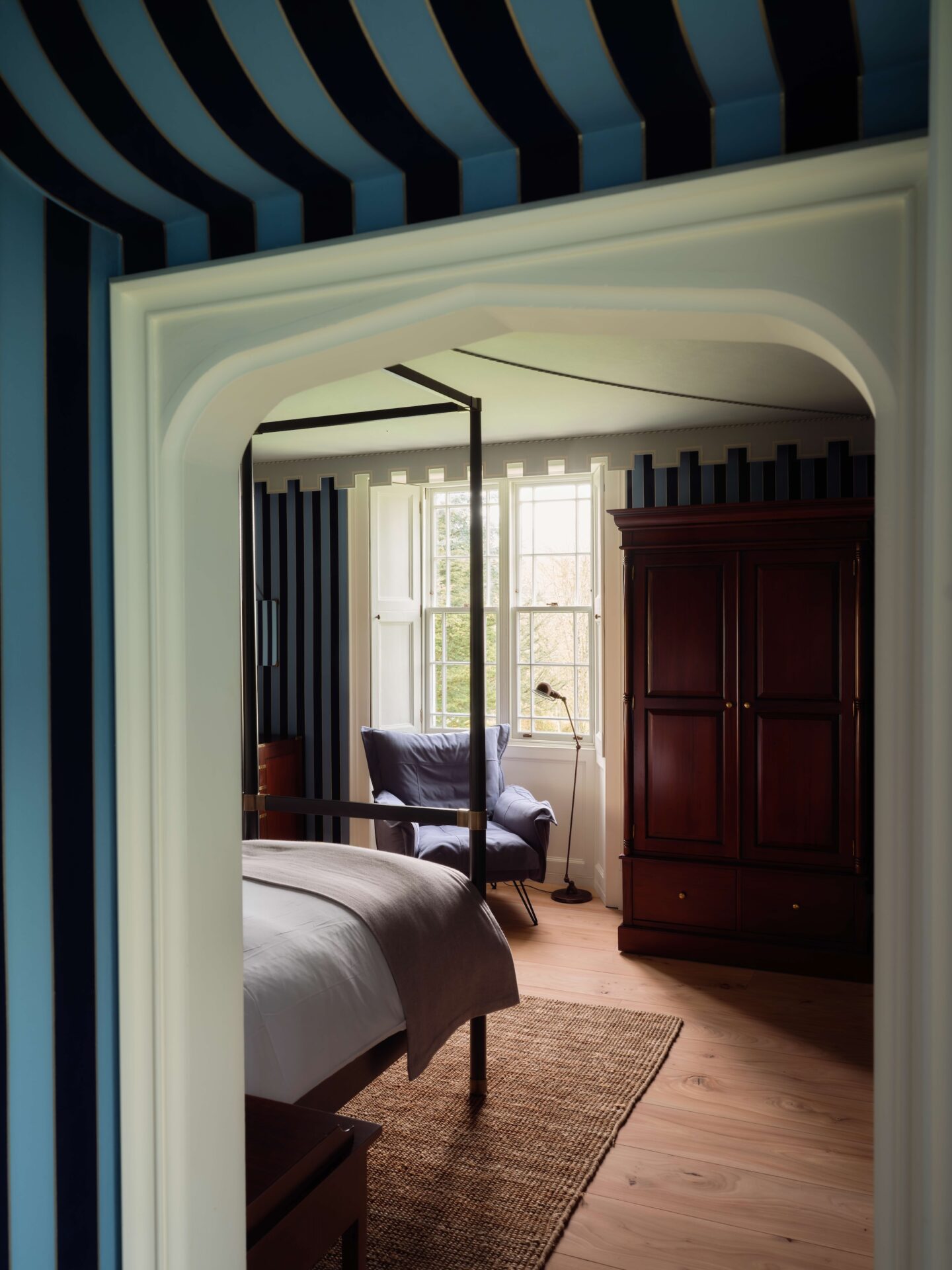
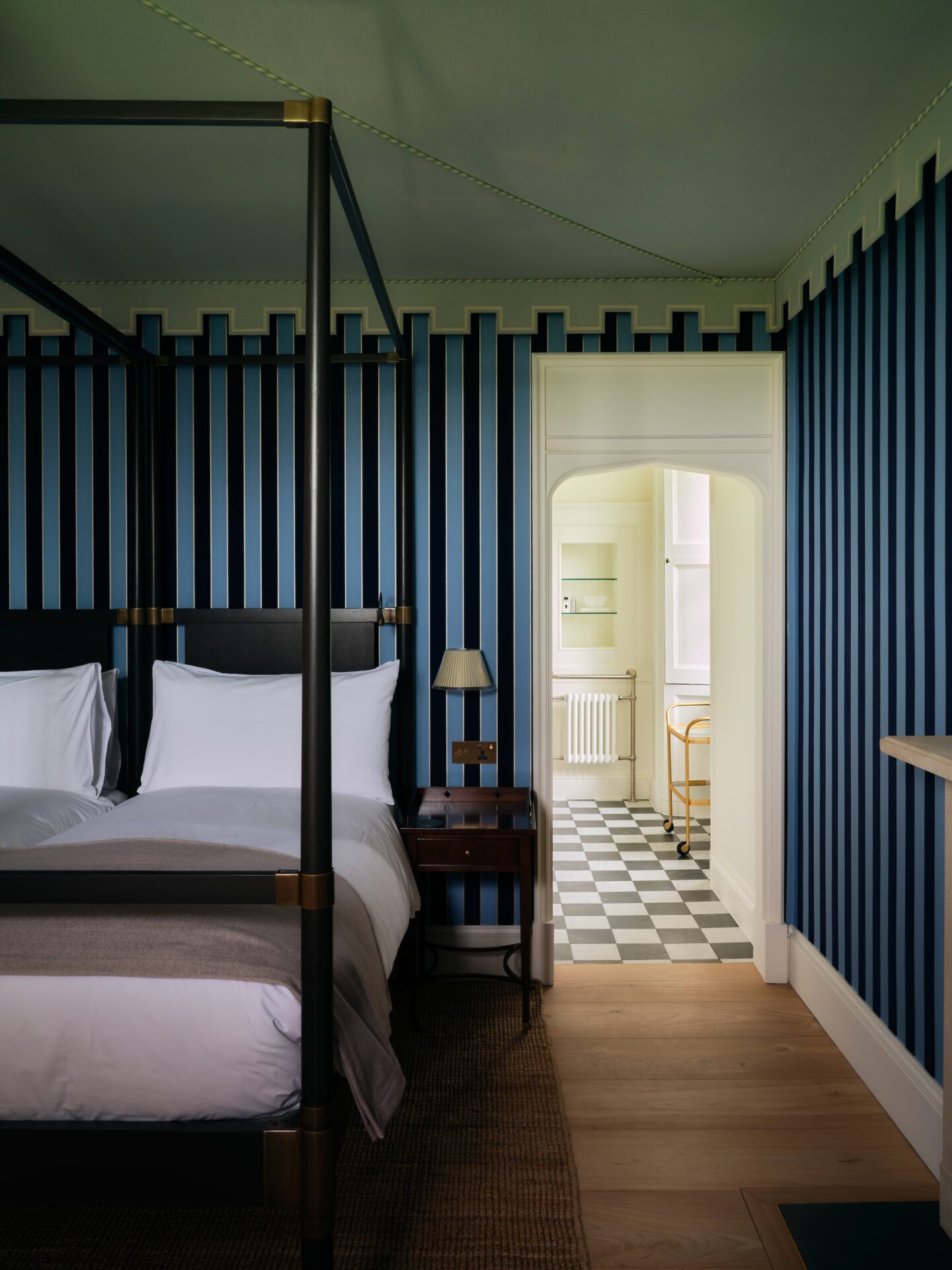
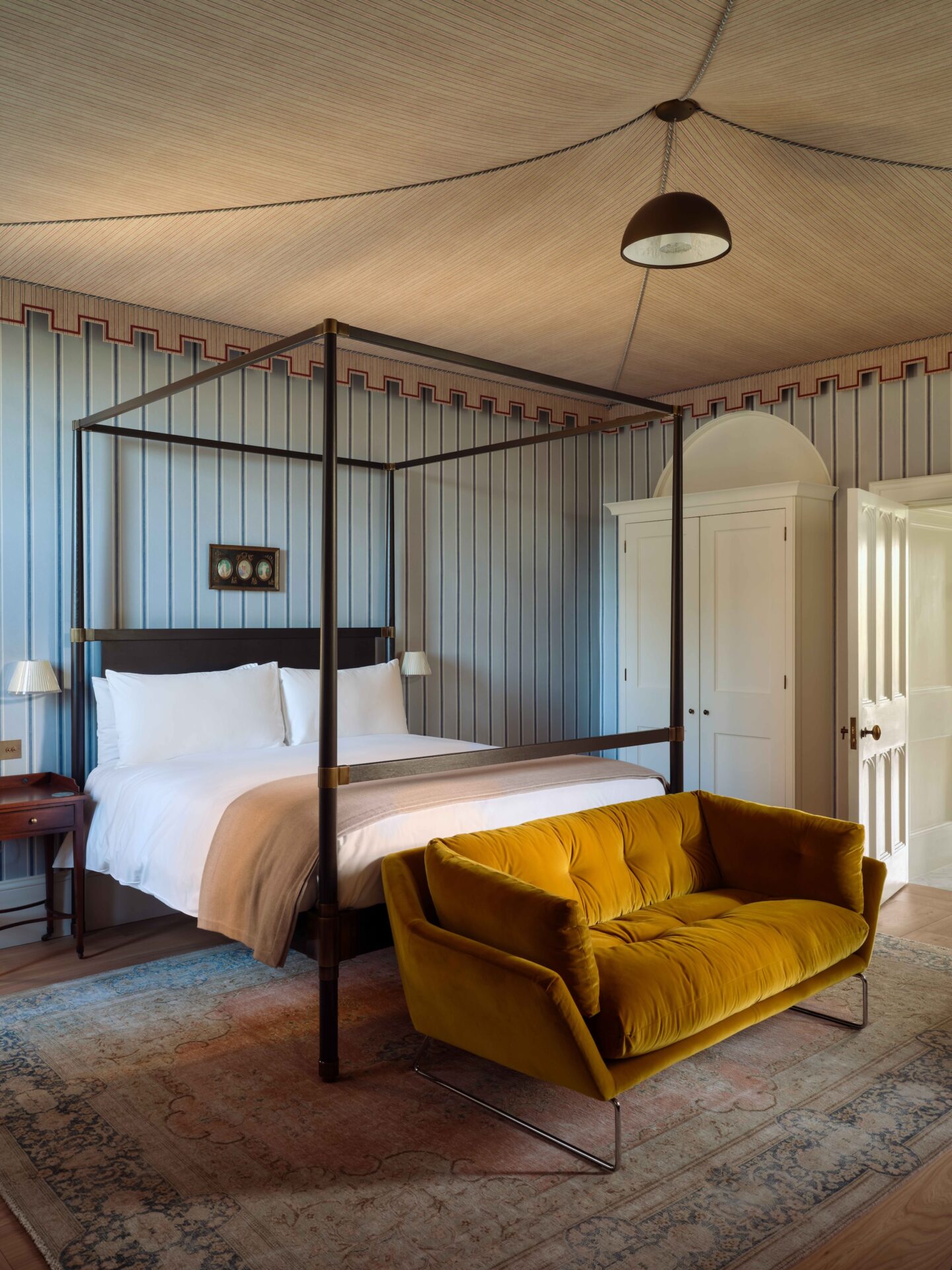
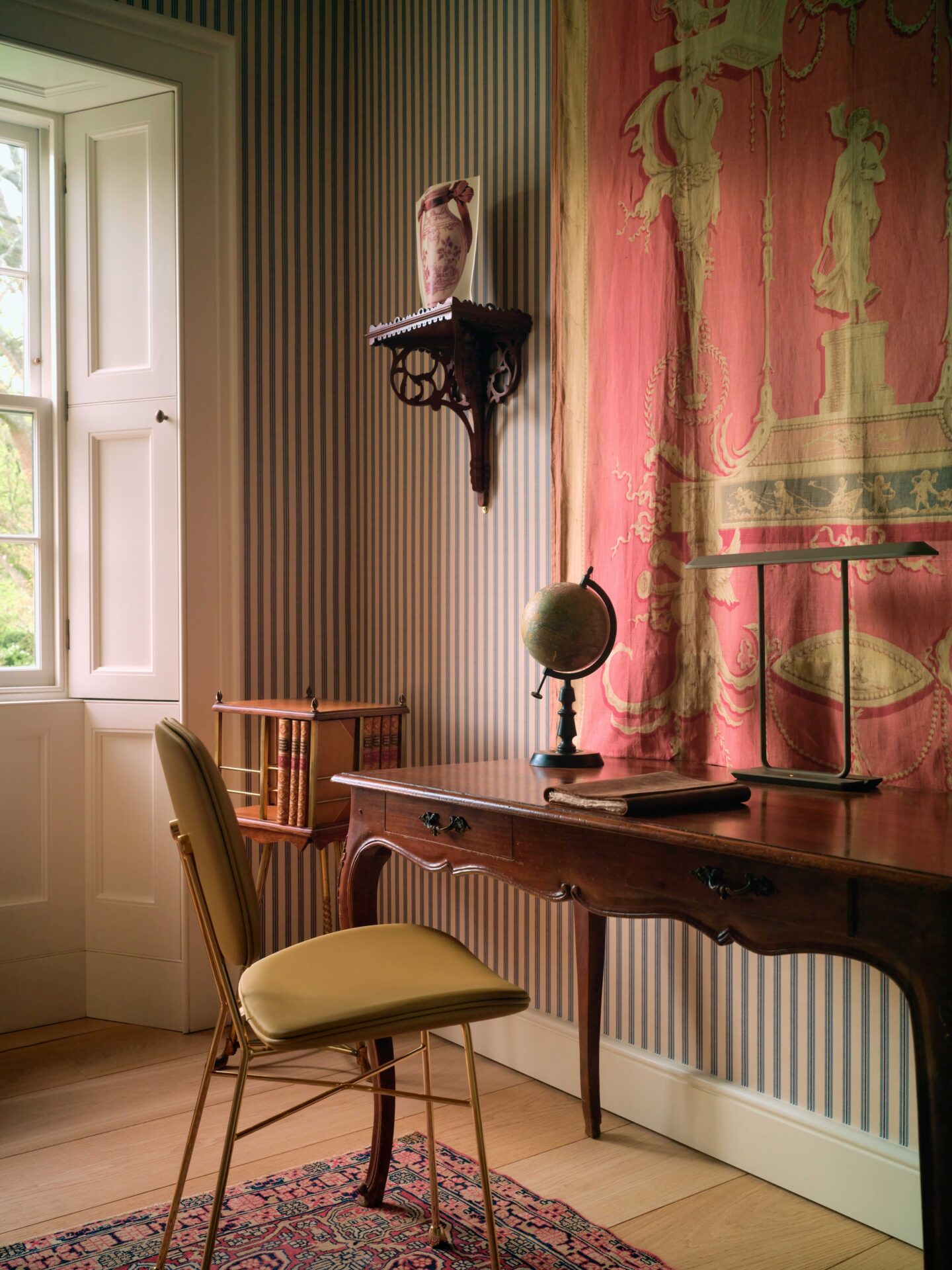
Its crenellated porch, and the wider Empire style that was fashionable at the time, has been reinterpreted for the interiors, which Parr and Roos worked on together. Tented ceilings trimmed with crenellated pelmets, wide Regency stripes and antique foldable campaign furniture channel the spirit of the age, but since Roos’ brief was “Napoleonic campaign meets rave,” there’s a bit more to it than that.
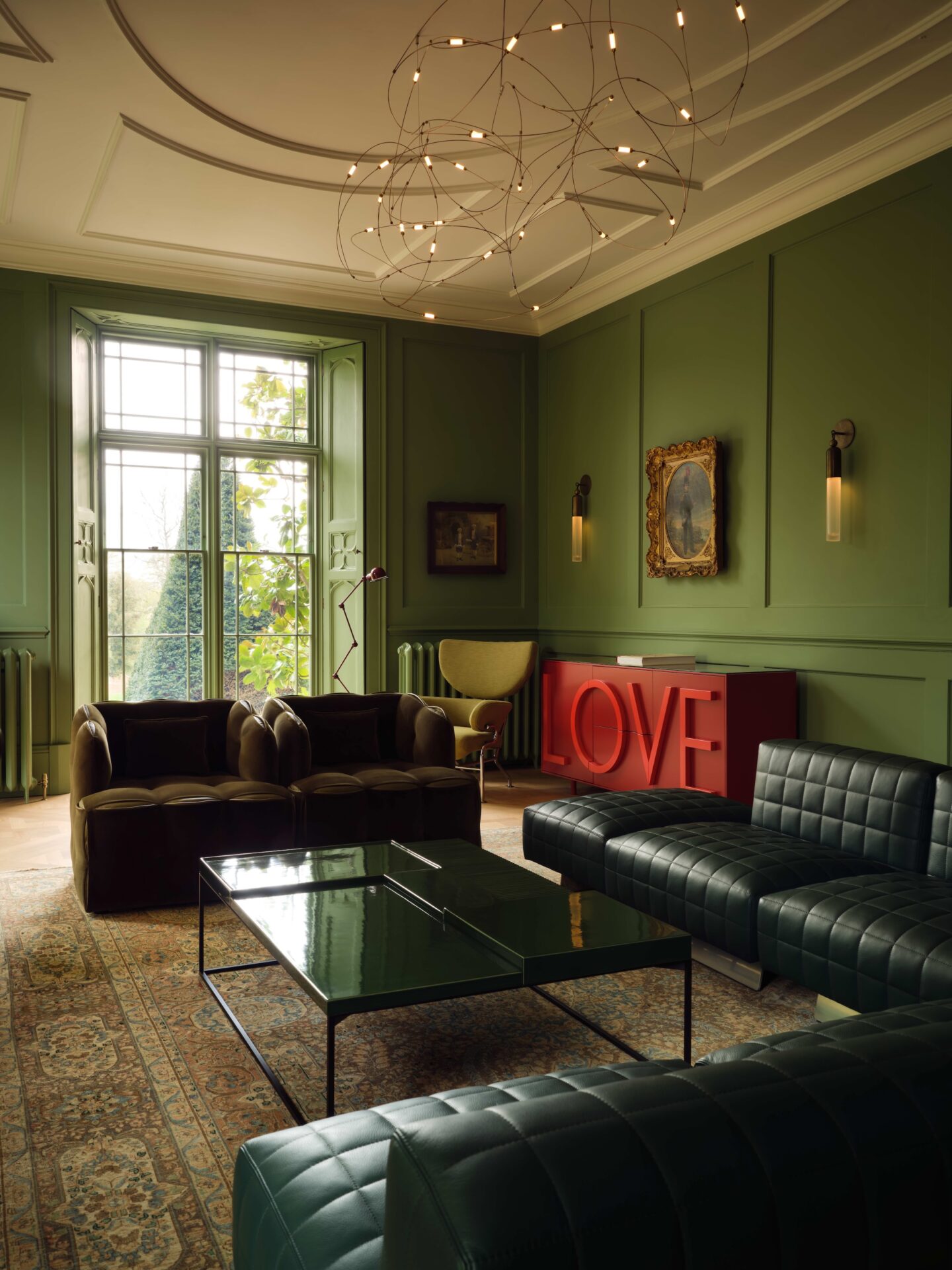
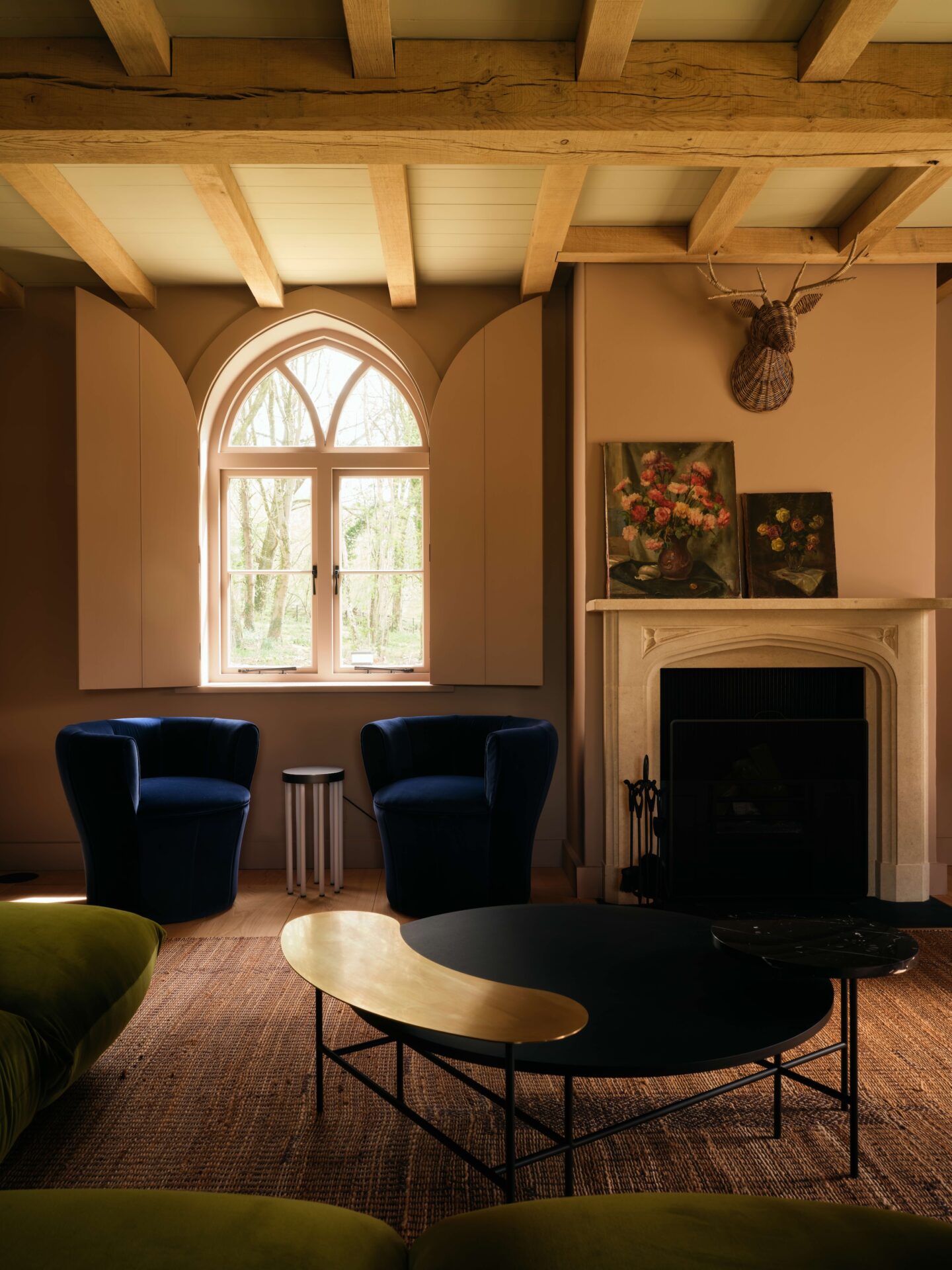
“In the cellar, we’ve created a sort of speakeasy bar and a cinema room… it’s very fun-oriented, which is quite different from, say, the very respectful treatment of the mahogany and oak staircase in the main hall,” says Parr. Roos brought in the contemporary furniture and lighting: in the main living area, there’s a Driade sideboard emblazoned with the word ‘love’ and Moooi’s Flock of Light pendant, an airy tangle of wire and tiny LEDs that stands in for a period chandelier. It all sits together remarkably well with the period plasterwork, gilt-framed paintings and gothic shutters with their quatrefoils and pointed arches.
“It’s very easy working with rooms that have those elegant proportions, and I’ve always found that Georgian Regency architecture takes contemporary things very well,” says Parr. “Because Karen is buying really high‑quality furniture by good designers, it sits inside those beautifully proportioned rooms incredibly well.”
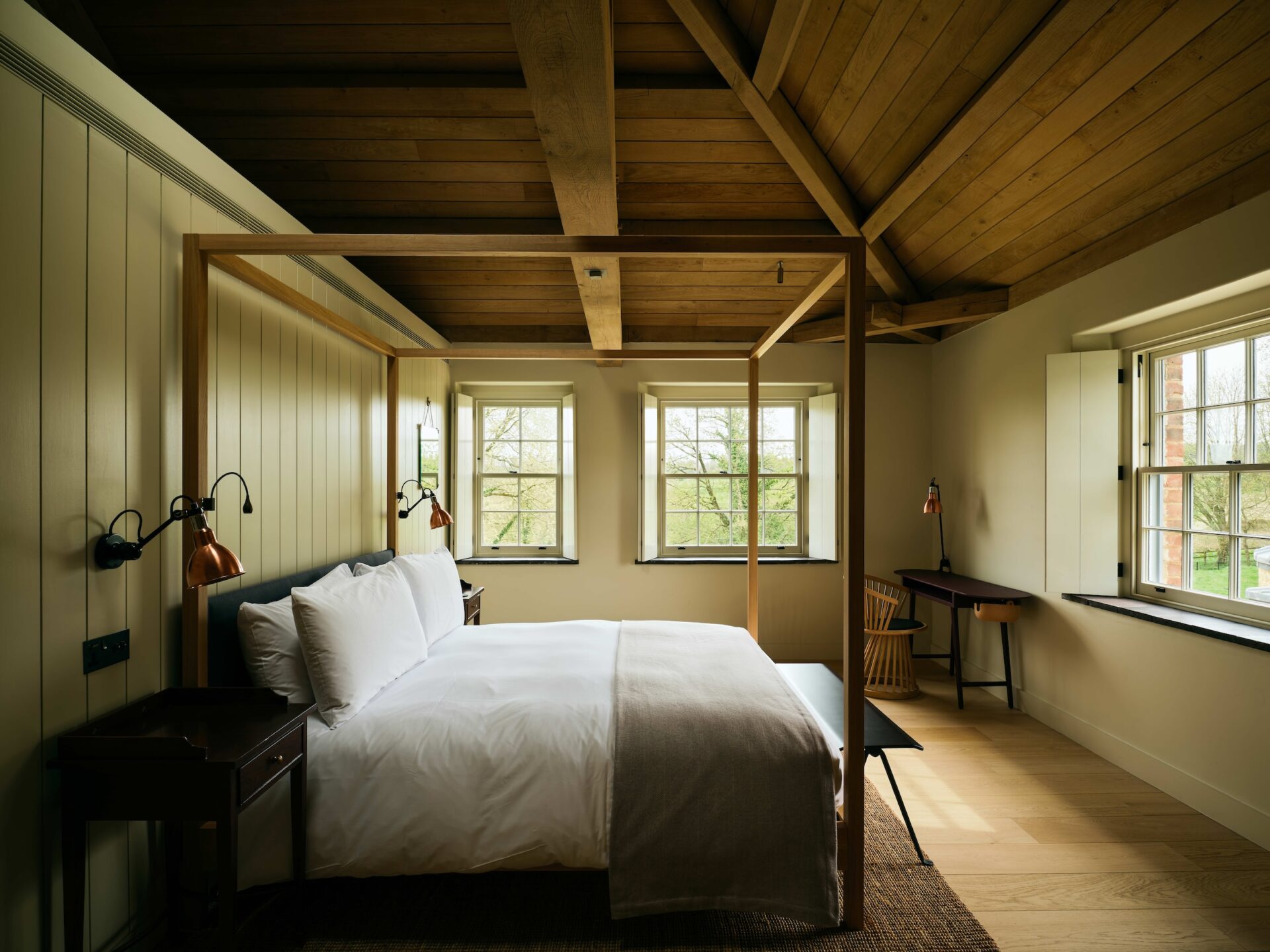
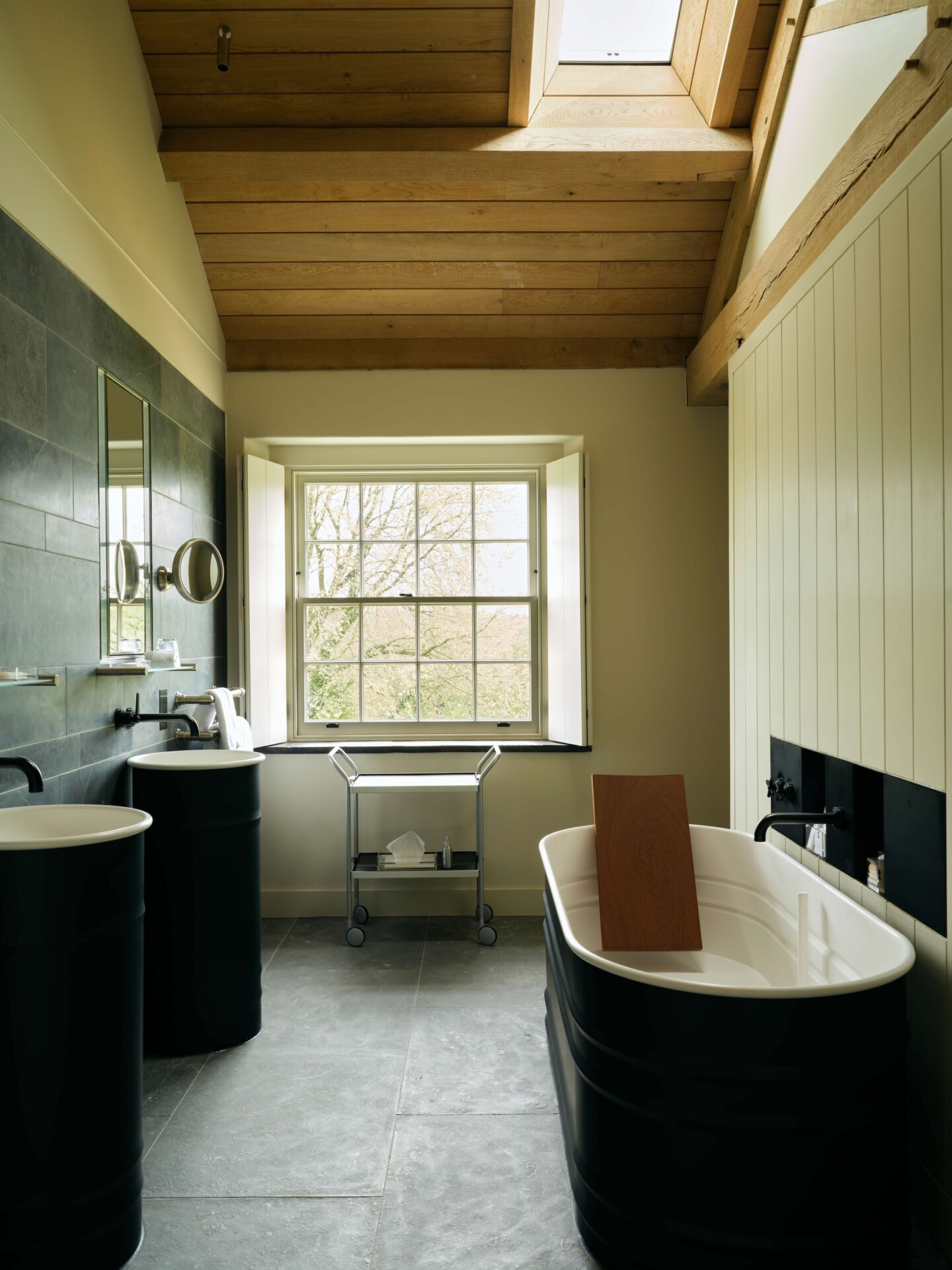
With their humbler beginnings and smaller size, the Coach House and the Cottage in the Wall have received a more rustic, cosier treatment. The beds may still be four-posters, but they are of a simple timber design, while ironwork, exposed stone walls and timber ceiling trusses lend these spaces material authenticity and warmth. “It is a contemporary version of the sort of materials that would have been used in the 19th century,” says Parr.
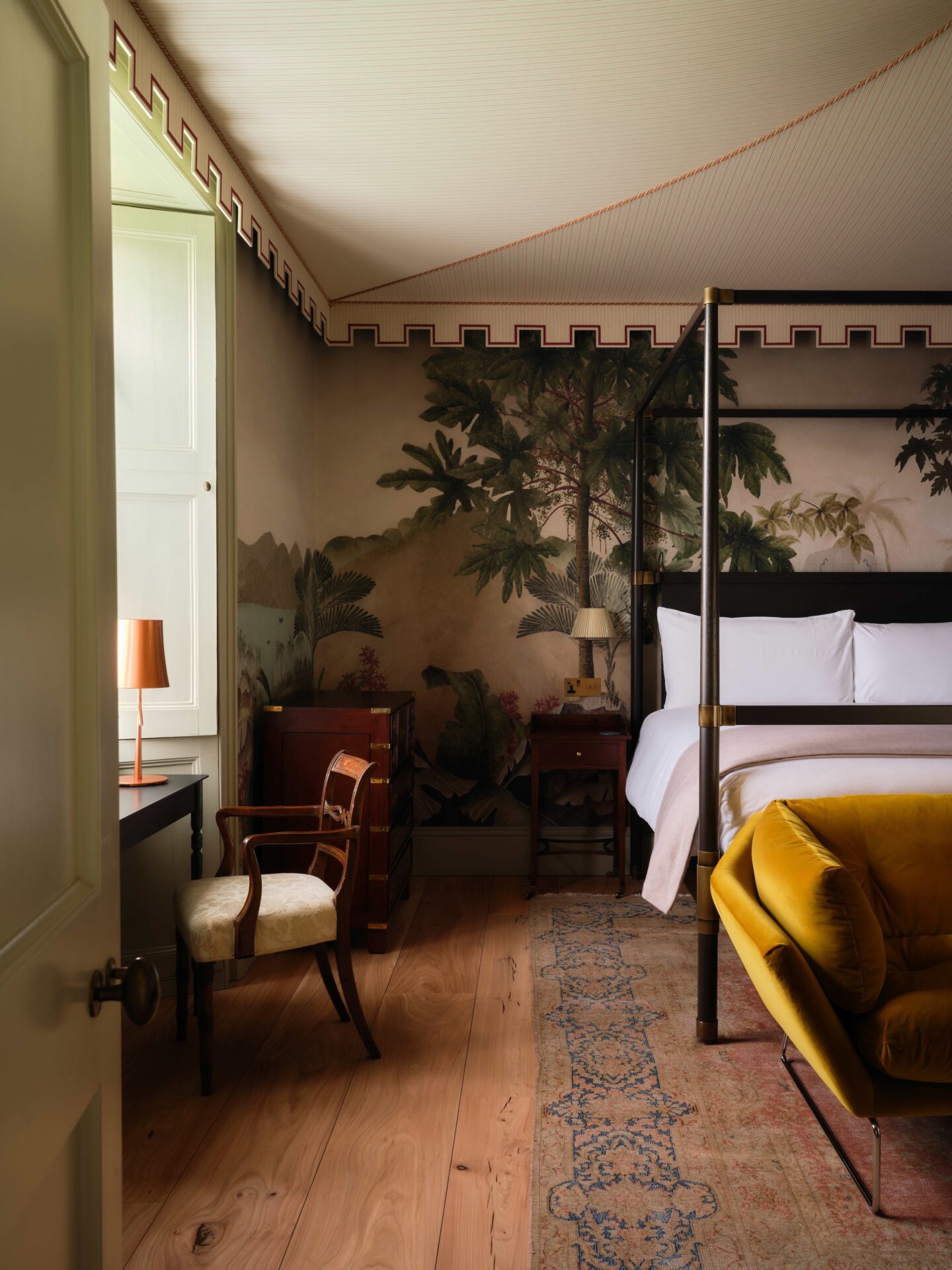
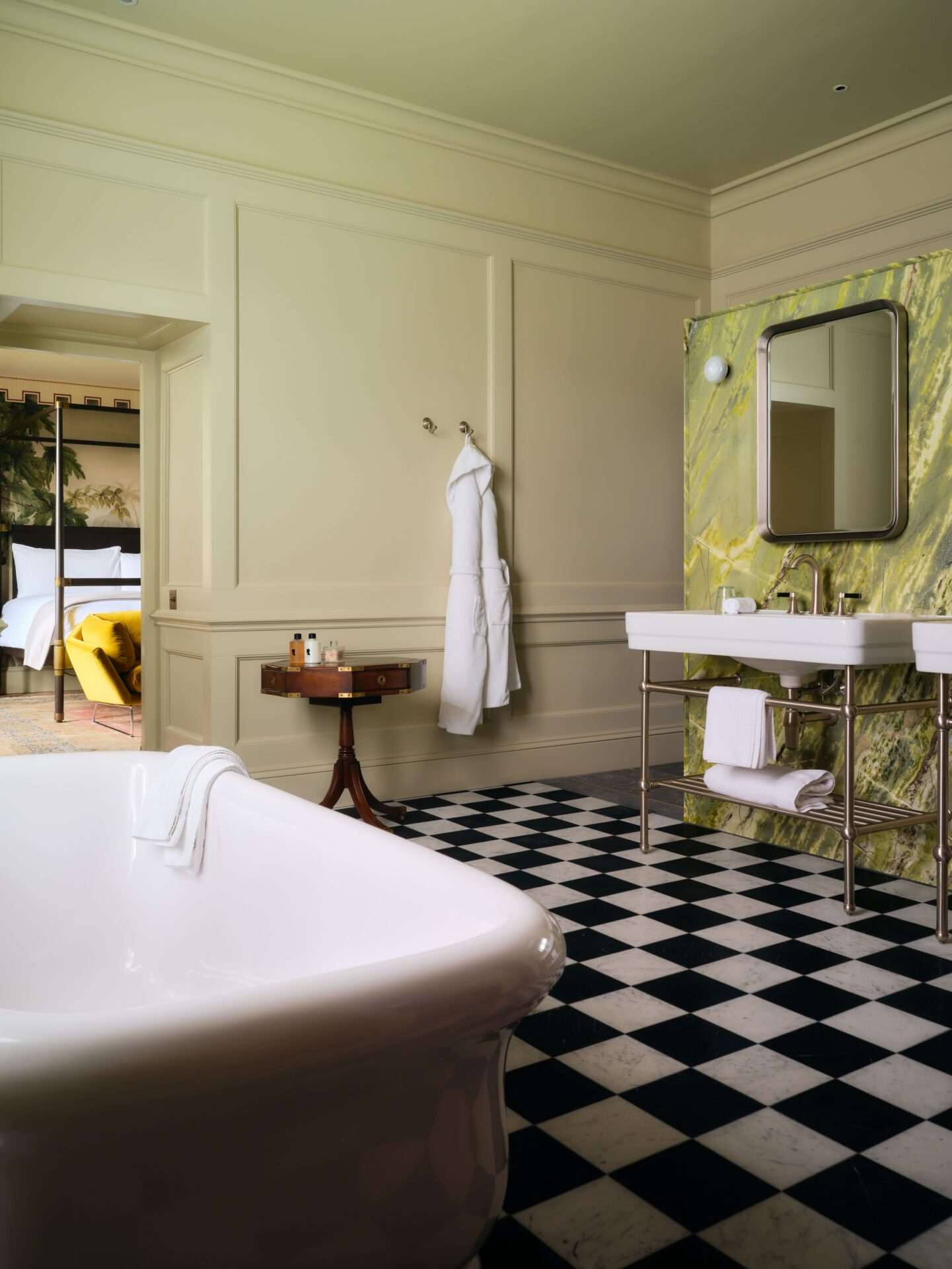
Specialist craftspeople were brought in to restore the buildings, including stonemasons and joiners, and Parr has praise in particular for the roofers: “The lead work is absolutely extraordinary. This is a complex building with lots of different roofs and falls, and that sort of quality is equivalent to a medieval cathedral. It’s just beautifully done.”
The Lodge was last restored in the 1980s “but it was never really a deep-dive restoration,” says Parr, “more like creating a veneer of nostalgia than taking it back to the core. Whereas my thinking is, ‘how are we going to make this building last another 100 years?'” Where original skirting and cornicing survived, they were replicated and repeated; flimsy ply door casements were replaced by hardwood versions of much higher quality. “It was a soft-touch but sensitive restoration, in as much as we didn’t radically change a lot.”
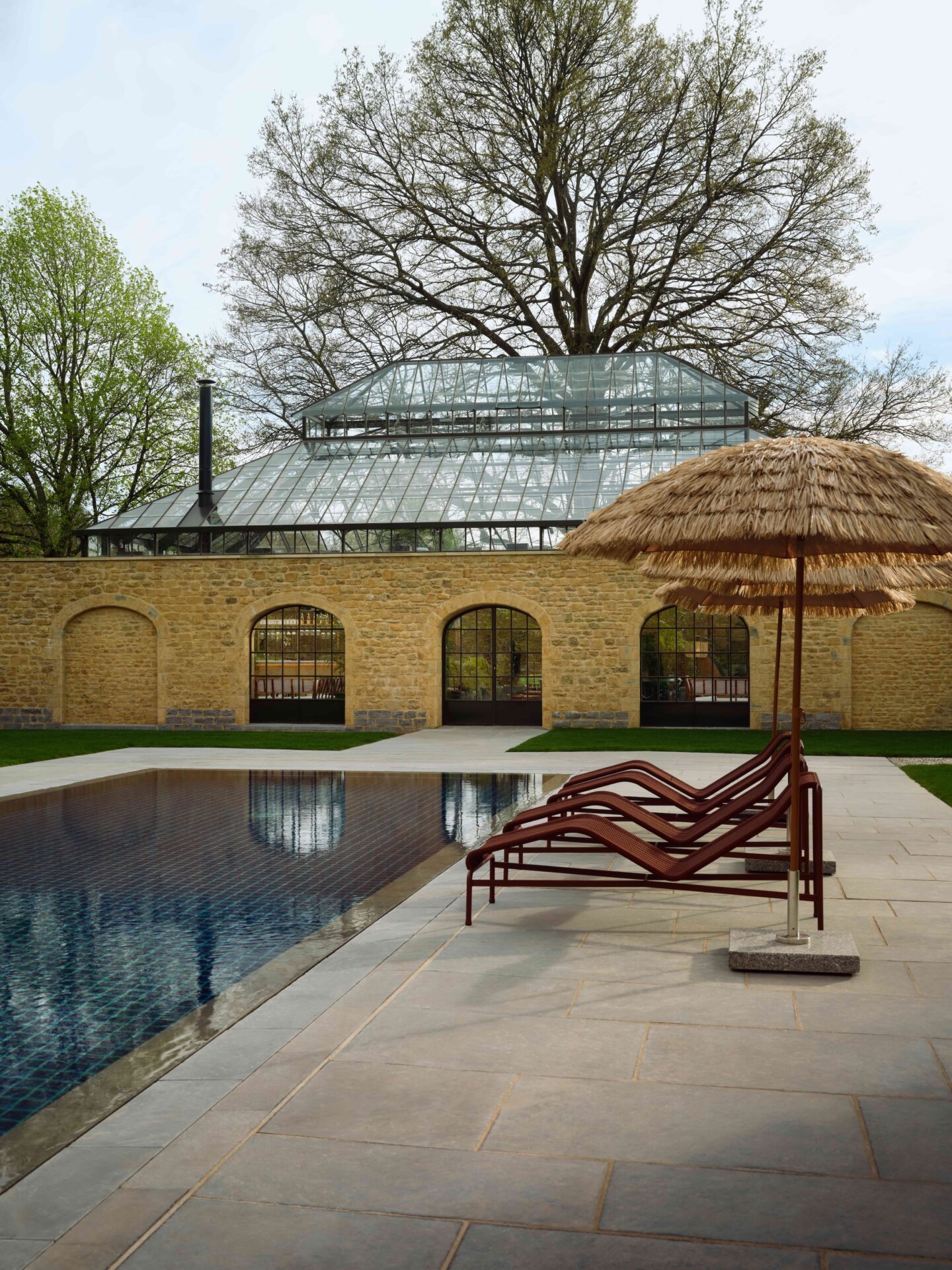
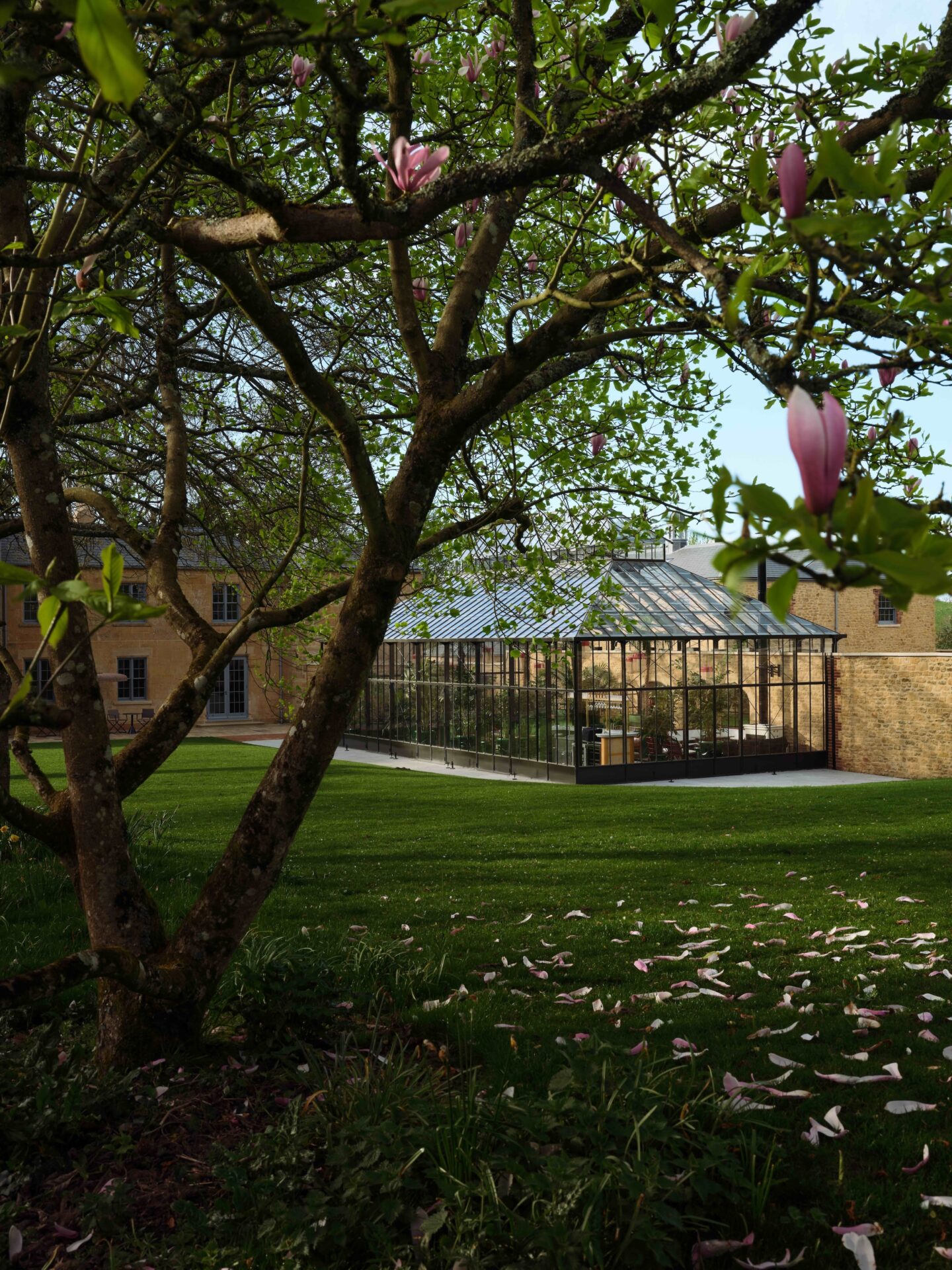
Outside, there is a pool connected to a new ‘grotto’ with a spa area, while the 1980s orangery that was once part of the house has been replaced with a freestanding winter garden glasshouse that can be used for anything from long lunches to yoga sessions.
It’s very easy working with rooms that have those elegant proportions, and I’ve always found that Georgian Regency architecture takes contemporary things very well
Parr’s work at The Newt for Roos and Bekker continues as their rural Somerset empire expands. He says that – apart from getting on really well with them, the first rule of a successful architect-client partnership – “the development of these projects is really interesting, because they inject their personality and their taste into everything, which is sort of the opposite to a lot of corporate hotels. It’s got a uniqueness that just makes it really exciting.
“Some of the things they ask me to do are really quirky. They may not be the most logical or the most sensible things to do, but I can work with all the things they throw at me, and I really enjoy that personal input. I’m not one of those architects who is precious about imposing my view on everything, but I do stand firm on the things I really believe in.”