An Urban Shelter
Daytrip Studio transforms a once-confused complex of offices into a charming workplace sanctuary, balancing the historic fabric with contemporary craft and character
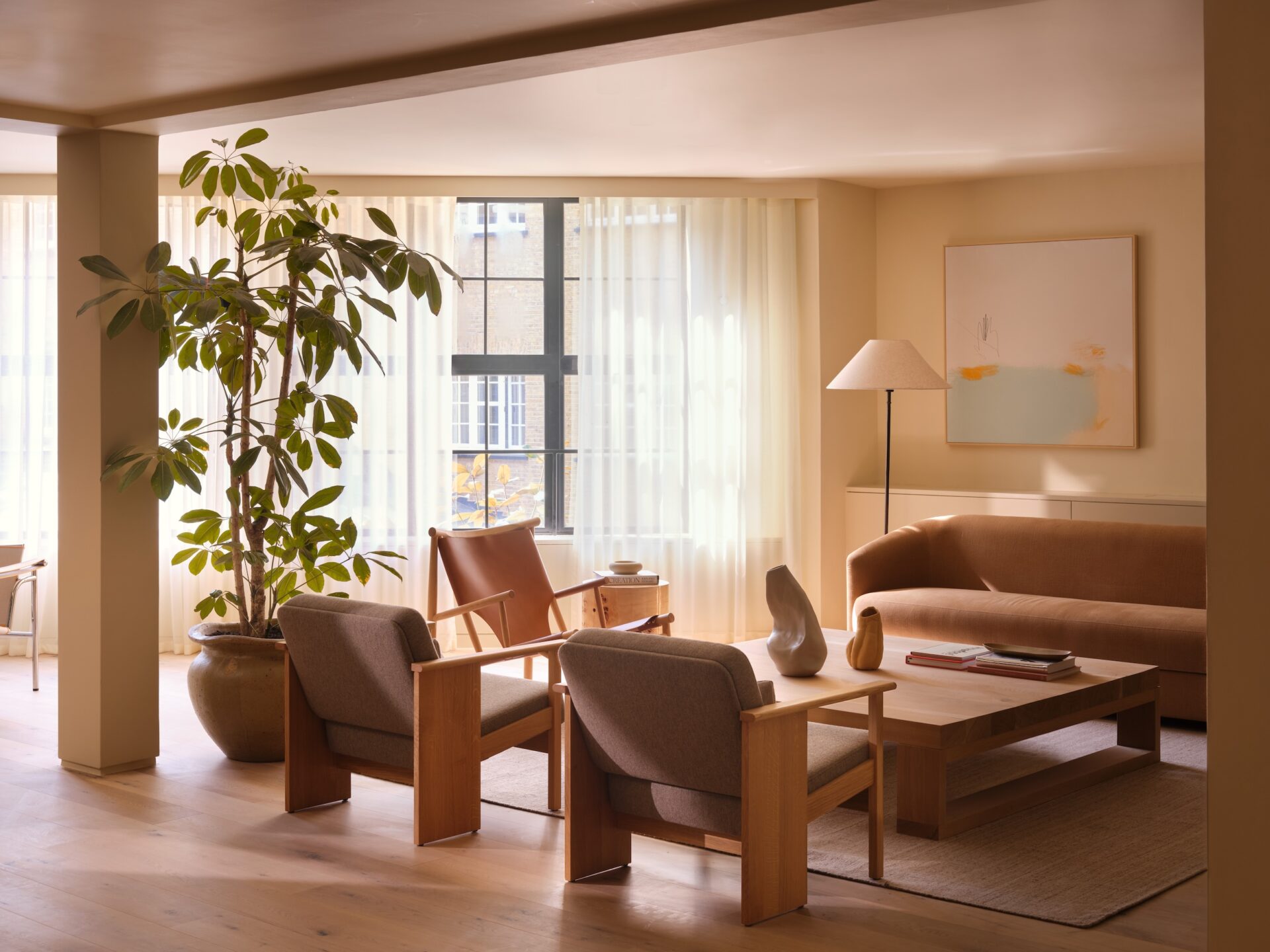
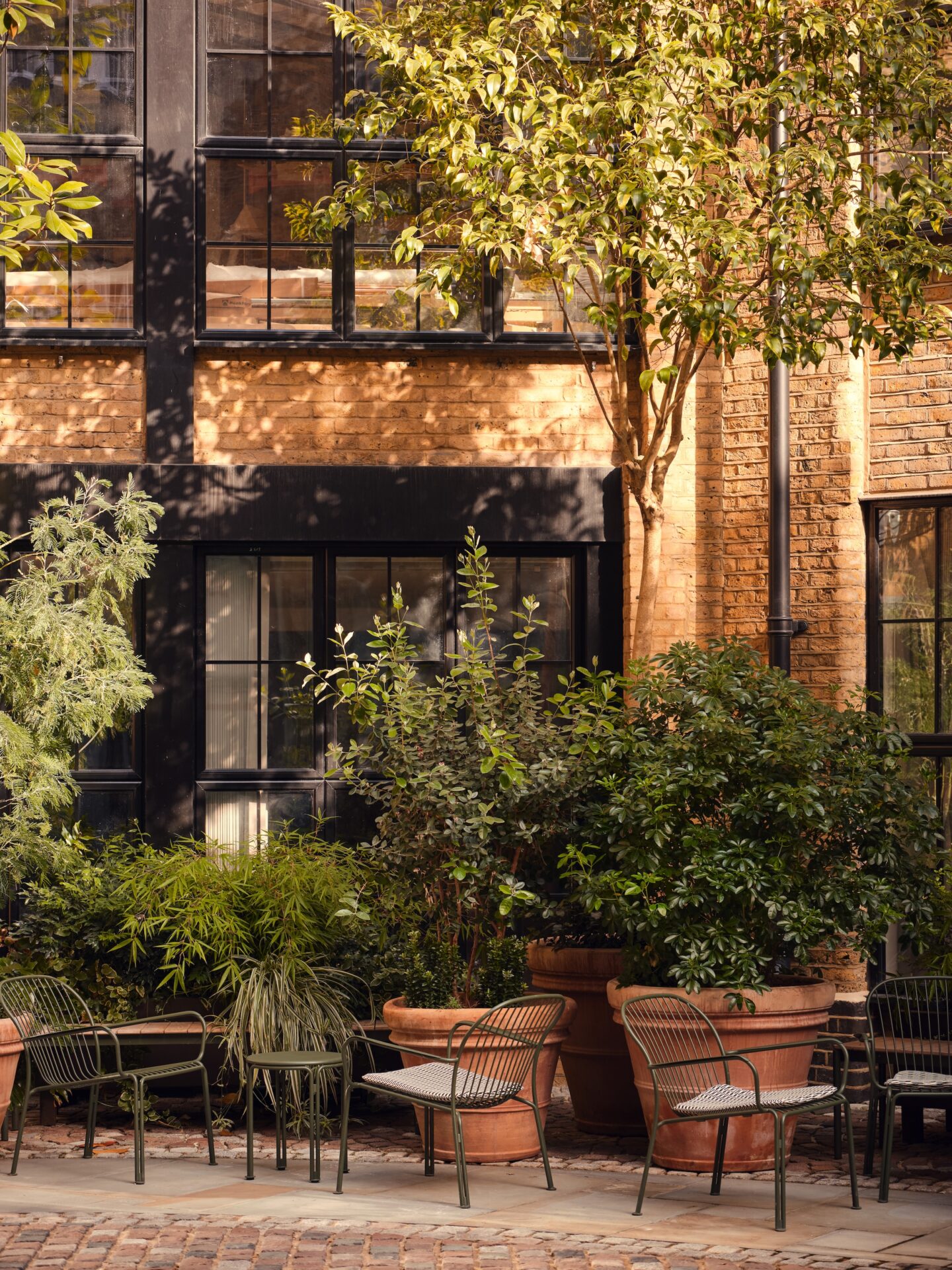
The name ‘Cloisters’ seems apt for this workplace development near London’s Old Street. Not only is it based around four buildings set around a secluded courtyard, which creates a delightful enclave away from the busy street, but the interiors by Daytrip Studio also have a gentle quality that provide calm and balance.
It wasn’t always like this. Daytrip’s co-founder Emily Potter describes the interiors in their previous incarnation as “a kind of Frankenstein space where no one had taken the creative lead. It felt a bit like a hospital – there were giant metal partitions, with lino and trunking everywhere. Bit by bit, we took it back to its original shell, and tried to reveal everything.”
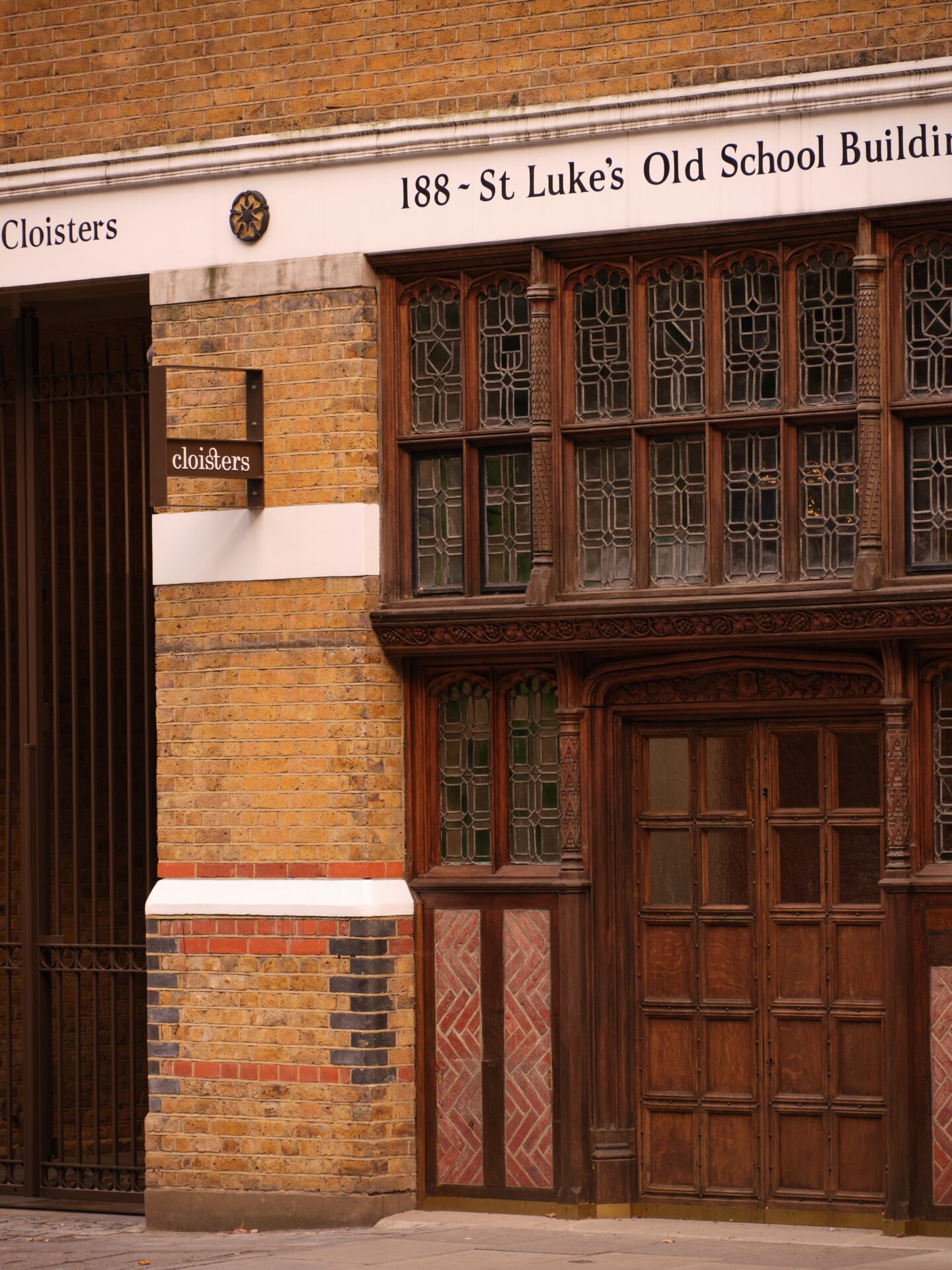
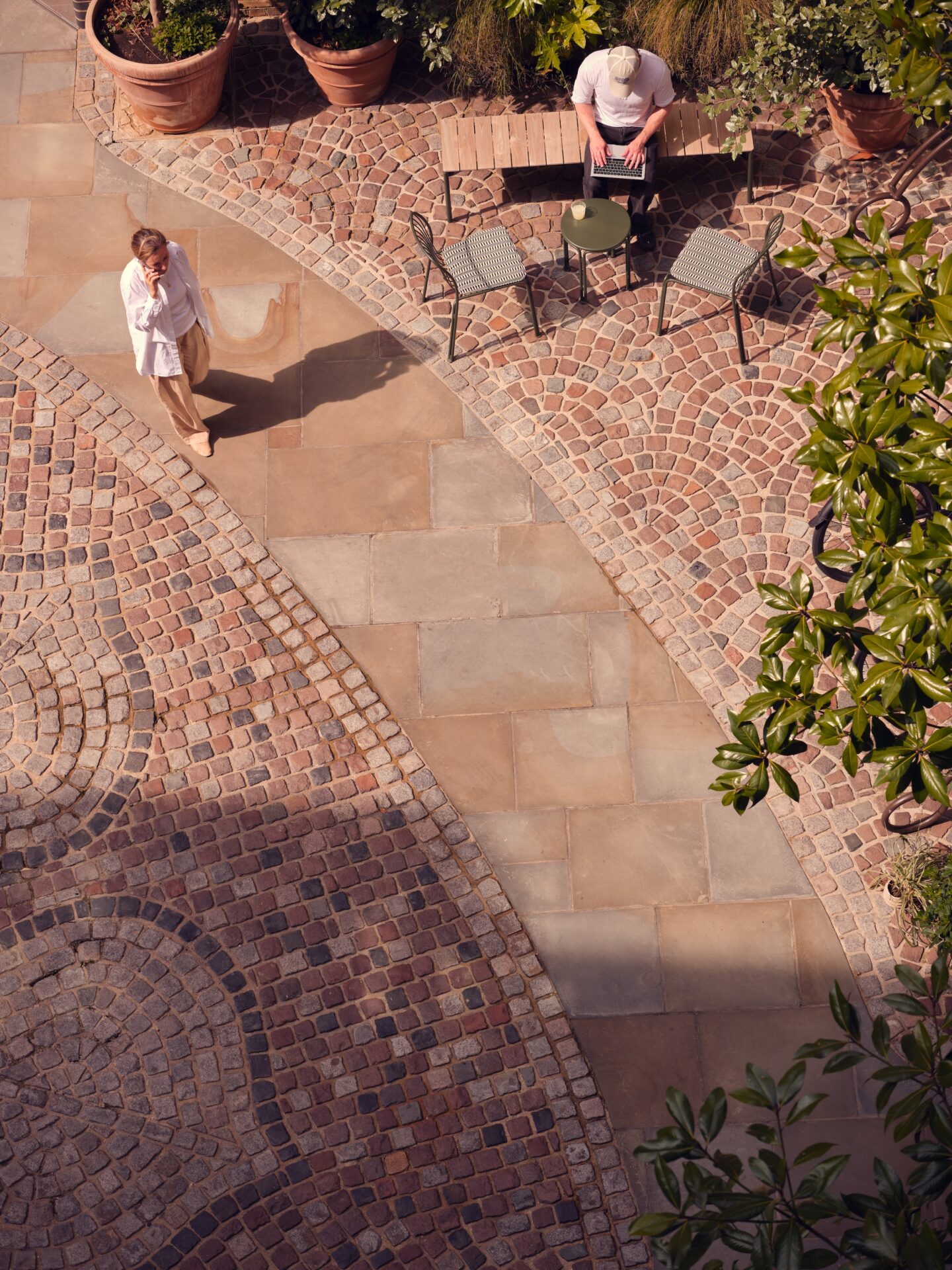
A lot has changed in workplace design since these Victorian industrial buildings were last refurbished in the 1990s. Community and wellbeing are now just as important as productivity, and expectations are high that the office will almost play a nurturing role, as well as being beautiful and functional. Good design is essential to this outlook, and phase one of Cloisters has seen Daytrip set out a whole new direction for the development, with work on the communal areas (entrance, reception and circulation spaces) as well as the speculative fit-out some of the office space, to entice potential tenants.
Because all the windows look on to this lovely courtyard, we wanted that to be the real draw
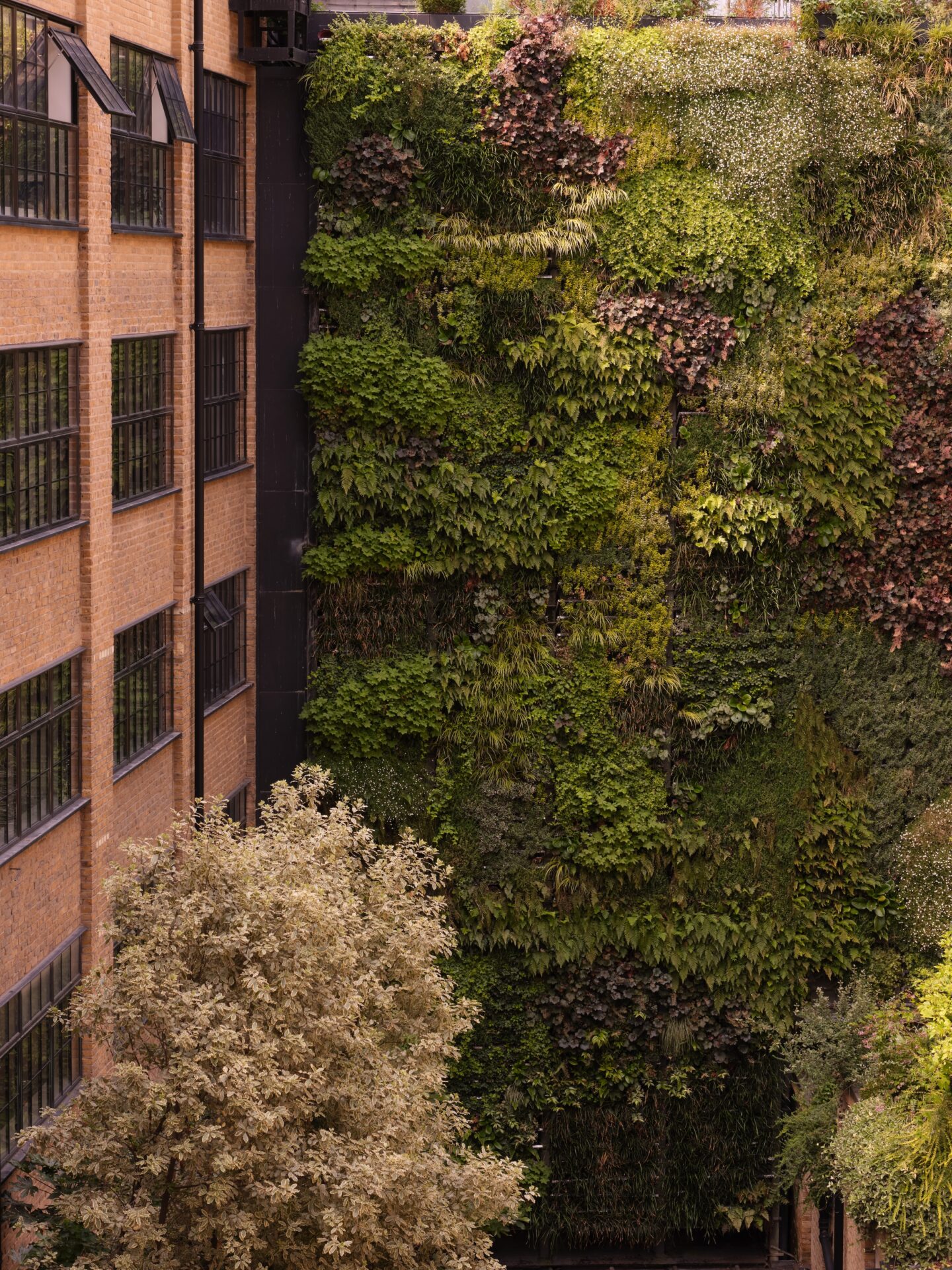
Visitors are greeted in the courtyard by a towering living wall by Conservatory Archives (one of London’s largest), immediately offering a calm connection to nature – Potter describes feeling “like I’m magically somewhere else” when she walks into this sheltered spot.
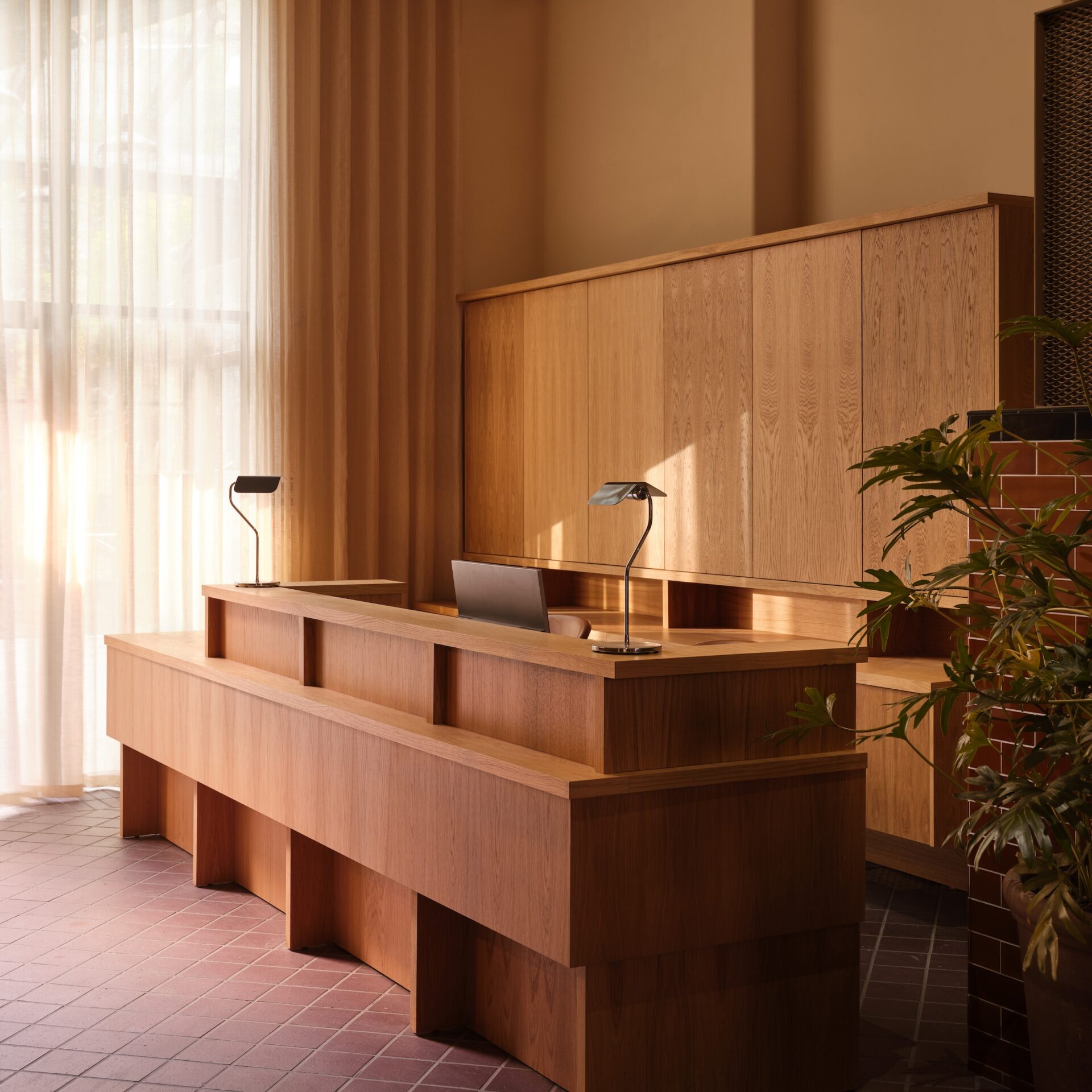
To preserve that magic, the reception area has been conceived as transition space between inside and out, with a quarry-tiled floor and exposed brick walls, plus a bespoke oak reception desk that also has an architectural rhythm to it.
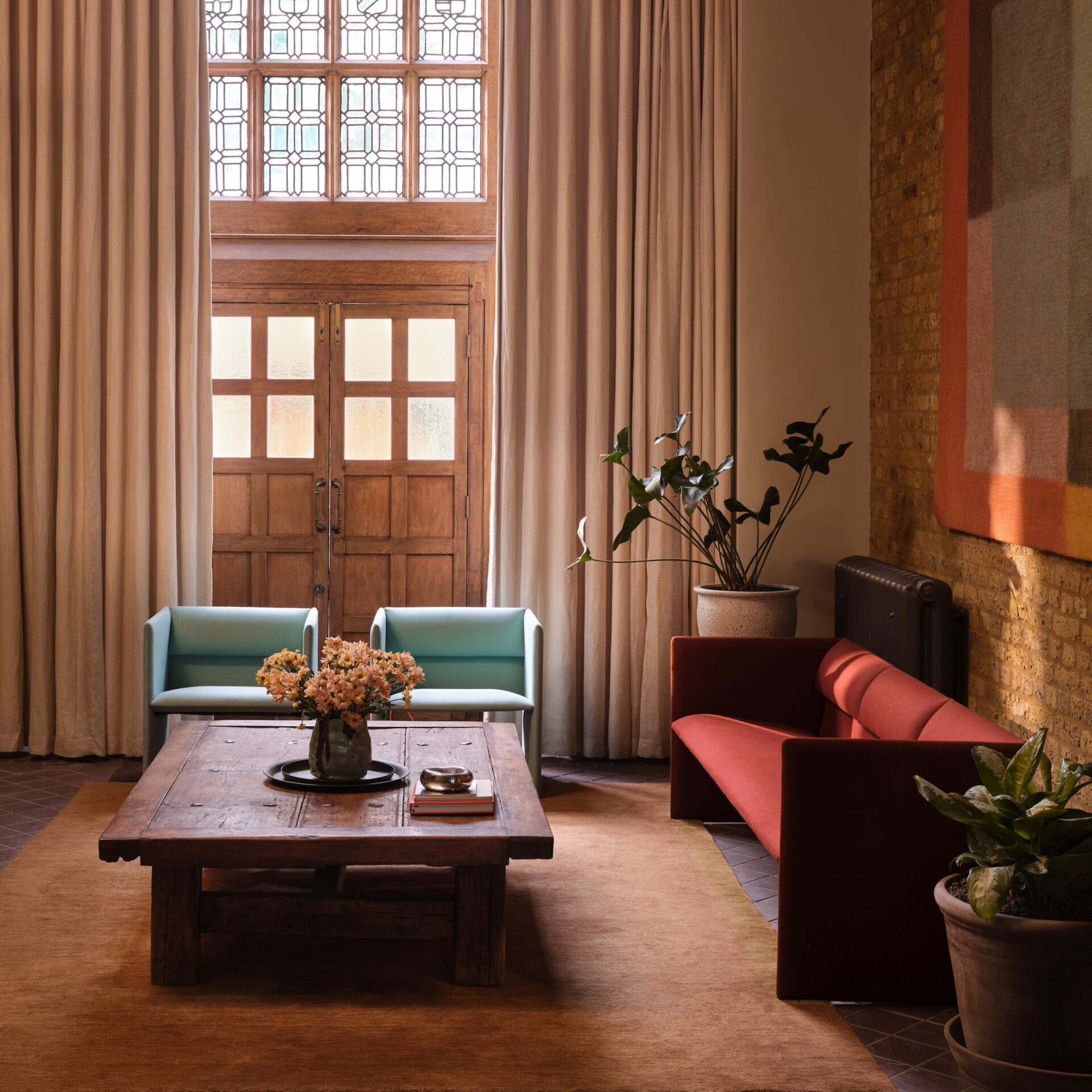
The entrance here has a period timber door with twinkling aqua-toned stained glass above it, which provided the colour inspiration for the palette within. A pair of Resident’s Sasha chairs (designed by Philippe Malouin) in the same shade sit next to this wall of oak and glass, complemented by a Sasha sofa in contrasting terracotta; above the sofa, a felt wall hanging (actually a rug, by Peace Industry) acts as a beautifully crafted acoustic dampener while bringing the earthier elements of the palette together.
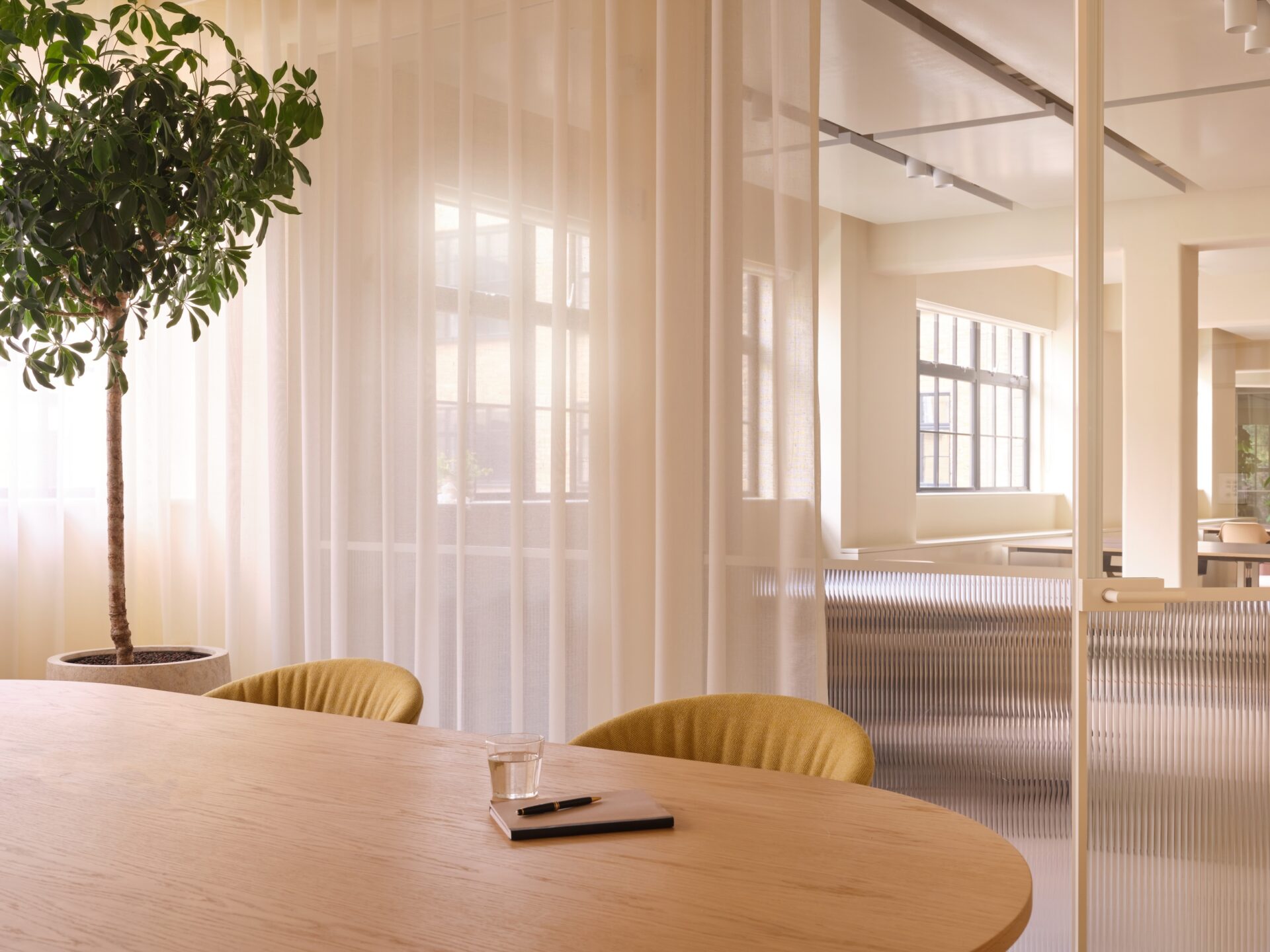
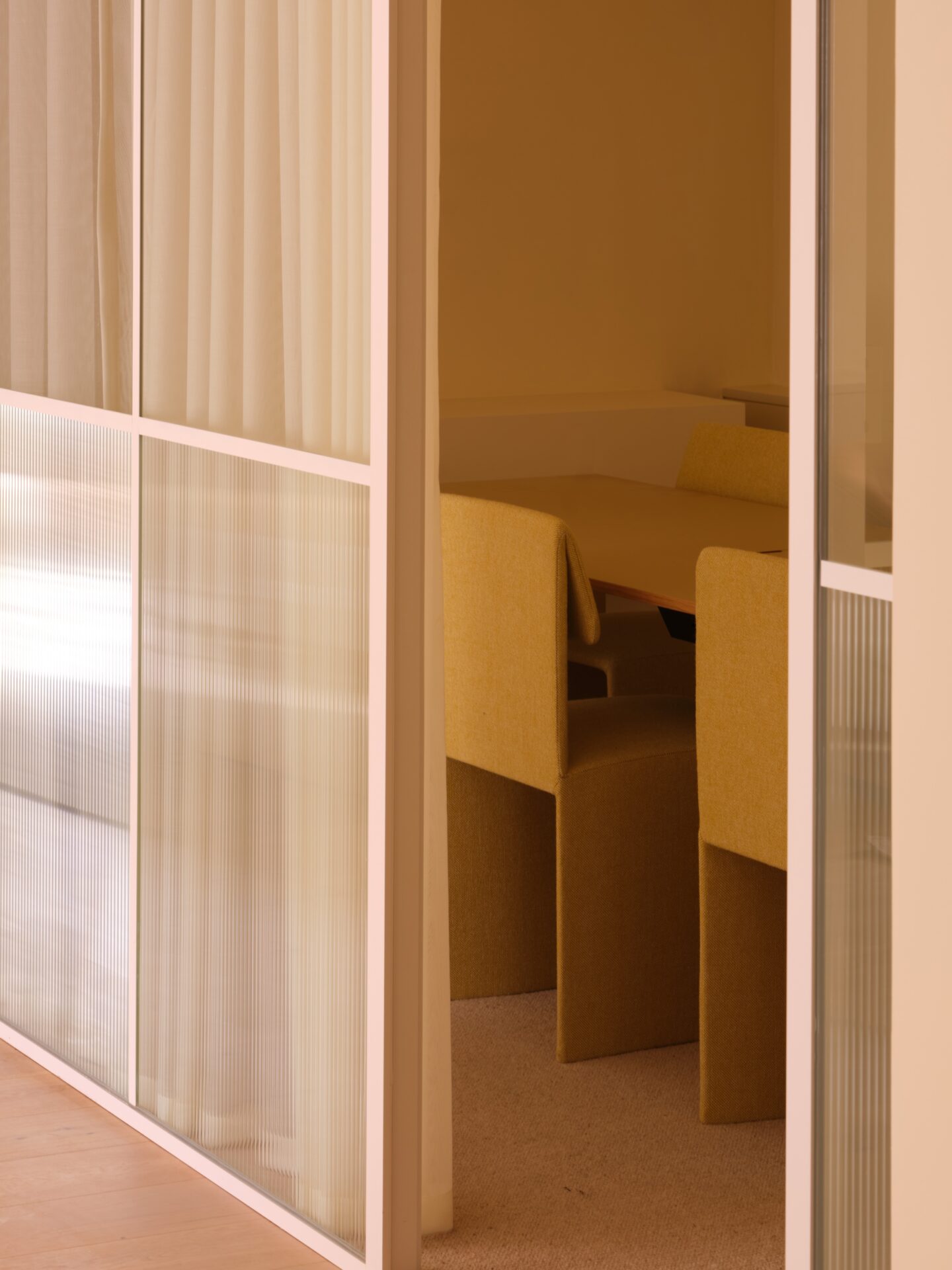
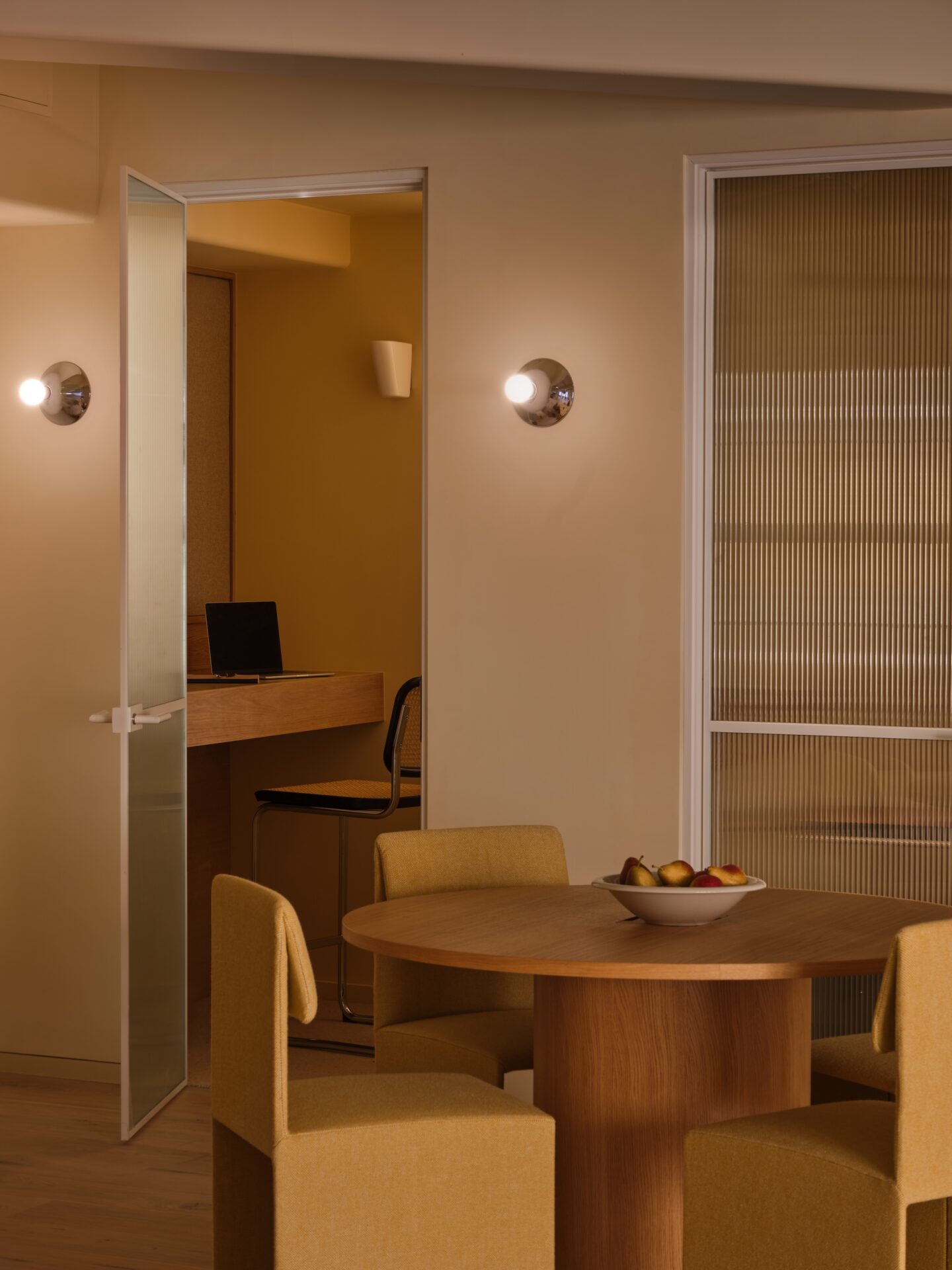
In Cloisters’ main office spaces, with all the strange partitions and visual clutter removed, what has emerged is a generous, light-filled interior. Daytrip Studio has amplified this feeling of lightness with off-white Crittall-style screens, oak joinery and diaphanous curtains, creating a diffused, tranquil atmosphere. “Because all the windows look on to this lovely courtyard, we wanted that to be the real draw, but the sheer curtains and nice blinds do add a kind of gentle glow to the scene,” says Potter.
Together with the pale, putty-toned walls, it means that everything’s almost soft-focus – a contemplative atmosphere that speaks to the wellbeing aspect of the modern workplace.
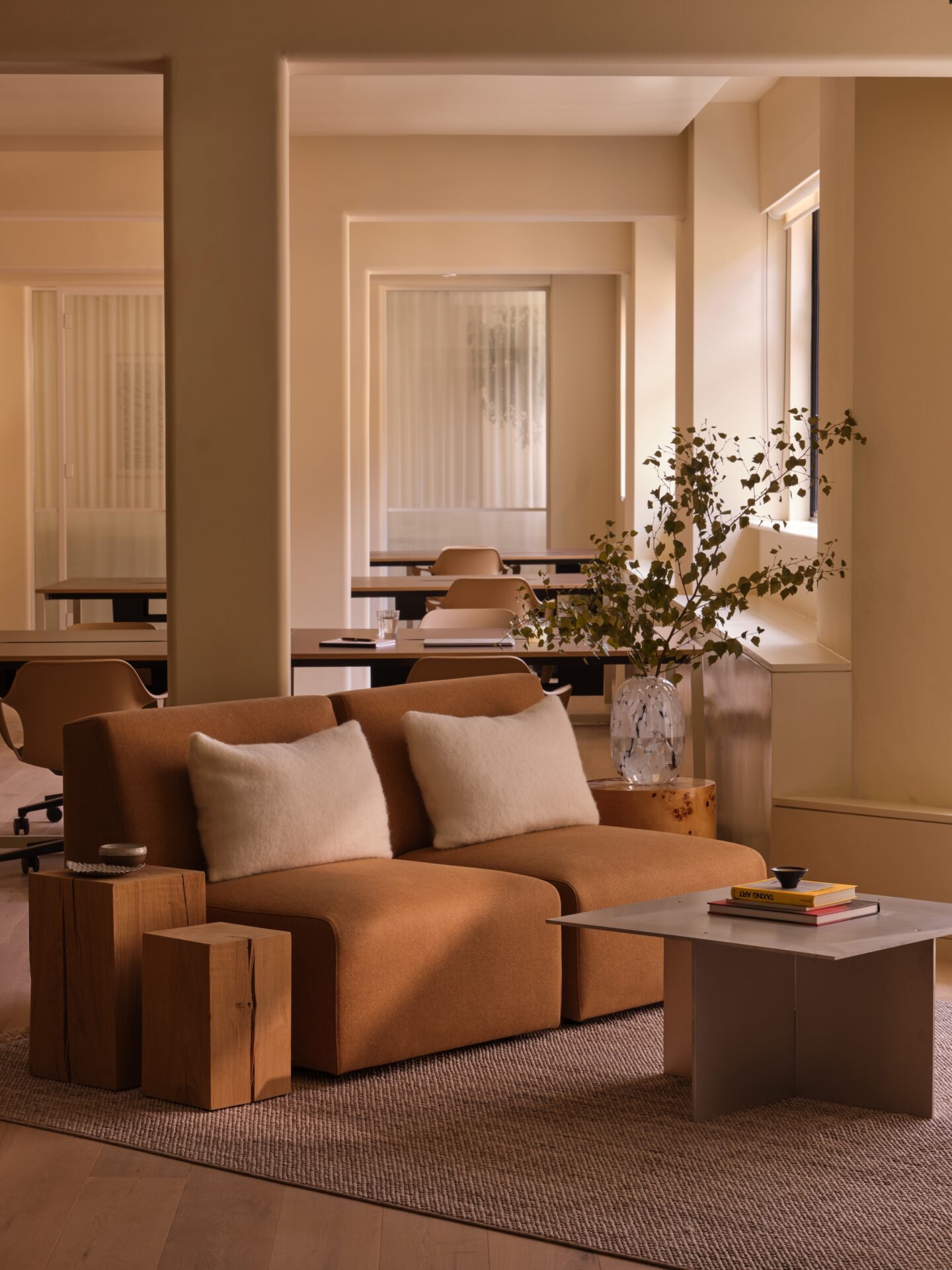
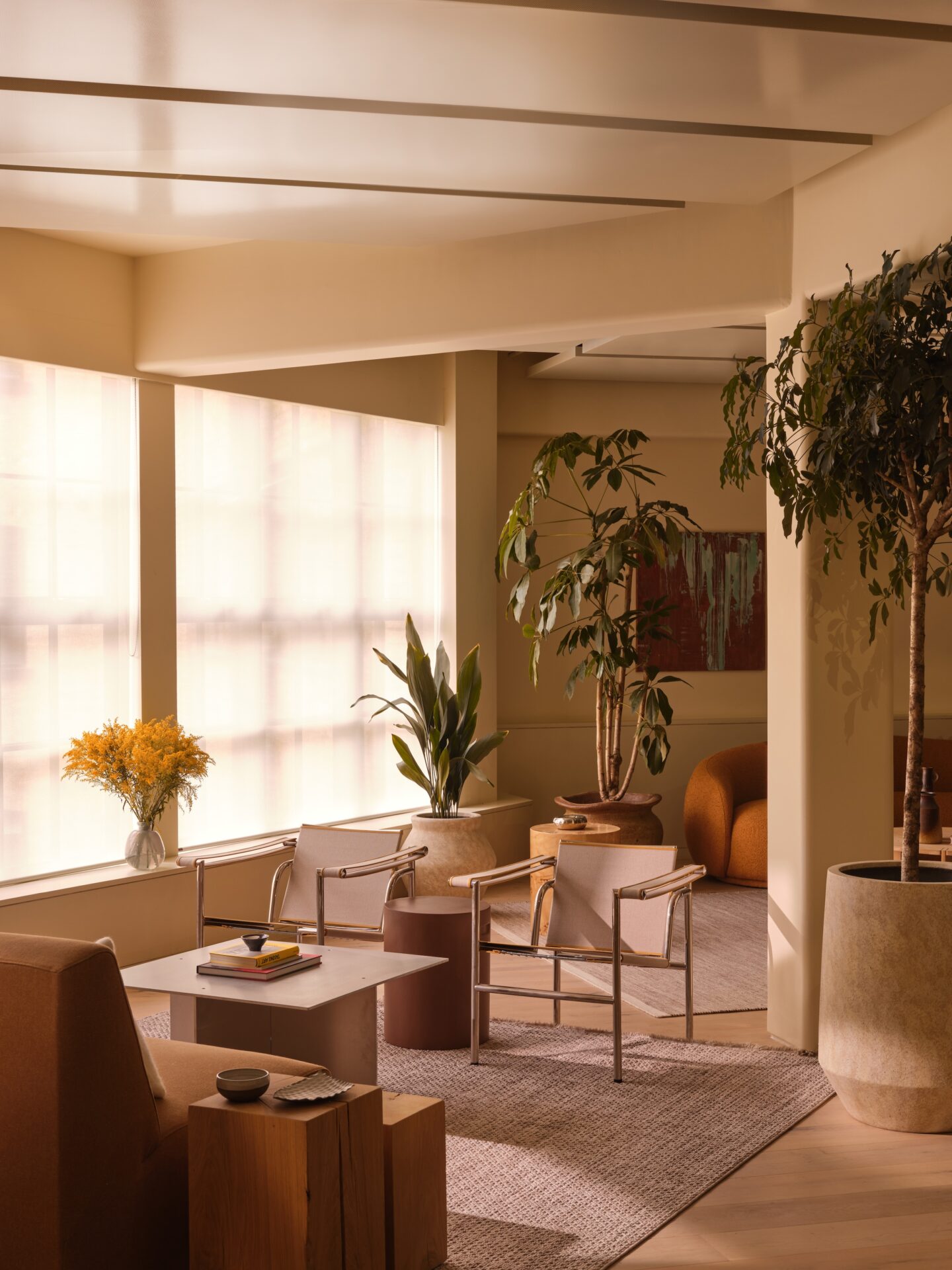
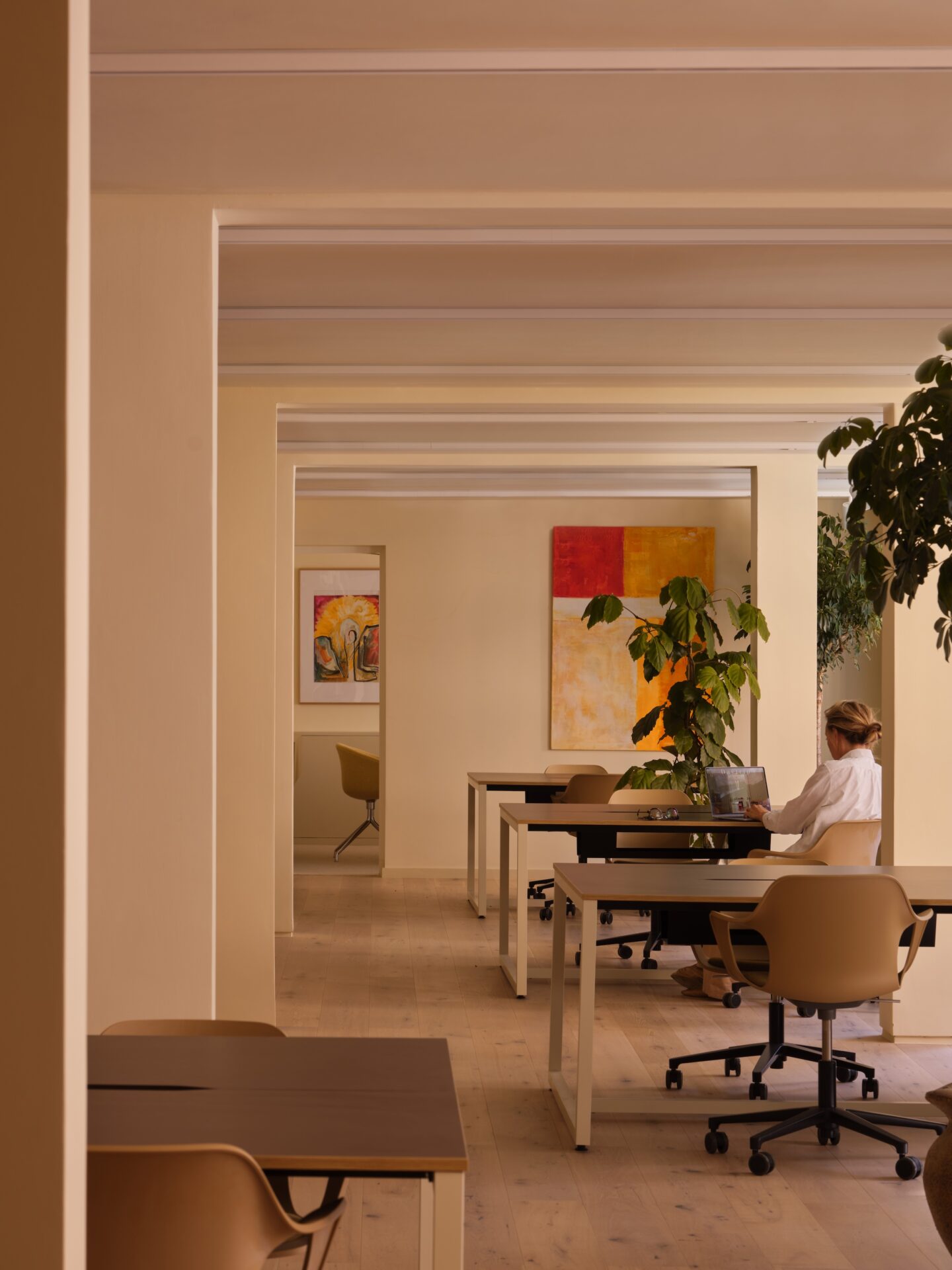
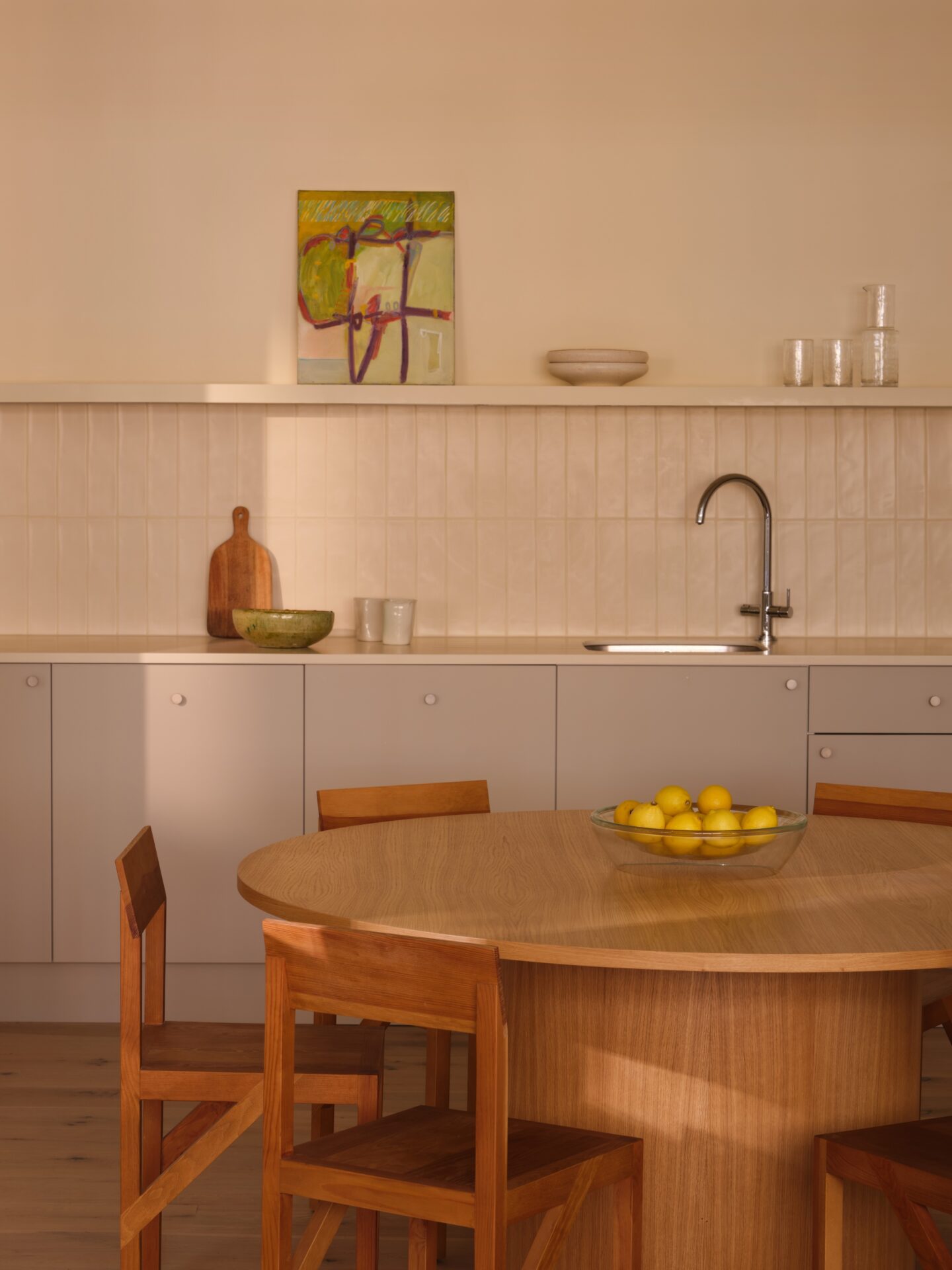
Daytrip Studio developed a desk design with Rawside Furniture that feels a cut above the usual sea of white melamine, and they’ve been paired with Vitra’s Hal Re shell chairs, made from recycled plastic. A datum runs around the walls, concealing storage, cabling and AC in a clean, invisible way, while communal/breakout areas feel distinctly homely, with open shelving, sofas and chairs upholstered in cognac leather and burnt-orange bouclé, and Frama’s simple round Farmhouse table in the kitchen area.
Potter talks about how her client is a family-run company rather than a big developer, and how that has led to a more thoughtful and considered outcome for Cloisters. “They’ve gone gently and managed it carefully; the contractor is from more of a luxury residential background,” she explains, “and I think the results show, because there is a lot of care and attention that’s gone into it. It’s quite lovely, really.”


