A Good Conductor
Studio Multi and Tabitha Isobel create a richly layered workplace within Stratford’s new-build Coppermaker Square development
The lush palm courts of Europe’s grande dame hotels were the starting point for Conductor, a new co-working space in Stratford, east London. Still in its post-Olympics boom phase, the area isn’t short of freshly minted workplaces – but none of them has such a layered and atmospheric setting as this one, thanks to the vision of architect and lead designer Studio Multi and interior design practice Tabitha Isobel.
“Our client asked us to design a workplace that was very different to everything that was around – that part of Stratford has a lot of industrial-style workplaces,” says Studio Multi’s Nicola Rutt. Connector is part of a wider development, Coppermaker Square, that was formerly the site of the copper workshops that made components for locomotives, so when it came to the storytelling behind the design, it would have been easy to lean into a more industrial aesthetic. Instead, Studio Multi and Tabitha Isobel’s imaginations went to where those locomotives might have carried people – and instead, a scheme took shape that was inspired by the golden age of travel.
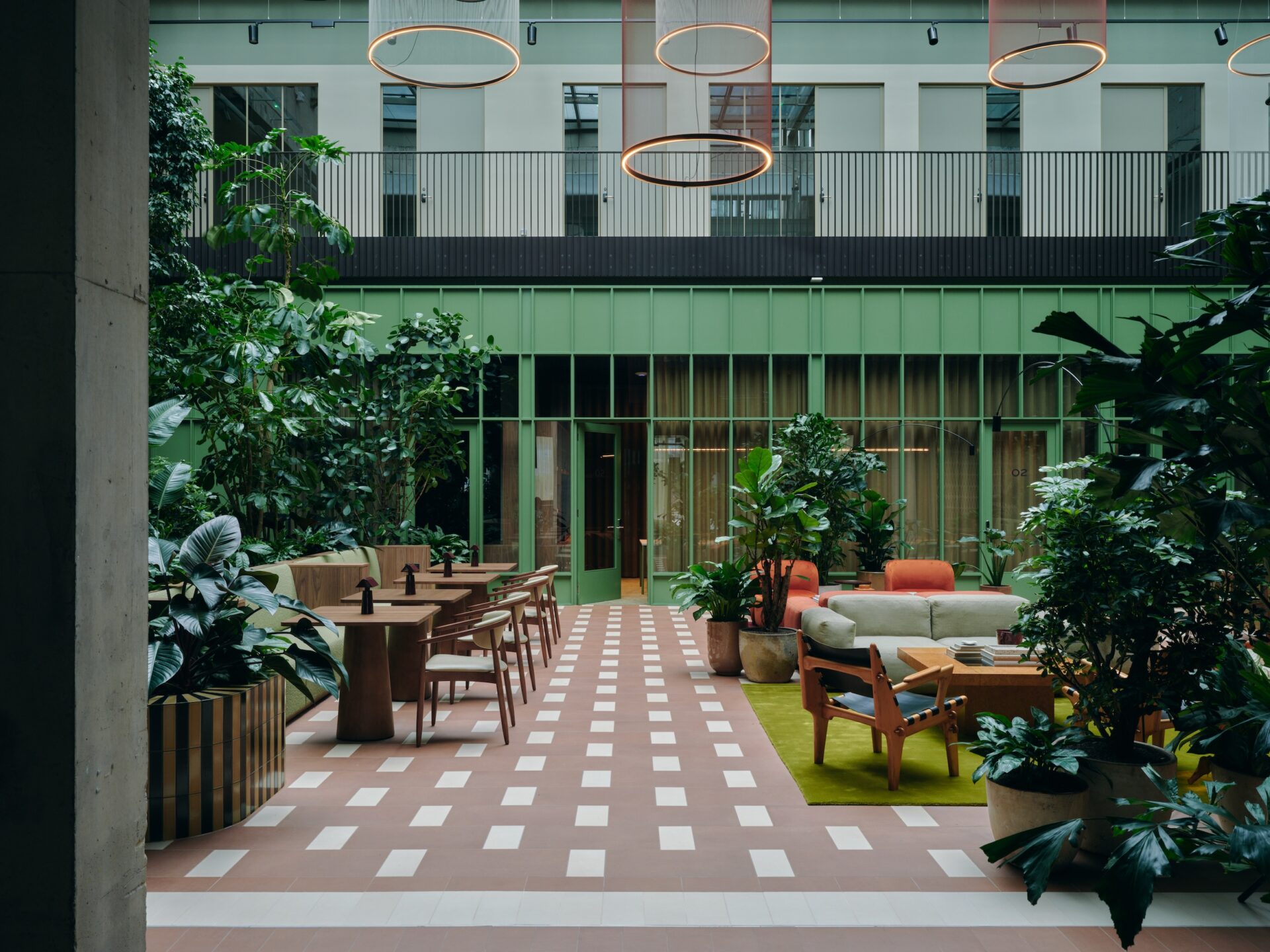
The concept also worked perfectly with the dramatic glass-topped atrium at the heart of the building, which felt like an oasis when you stepped off the busy road outside. To Rutt, it called to mind a Moroccan riad, a space that could literally be brought to life with a profusion of planting.
Studio Multi’s name comes from its multidisciplinary approach – “we like bringing in collaborators, so that each project gets the best expertise,” says Rutt – and so she worked with Bath-based To-studio for the landscaping side. “We wanted to turn everything up to 11: if we were going to do planting, we wanted to it to be big and immersive, so that it really became a focal point,” she continues.
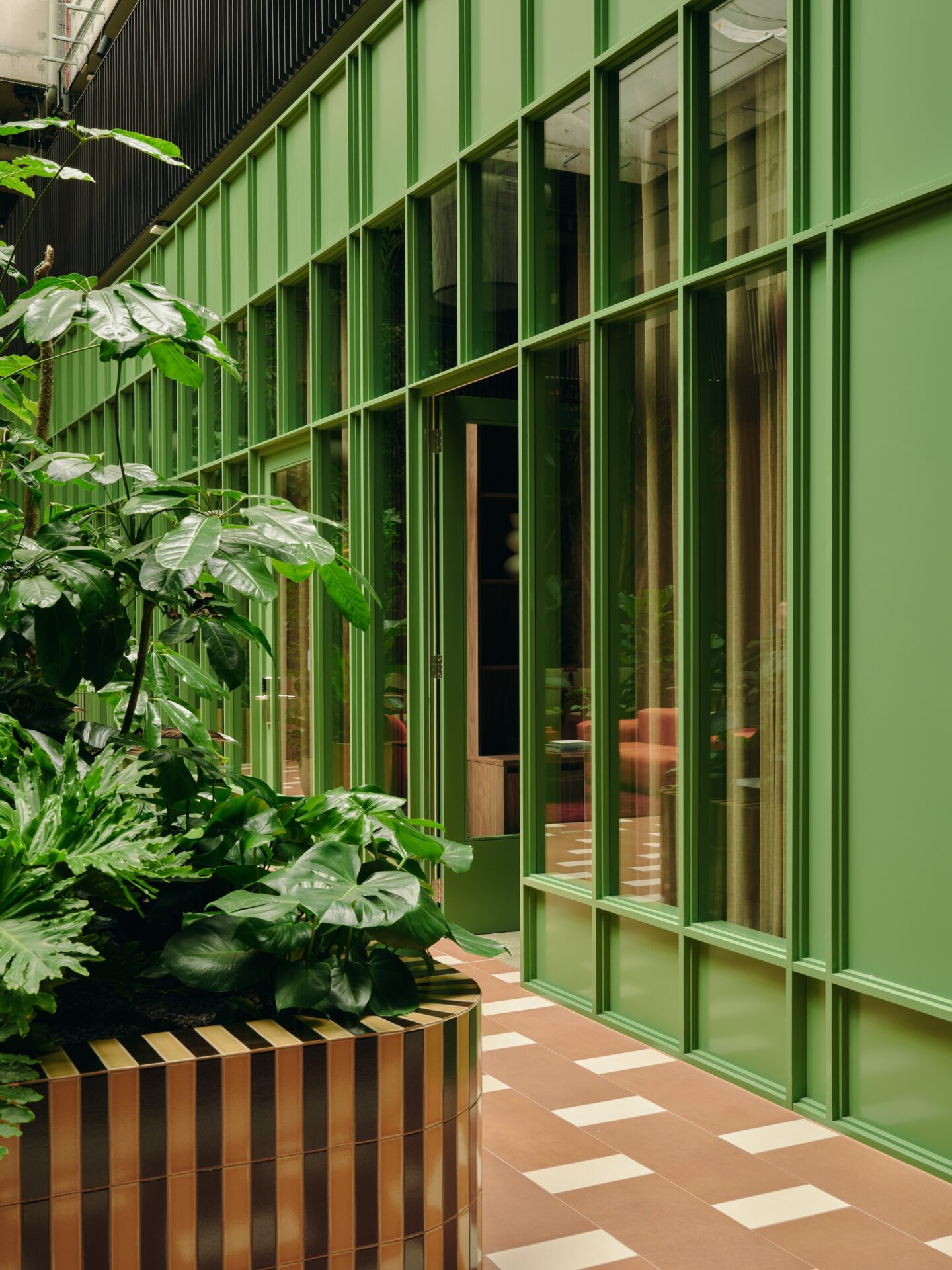
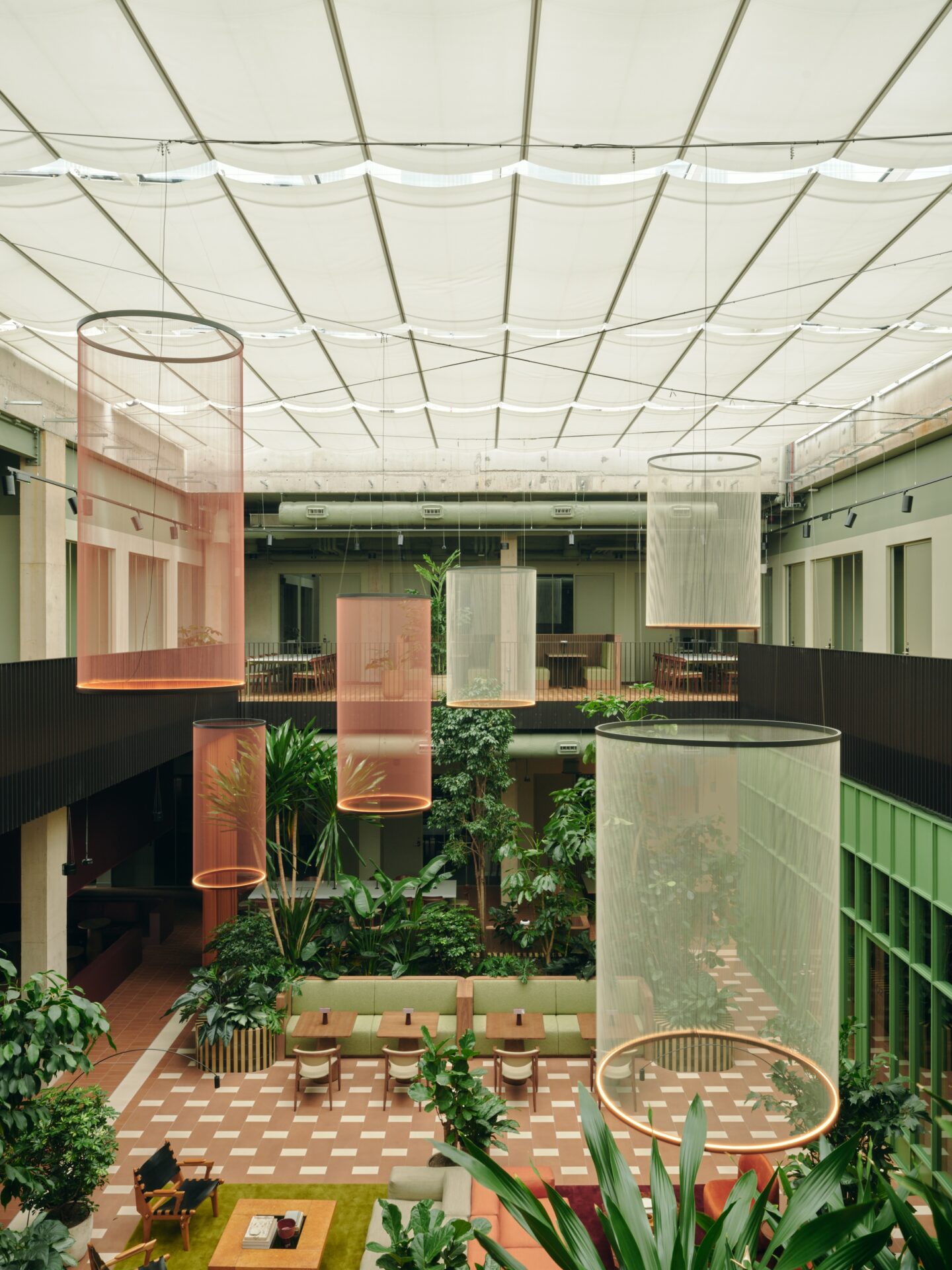
In the final scheme, the plants play a vital role, not just in establishing the atmosphere but breaking up the large space, with trees that rise up from behind banquette seating and smaller specimens set in curved planters clad in striped tiles. Tiles play an important role across the site, providing joyful pattern, delineating types of space and bringing a handcrafted feel, all while being incredibly hardwearing.
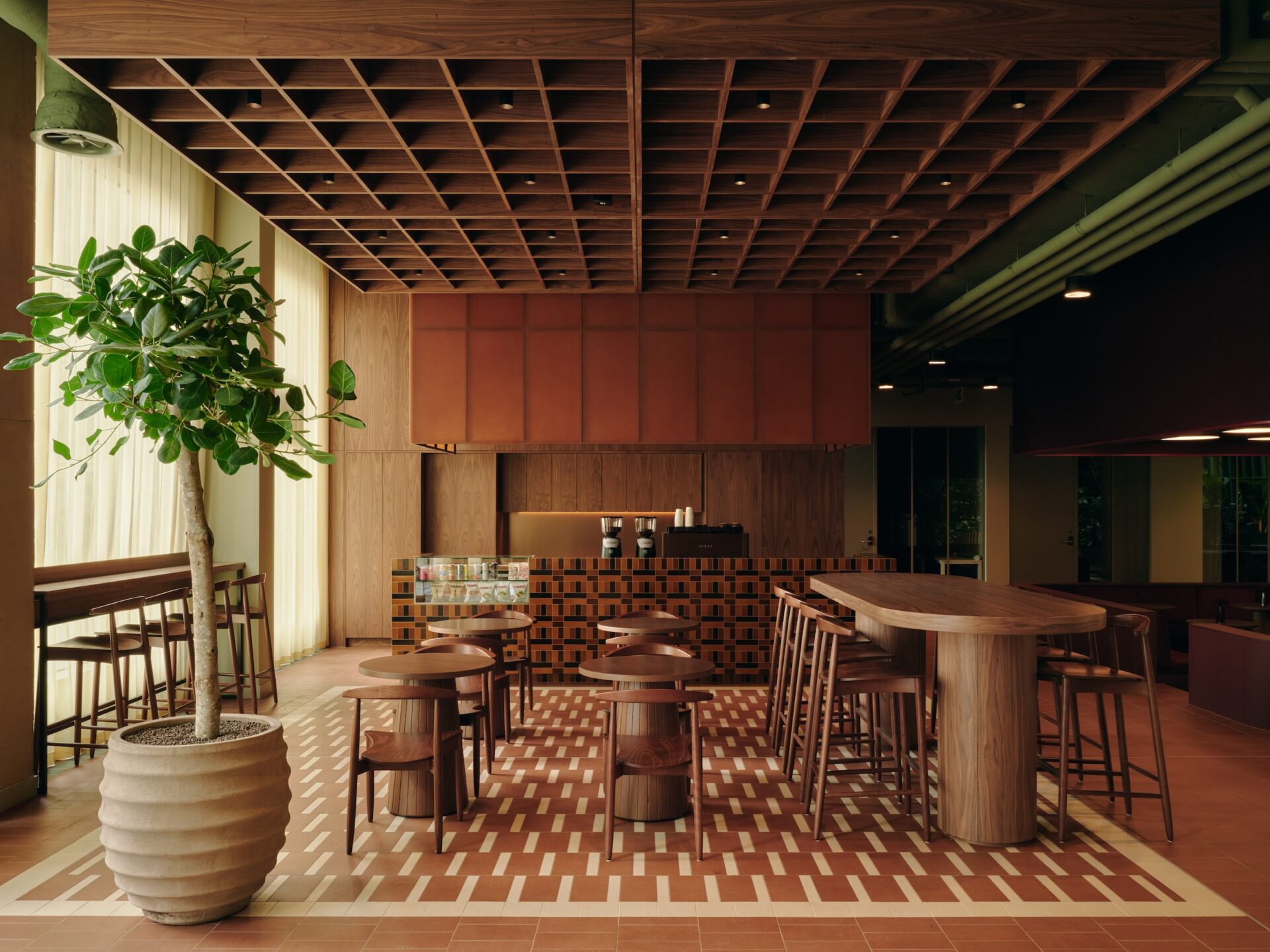
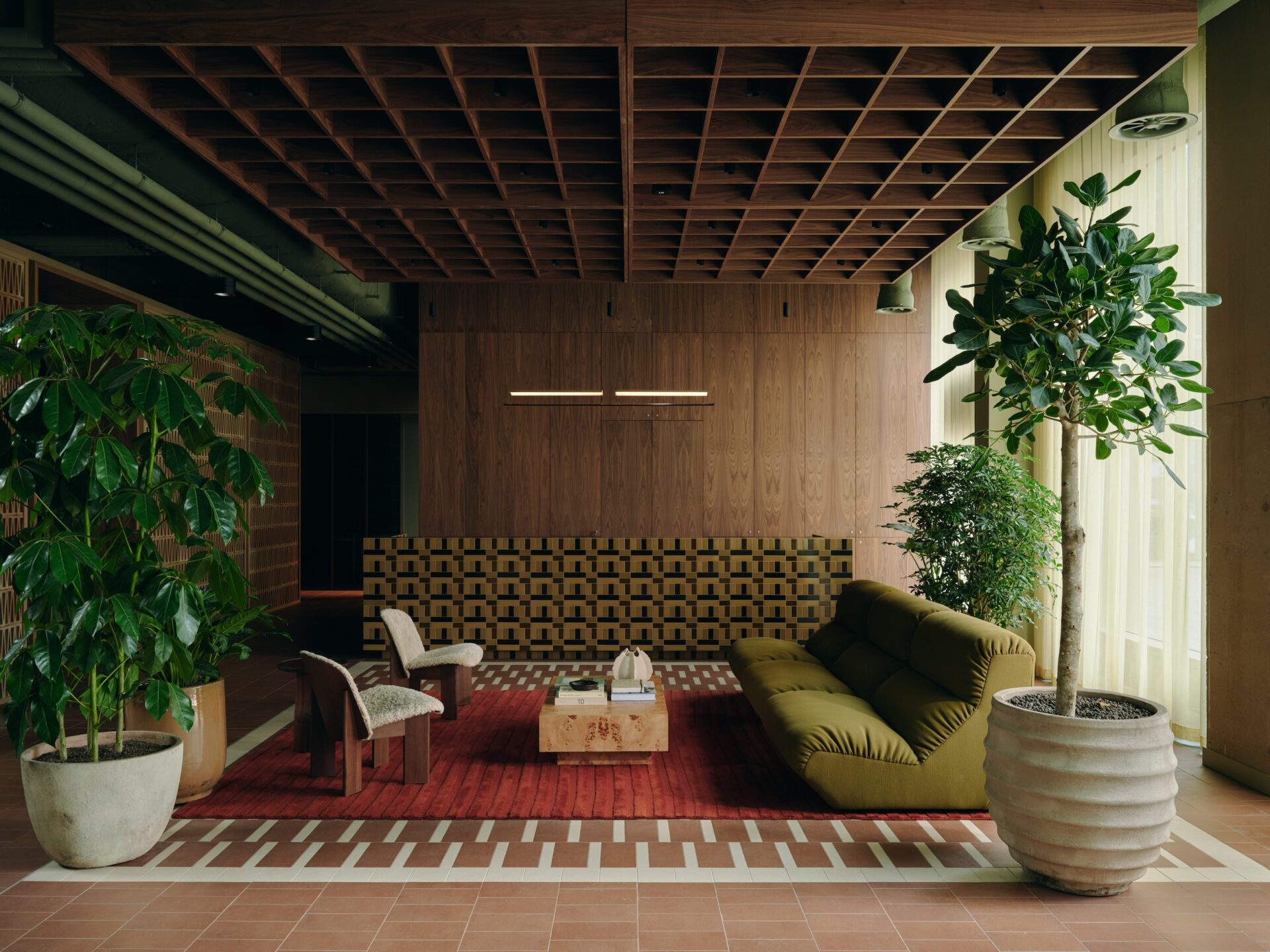
“We use the floor tiles to zone the spaces,” says Tabitha Organ, the founder of Tabitha Isobel. A single clay-toned tile product – Florim’s SensiTerre, sourced from Solus – has been used in multiple ways: “There’s one pattern under the cafe and the reception, and then the central atrium has a different pattern, but it’s all using the same range of tiles.” The reception desk is clad in a patchwork of Dzek’s volcanic ash glazed tiles, while a library area is partitioned off by walls of pierced terracotta bricks (Mutina’s Celosia), making it feel cleverly enclosed yet open at the same time, and all a bit tropical Brazilian modernism rather than Moroccan riad.
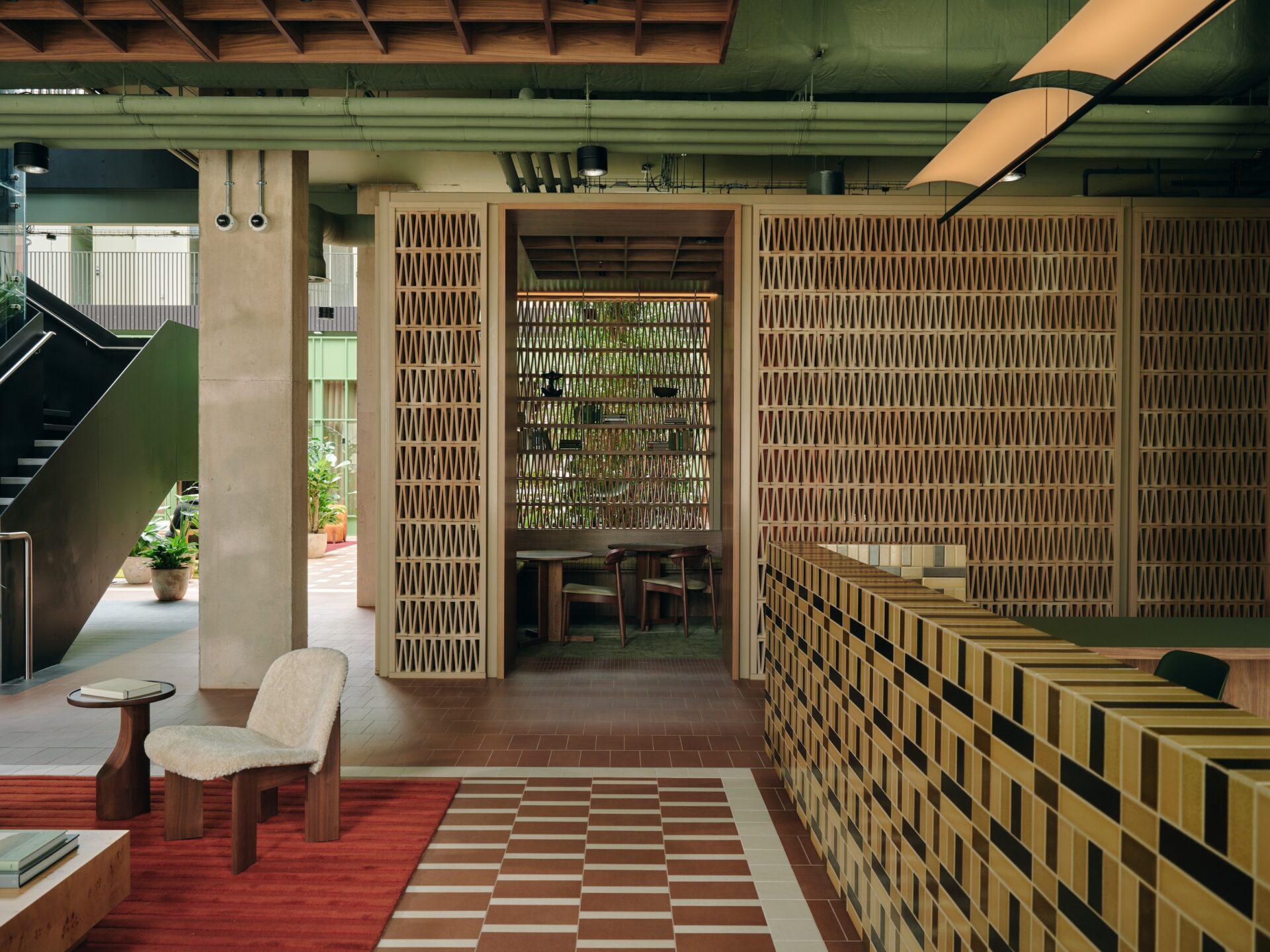
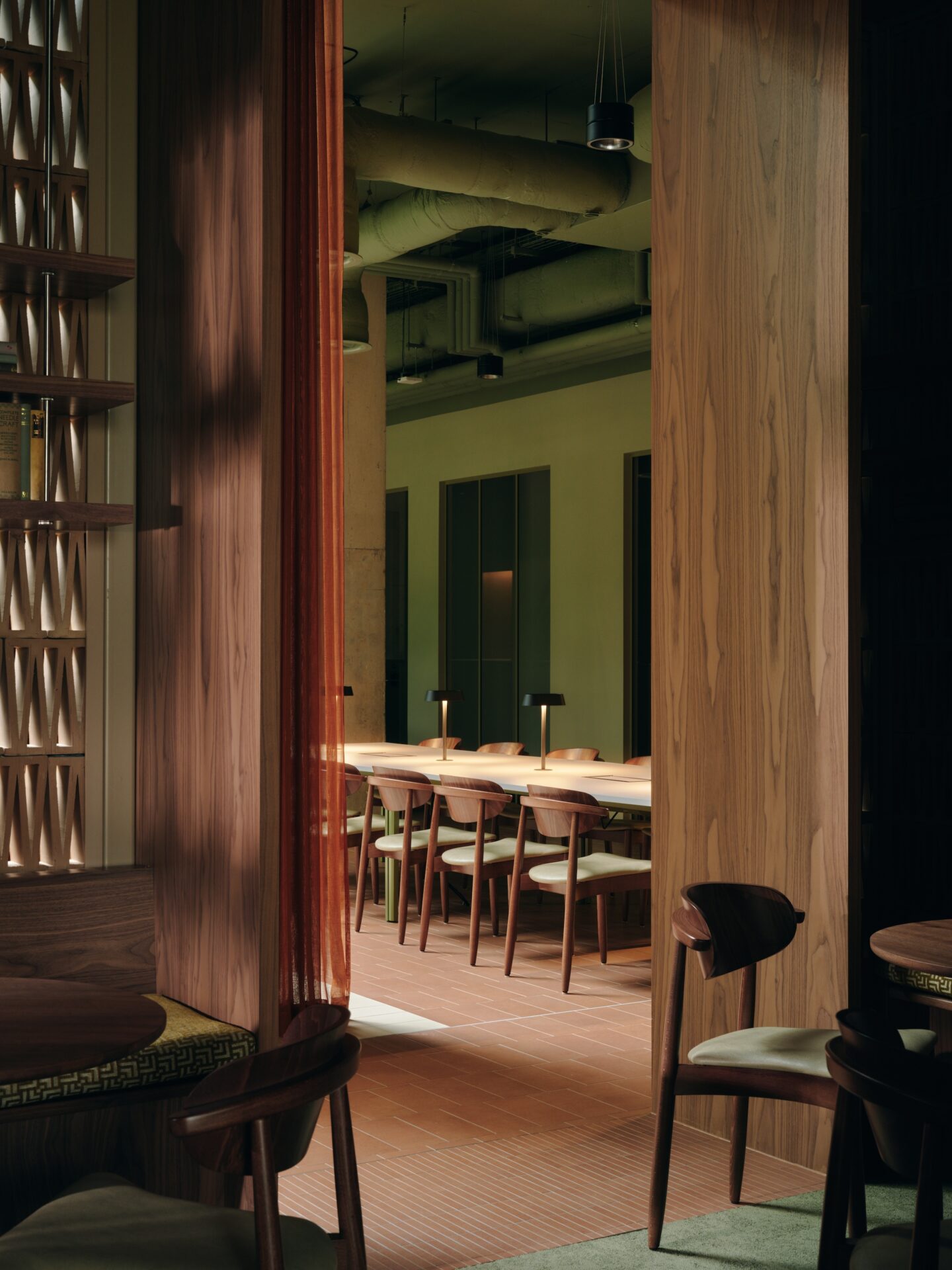
“There’s a real move away from people wanting to work in a corporate-style office at a standard desk,” says Organ, “and so we really start thinking about different ways people like to work, whether it’s a more casual setting on a sofa, or at table with a library lamp.” With lots of functions to fulfil – from small private working areas to casual sofas where people can chat or cafe areas suitable to solo or group working – how the large space has been broken up works particularly well.
Rutt described how the library is like “a building within a building,” and the run of green-painted, timber-framed glazed meeting rooms that look on to the atrium could merit the same description. A sunken ‘conversation pit’ a few steps down from the cafe provides another point of difference: “the base is lined in carpet, the seats are lined in carpet, and then it’s all upholstered,” says Organ, while a canopy above – the same deep red wine colour as everything else, with diffused circles of suspended lighting – lowers the ceiling height. “It’s kind of a moody, vibey zone where you could grab a coffee, sit on your own with a laptop, or have a casual meeting,” she continues.
The lighting design, by 18 Degrees, creates a glamorous, clubby feel in the conversation pit by night. The studio was also responsible for the vast suspended lanterns in the atrium, which beautifully fill the empty space, but thanks to their ghostly translucency, don’t block the sightlines from the first floor when looking across or down.
We wanted to turn everything up to 11: if we were going to do planting, we wanted to it to be big and immersive, so that it really became a focal point
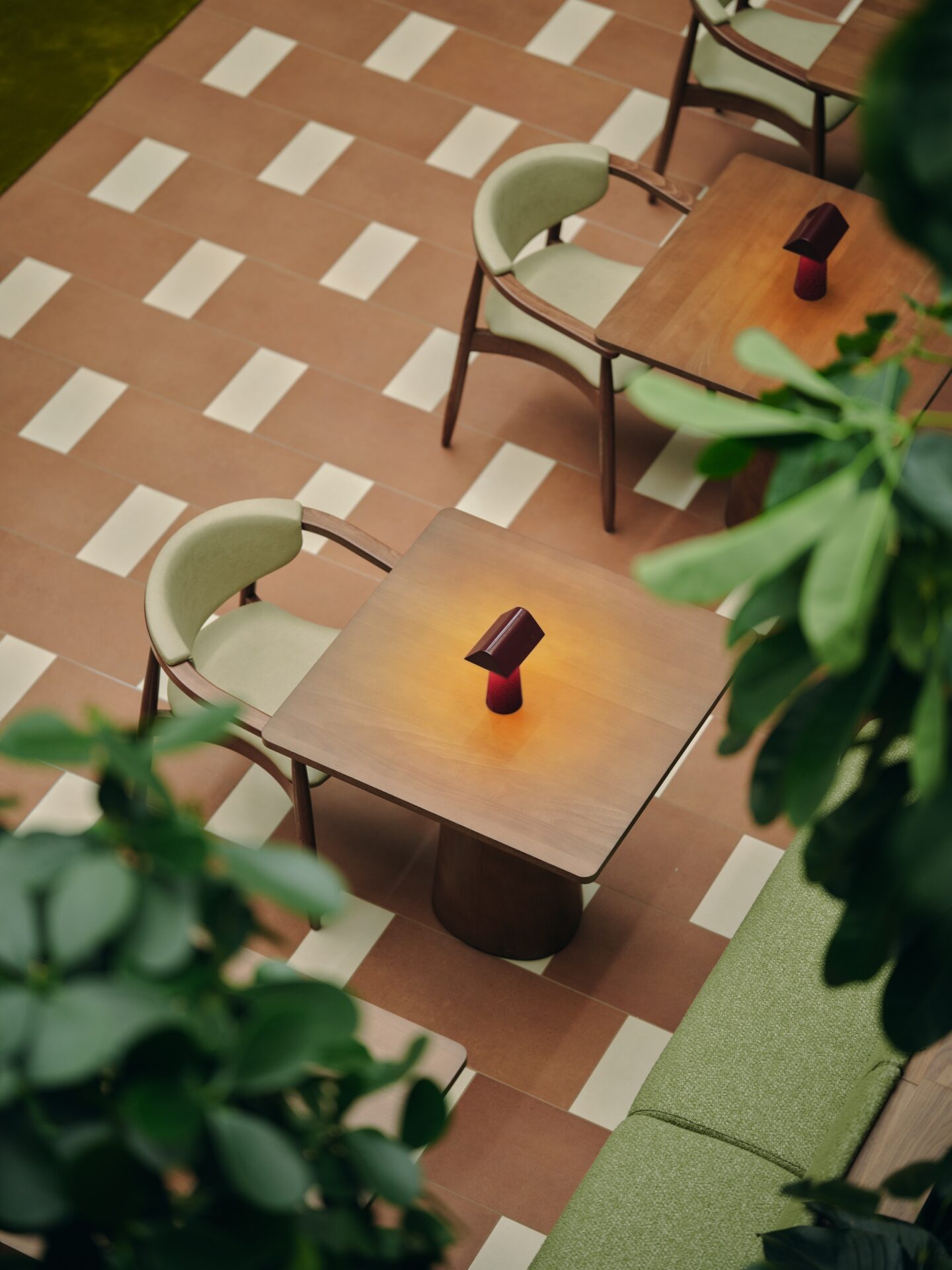
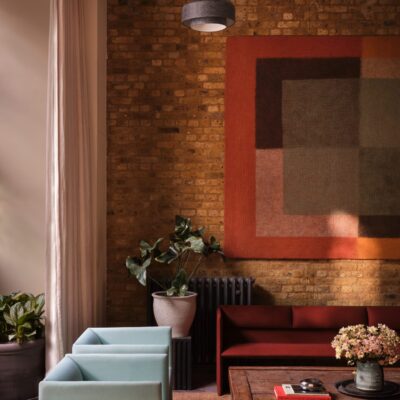
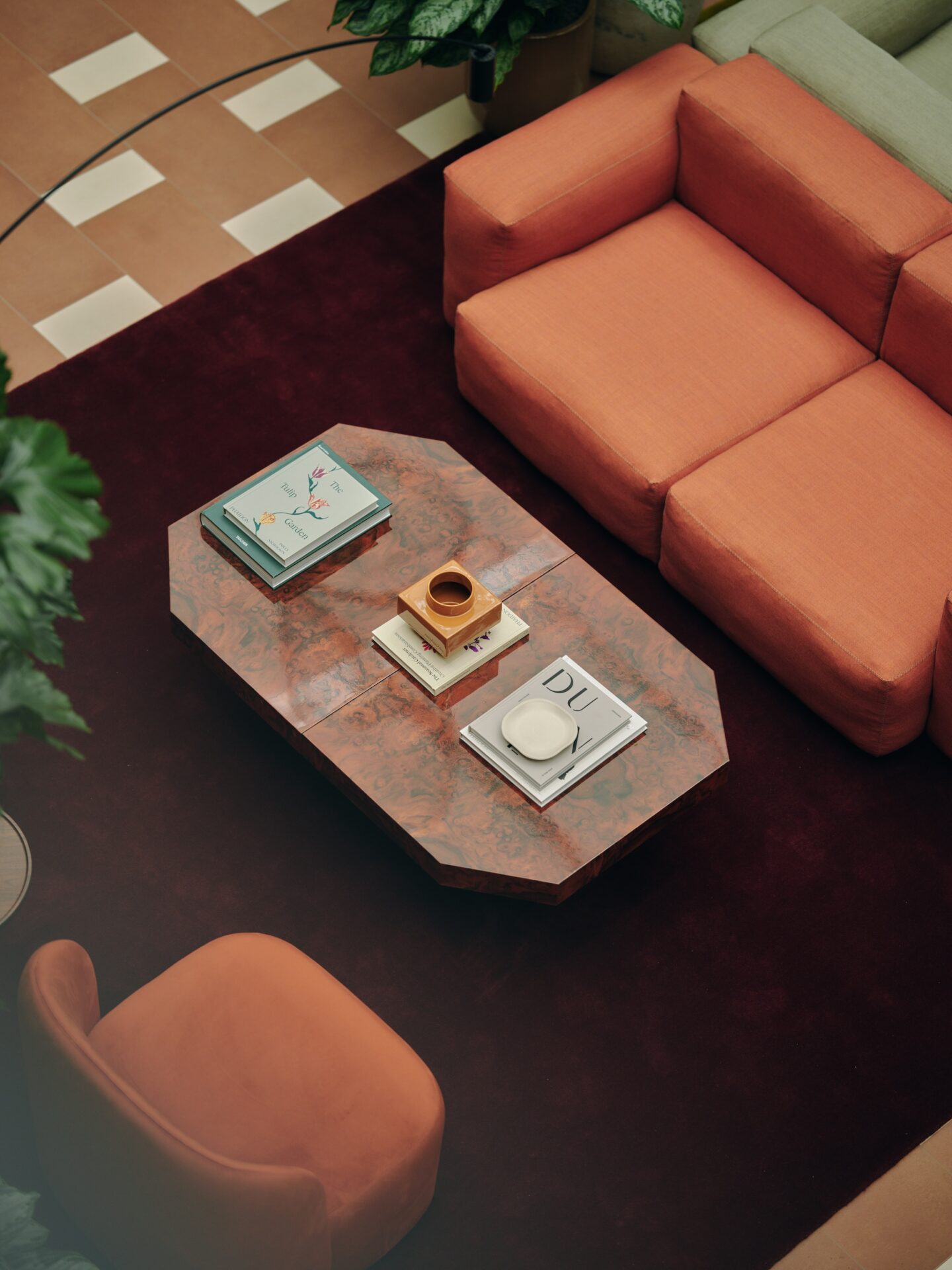
The designers didn’t want to do anything so obvious as introduce a lot of copper finishes to a development whose history was built on the same metal, but its warm hues are a thread that runs throughout. As well as the terracotta-toned floor, there are soft tangerine-coloured sofas by &Tradition in the atrium, all contrasting with the greenery of the plants, the timber-framed meeting rooms and the upholstered banquettes. Along with lots of timber, it feels inspired by nature, rather than industry.
Flexibility is another defining aspect of Conductor. Designed to accommodate both workers and the residents of Coppermaker Square, the scheme also had to be adaptable to presentations, events or other activities, particularly in the atrium. “The chairs needed to be stackable, and the sofas in the centre are modular, so they come apart very easily,” says Organ.
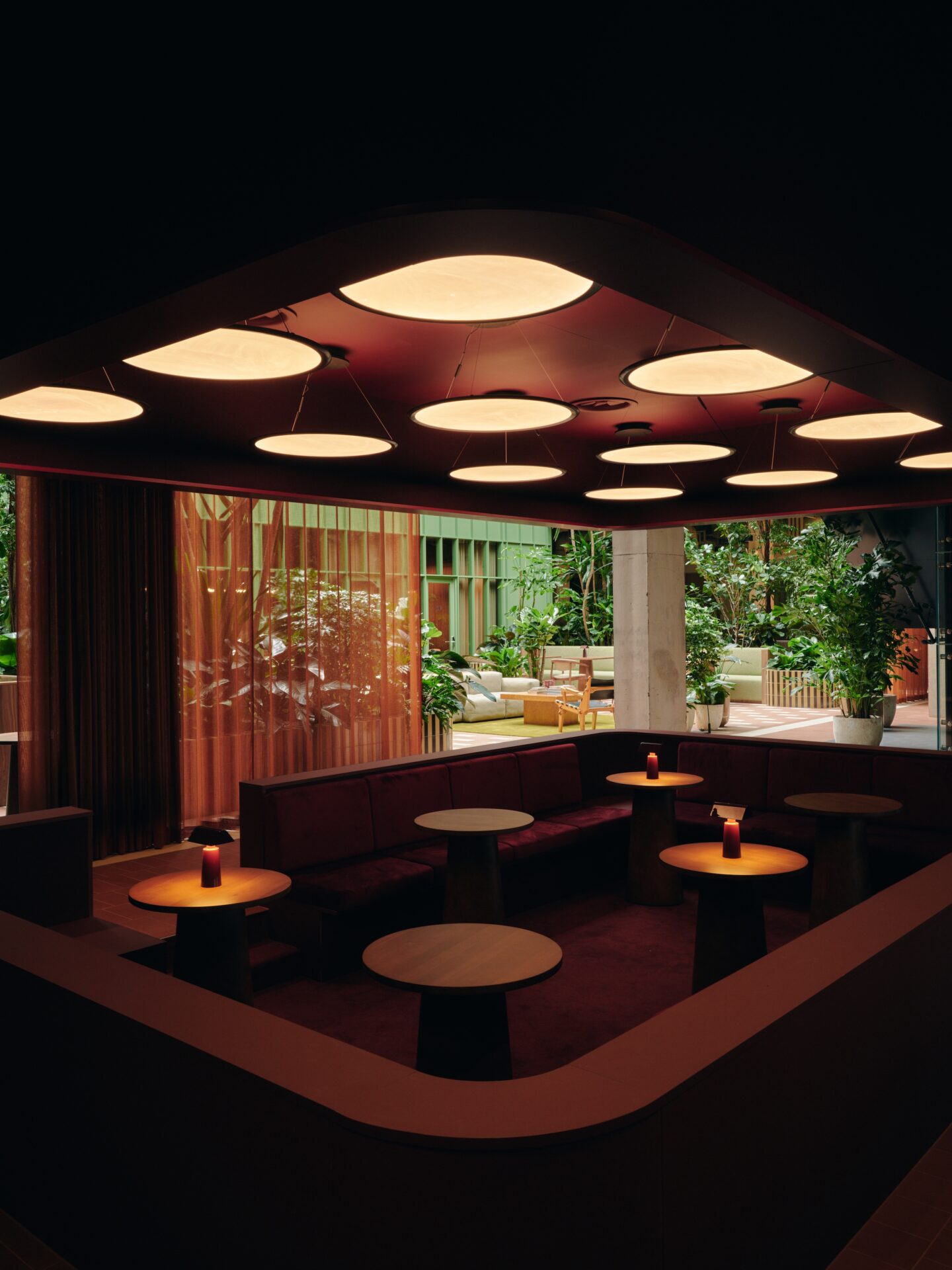
For Organ, the scheme is best experienced from a single spot. “There’s a point in the building where you catch all the different areas – the edge of the cafe canopy, the conversation pit canopy with the sheer, bright orange curtain behind it, the planting… the layering is so beautiful. There’s such a richness to that viewpoint.”
This emphasis on spatial and material layering lies at the heart of the project. Conductor unfolds as a series of interconnected zones, easy to read and each with its own character, with flexibility built in for day-to-night use or a change of function. Attuned to the rhythms of daily life in the contemporary workplace, it also offers a sense of retreat.