Dream Dinner Party
Curated by Daytrip in collaboration with D/A UK, this dining room takeover within The Lavery, in South Kensington, is inspired by Gio Ponti and a painting by Sir John Lavery, “The Green Coat” (1926)
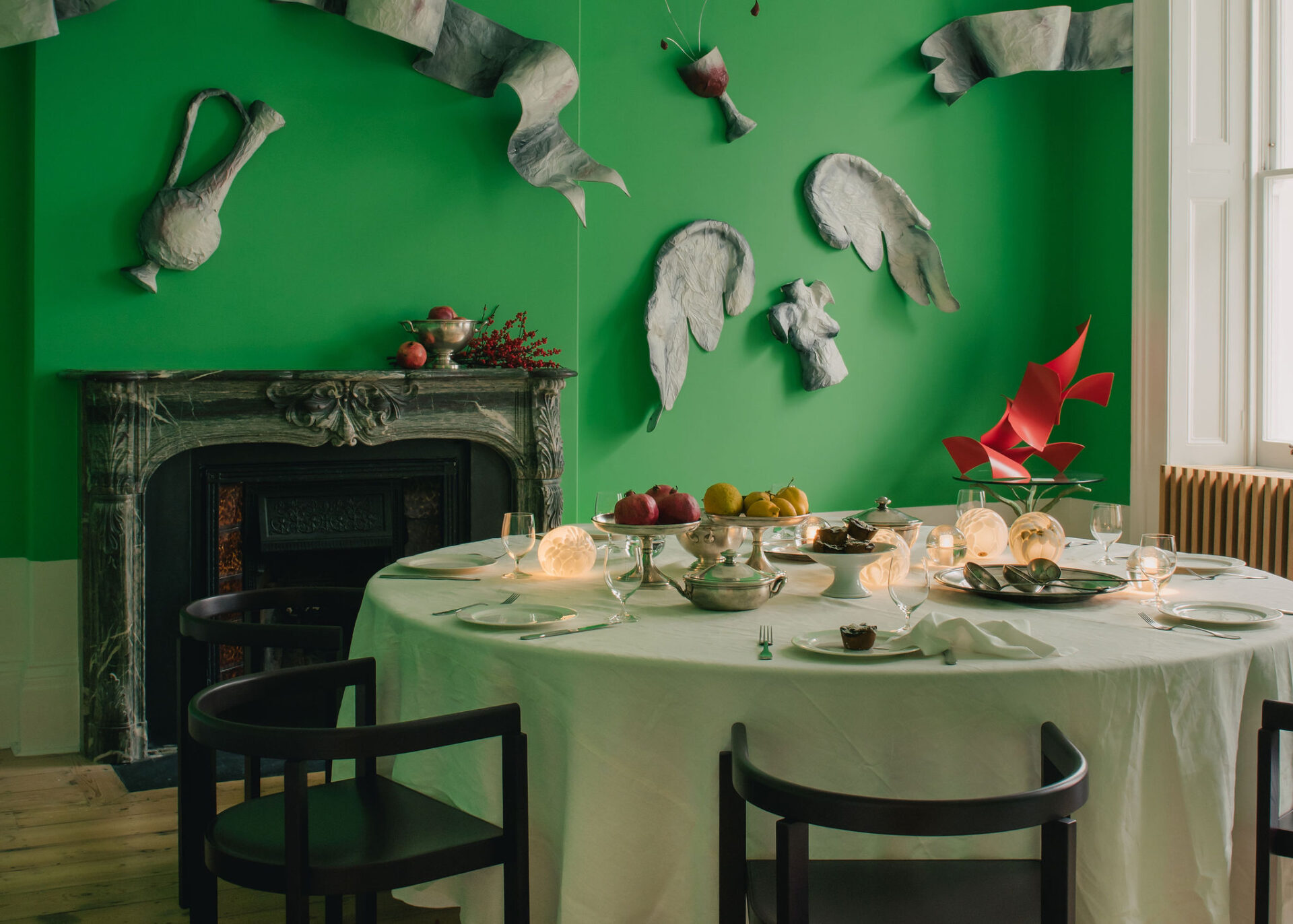
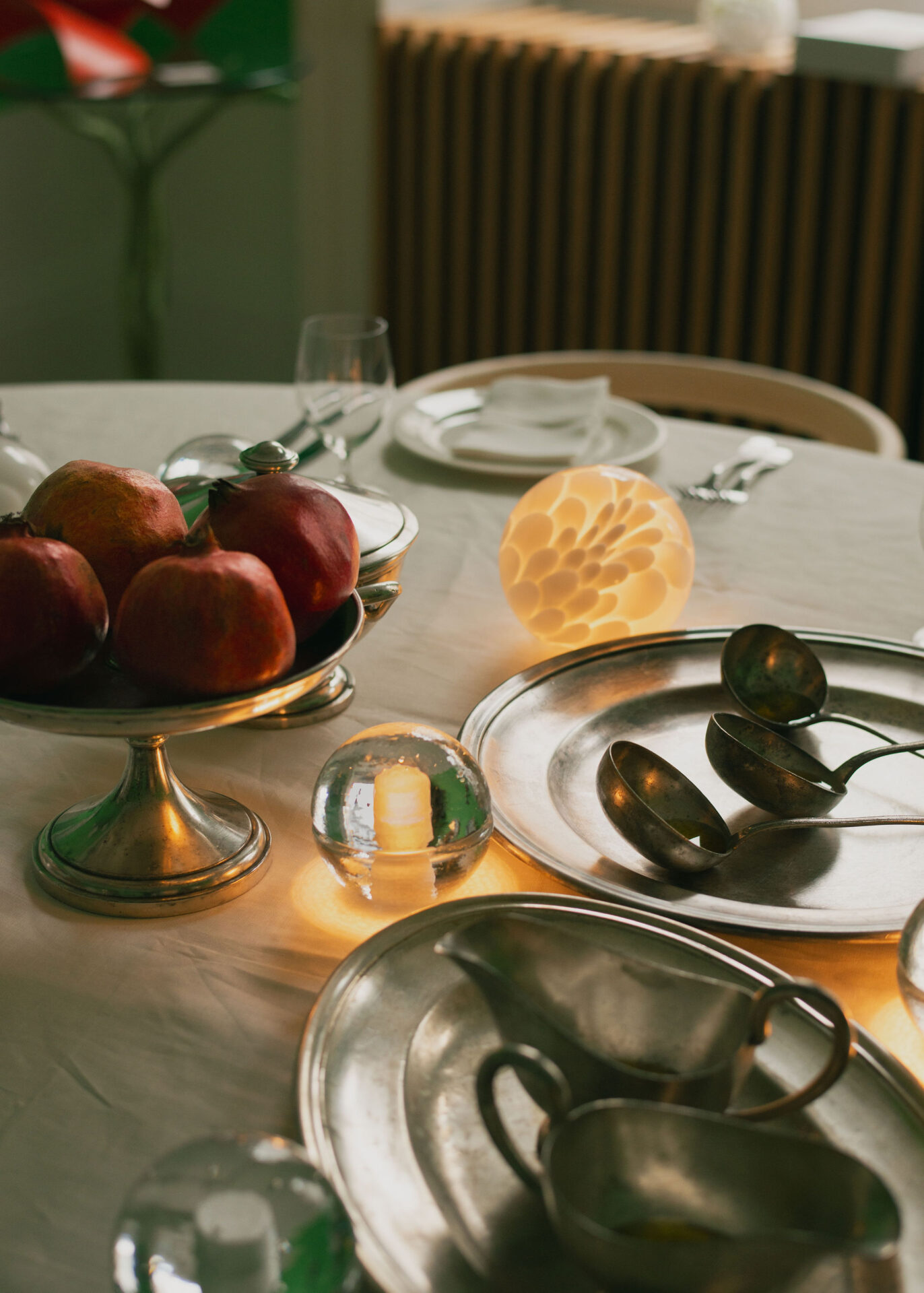
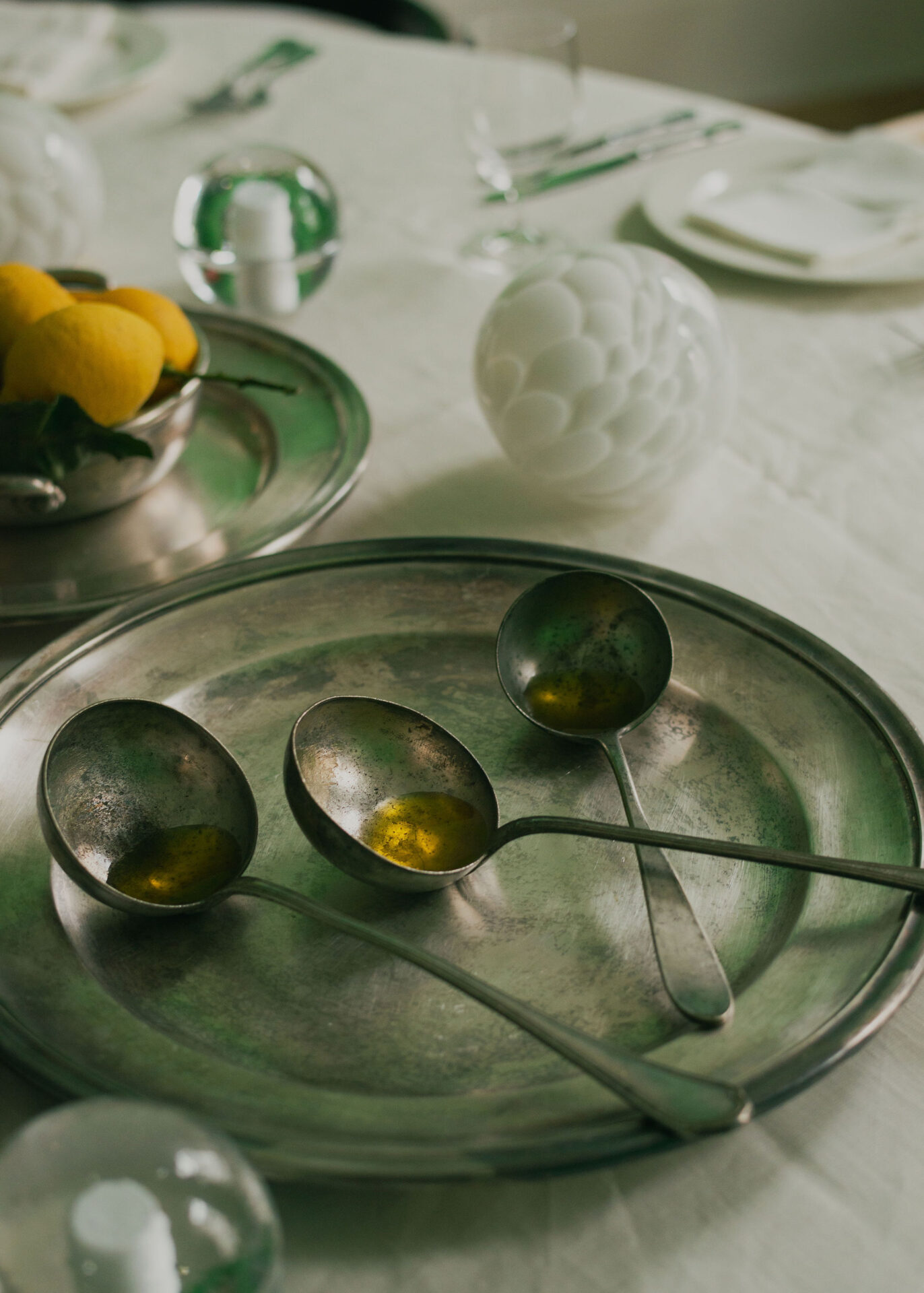
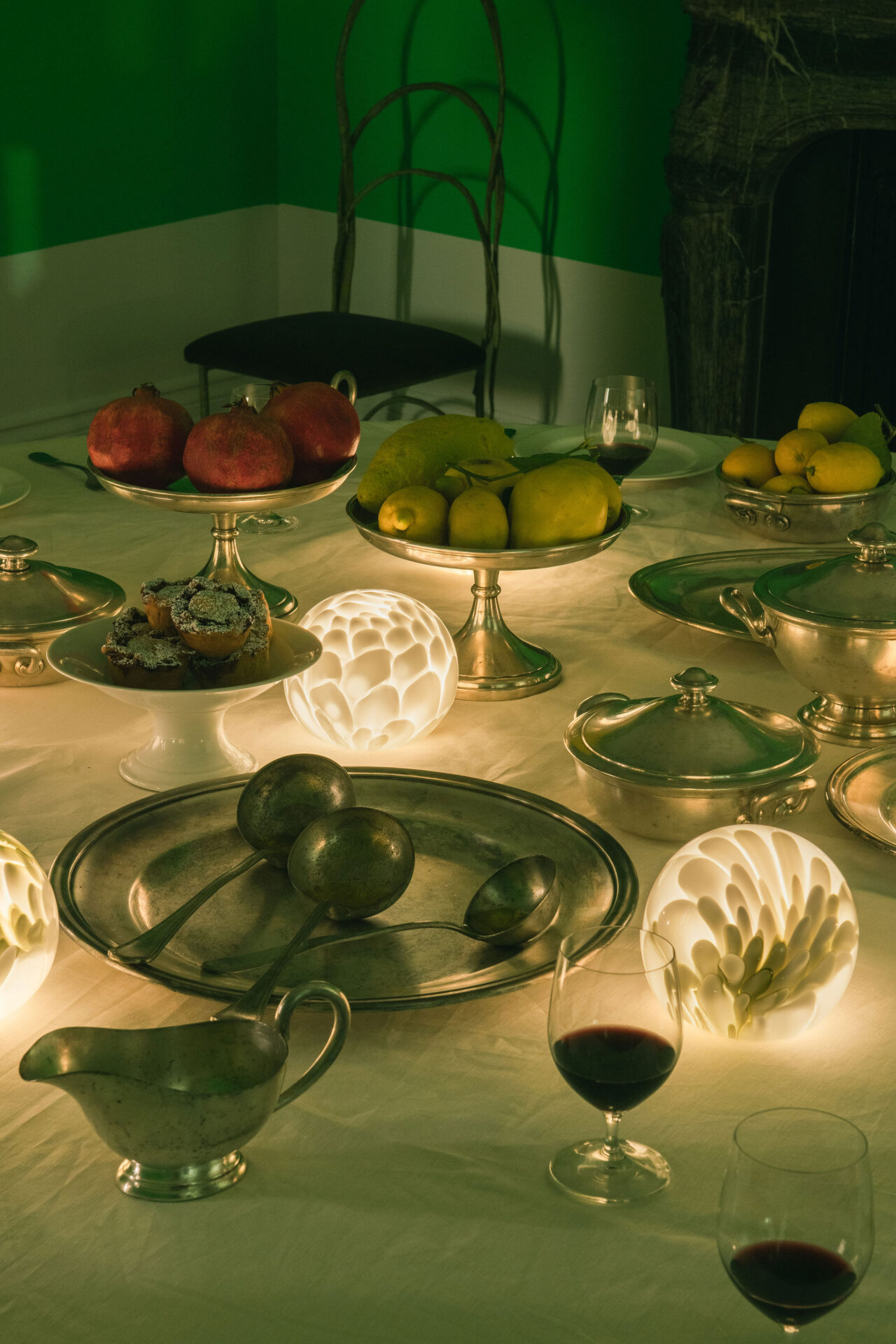
A set of Gio Ponti silverware, originally designed for the Hotel Kursaal in Rimini, Italy, provided the creative spark for Daytrip’s curation of this private dining room at The Lavery – London’s latest hot spot in South Kensington – in partnership with Design Anthology UK for the festive season. The elegant forms of the pieces evoke a sense of playfulness – and their graceful eccentricity is made practical in the hand.
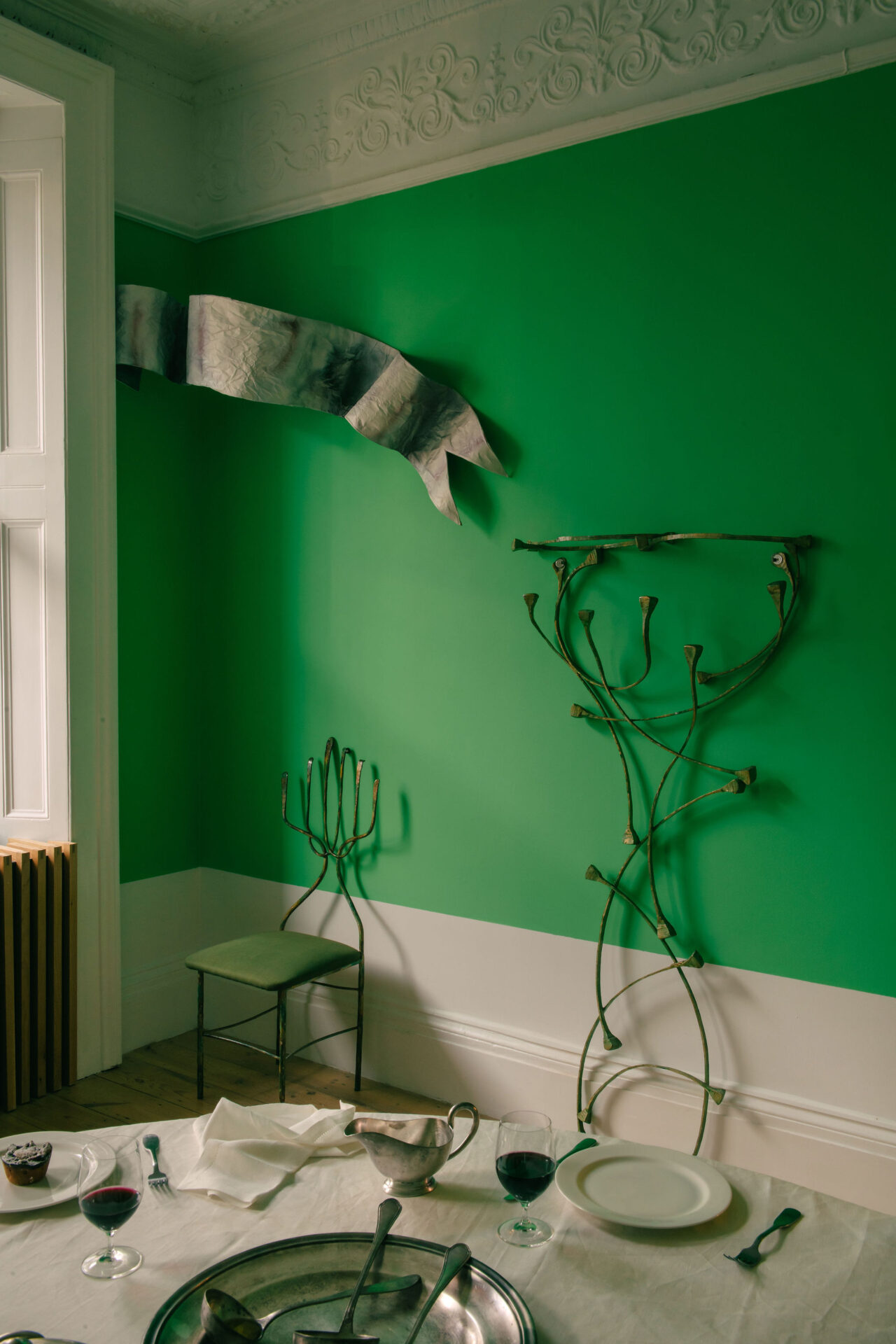
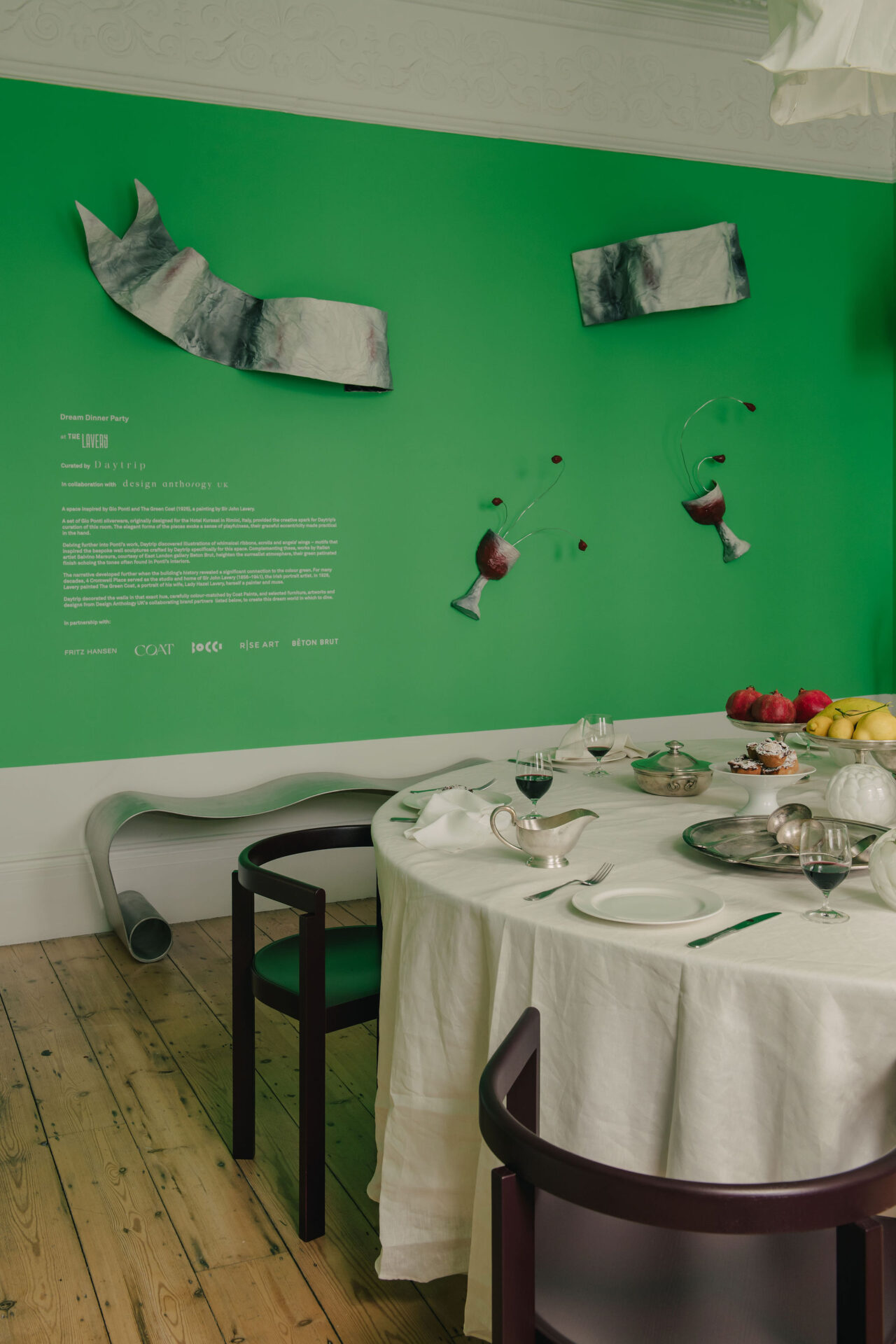
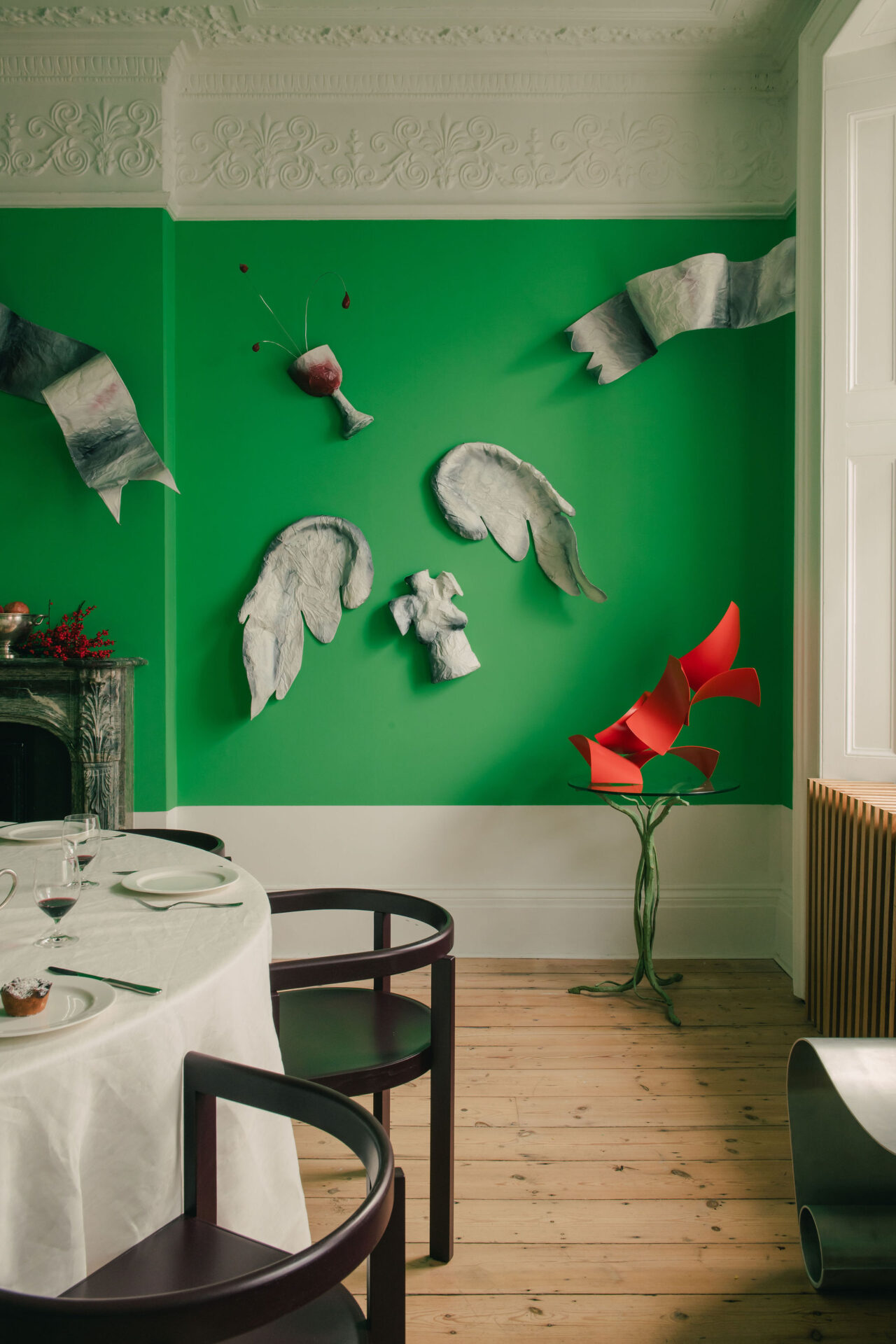
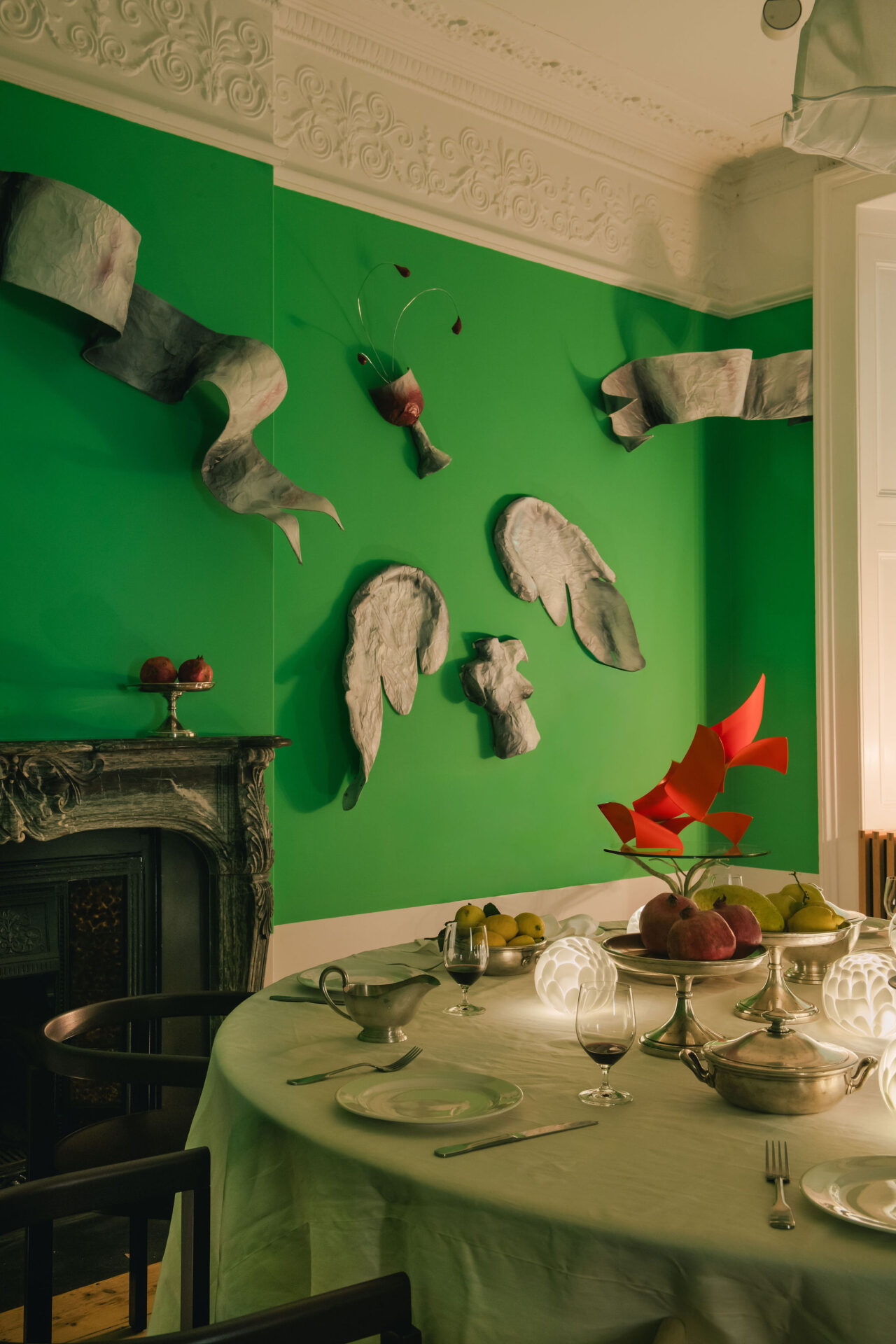
Delving deeper into Ponti’s work, Daytrip discovered illustrations of whimsical ribbons, scrolls, and angels’ wings – motifs that inspired the bespoke wall sculptures crafted by Daytrip’s team specifically for this space. Complementing these, works by Marsura Salvino, courtesy of East London gallery Béton Brut, enhance the surrealist atmosphere, finished in a green patinated hue that echoes the tones often found in Gio Ponti’s interiors.
The narrative took shape when the building’s origin revealed a meaningful connection to the colour green, too. For many decades, 4 Cromwell Place was the studio and home of Sir John Lavery (1856-1941), an Irish artist famed for his portraits. In 1926, Lavery painted “The Green Coat”, a portrait of his wife, Lady Hazel Lavery, also a painter and muse.
Daytrip decorated the walls in that exact hue, carefully colour-matched by COAT Paints, and selected furniture, artworks and designs from Design Anthology UK’s collaborating brand partners – Fritz Hansen, Bocci, COAT Paints, Rise Art and Béton Brut – to create this dream world in which to dine.
Below we speak to Daytrip’s co-founder, Iwan Halstead, about the studio’s approach to the collaboration.
DESIGN ANTHOLOGY UK: Tell us how you found inspiration for the room?
Daytrip had previously designed the restaurant and café spaces for The Lavery, so I was already very familiar with the building. While researching further and exploring Ben Prescott’s new graphic branding, I discovered that the green used throughout is drawn from a portrait of Lady Hazel in a green coat by former resident artist John Lavery. This particular green felt perfectly suited to the private dining room and inspired me to explore interiors that have embraced this vibrant tone.
A long-time friend and collaborator of the studio, Sophie Pearce from Béton Brut, subsequently shared her range of Gio Ponti silverware, available for hire through her gallery. This led me to delve deeper into Ponti’s work, where I discovered some of his drawings and painted works from the 1940s. These were primarily sketches, decorative panels, and experimental pieces produced alongside his furniture and interior designs. They felt timely, playful, and celebratory—ideal for this scheme during the festive season.
DA: Have you ever done a space like this before?
Not since my student days dabbling in decorative works and set design have I explored such creative experimentation. It took time to shift my thinking toward an alternative approach to interiors and temporary installations—pushing the abstract and creating wall sculptures that engage and capture the imagination. Our studio name, ‘Daytrip’, reflects our appetite for the playful and experimental, exploring interior spaces that verge on the surreal. In our early careers, Emily and I worked in theatre design and set builds for theatre companies, a fun and inventive way of thinking that freed us from the conventional methods of commercial interior design.
DA: What is the feeling you hope people will have when they walk in?
The Restaurant and Café spaces at The Lavery are relatively pared back, serving as a celebration of the ornate classical Grade II listed interiors. Common vintage bentwood dining chairs and a utilitarian zinc bar and counter suggest a quiet, minimal elegance. For the Private Dining Room, I wanted to create a dramatic counterpoint—a space to celebrate, escape, and feel truly special. Designing a festive dining room is such a fun brief: it allows you to be playful and purposefully whimsical, offering a space where the imagination can run wild.
DA: What kind of music do you imagine would accompany the space?
Umm, tricky, but I love this question — design is never just about the visual. The senses are triggered by smell, sound, and touch as much as by colour and form. For this space, I imagine a surrealist soundtrack: avant-garde and contemporary-classical, playful yet sophisticated. Works by Christine Ott or Max Richter could set the tone, layered with Jon Hopkins’ cinematic electronic textures and Björk for ephemeral drama. With lights dimmed and the gentle clinking of glasses and cutlery, the room becomes a living, cinematic experience — perhaps even enhanced by the new Rosalía album.
DA: What was the thinking and process behind the wall sculptures? What are they made of and how are they affixed to the wall?
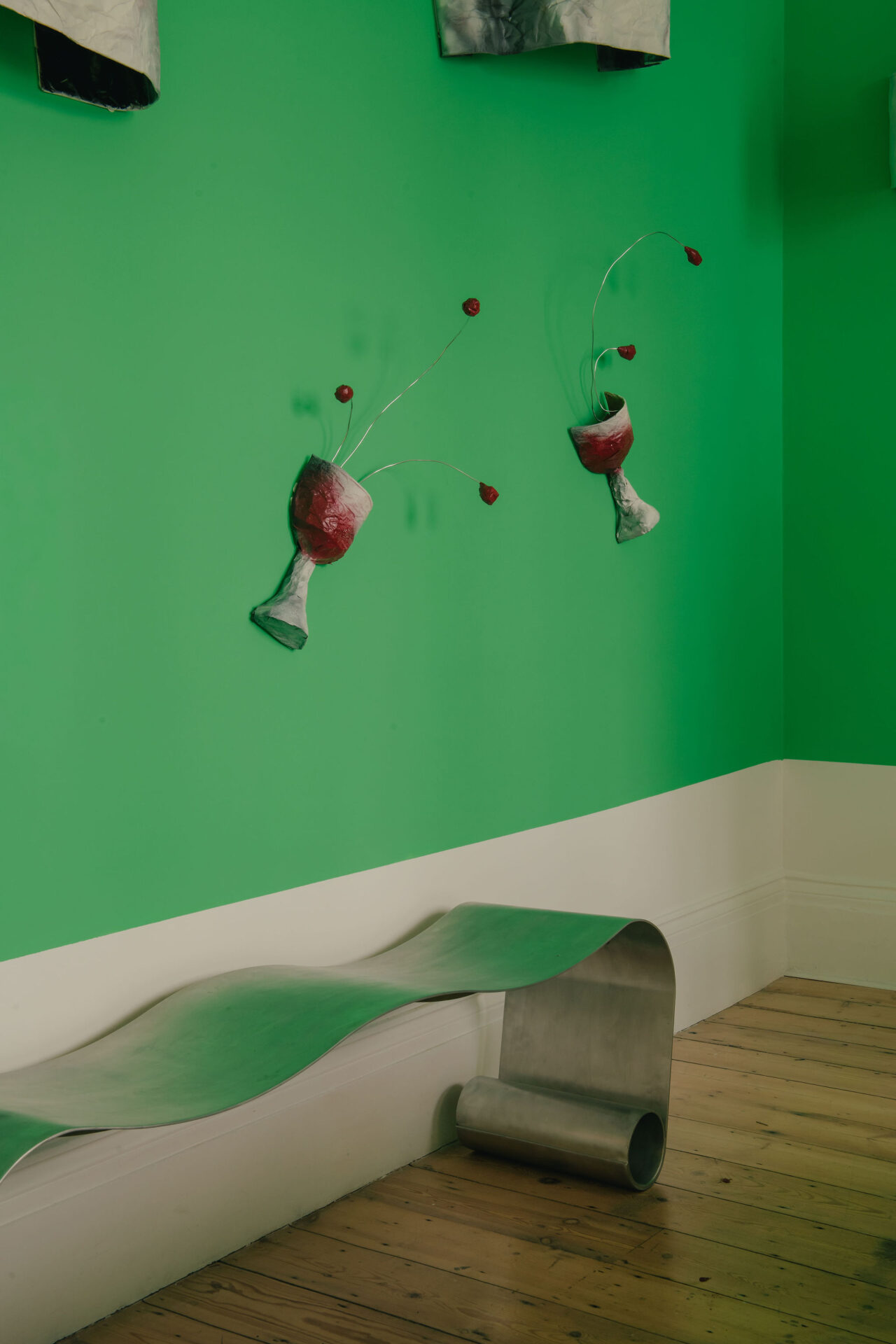
To create the undulating forms and wall sculptures, we employed a craft of paper and wire – shaping waves of ribbon with flexible wire, then wrapping them with craft paper and tape to form a surface that could be painted and rendered. Angel wings and vessels spilling droplets of wine were made using the same technique and affixed to the walls with Velcro tape, offering the ultimate in temporary, flexible installation.
DA: How did you go about making selections with Rise Art and Béton Brut?
Alongside Béton Brut’s Gio Ponti silverware, I was drawn to a collection of contemporary benches by Archive for Space, their gentle aluminium waves echoing the ribbon motifs in Ponti’s sketches and the wall sculptures we were creating – I knew they would be a perfect fit. During a recent visit to the showroom, a Salvino Marsura retrospective introduced me to green-toned metalwork pieces that felt in dialogue with the installation. I was enchanted by the surreal, organic shapes of the furniture and wanted to include one or two unique chairs and side tables to complement the dining scene.
I also wanted to include some contrasting pieces that spoke to a more traditional art form, highlighting the enduring beauty of still life and perhaps nodding to the techniques employed by John Lavery. Rise Art is a fantastic platform offering purchasable artworks from artists worldwide. I was drawn to the mundane dining scenes and the quiet elegance of plates and cutlery, captured in expressive oil brushstrokes by British artist Rosemary Burn. There is a certain warmth and human connection in these works, particularly suited to the private dining space.
Designing a festive dining room is such a fun brief: it allows you to be playful and purposefully whimsical, offering a space where the imagination can run wild.
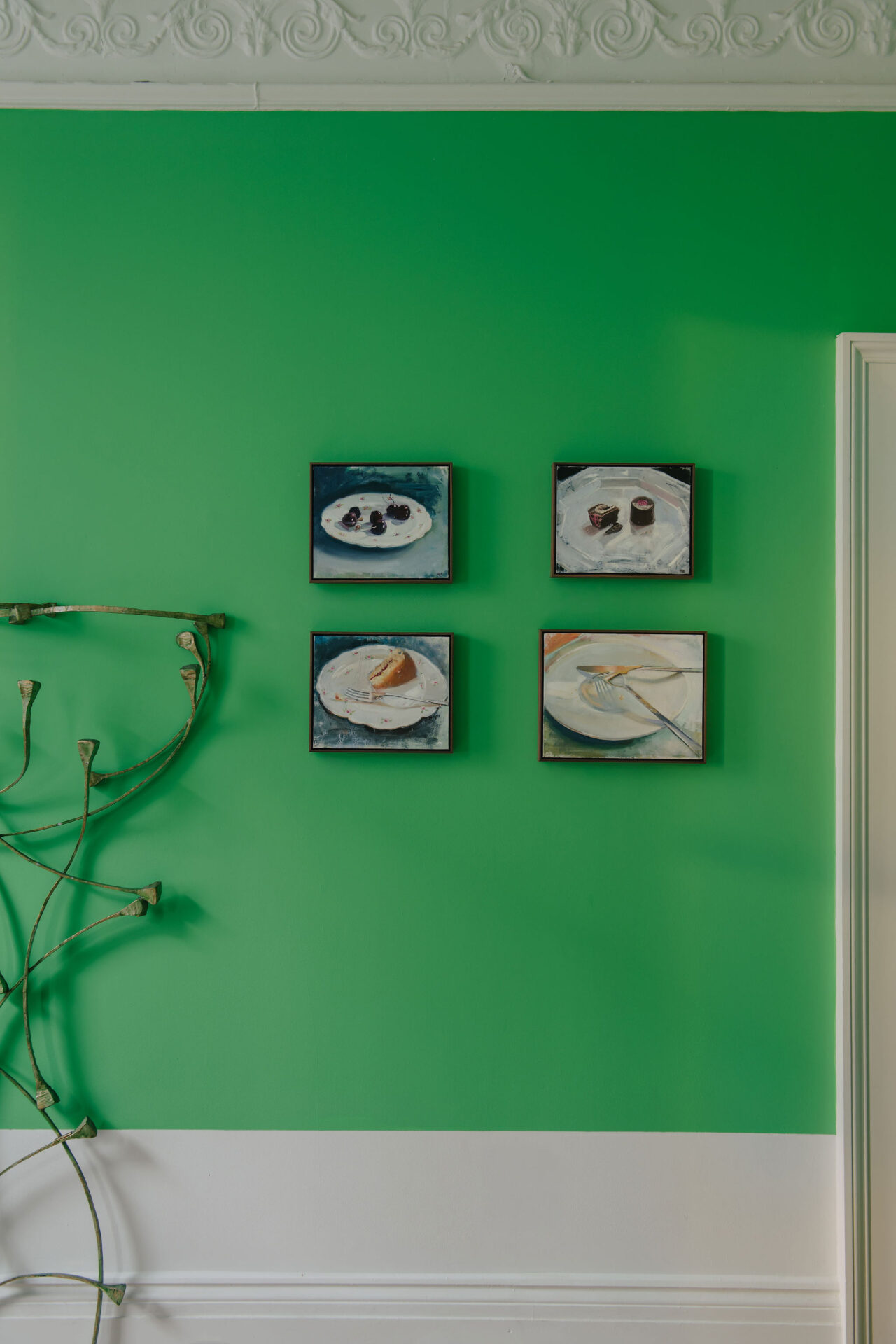
DA: How was it to colour match Lady Hazel’s cloak with COAT Paints? Did it take a while to get it right?
It was not an easy process, and after sampling several pots of “close, but not quite right” green, we finally arrived at the perfect shade – one that manipulates the light beautifully. This is always the challenge with paint and colour: they never quite match what you see on a screen, and even once applied, the colours can shift dramatically depending on surface and overhead lighting. COAT Paints were incredibly patient, providing multiple options until we got it just right. I am very happy with the end result.
DA: There is a real mix within our group of brand collaborators: what drew you to Bocci’s lighting for this space? Or the rational form of Fritz Hansen’s ‘After’ Chairs, which are a real contrast to the whimsy in the rest of the room?
When we (myself and the Design Anthology team) were in Milan for Salone, we met with Bocci co-founder Omer Arbel and were introduced to a showcase of their creations. I was struck by the beauty of the craft, the colour, the texture and the organic qualities of both the light fixtures and the sculptural glass pieces on display. Daytrip continually explores light, layering and translucency, and glass is a key material that complements each of our projects. It felt entirely fitting to integrate some of Bocci’s editions, in particular the portable lights, for their artful purity and ambient glow. They are luminous gems and mini works of art.
In contrast to Marsura’s fantastical, dreamlike works, I wanted a functional, sombre dining chair; one of simplicity and comfort. We had already specified Michael Anastassiades throughout The Lavery, with his light fittings installed throughout the hallways and walls of the restaurant, and his pendants suspended over the dining areas. His new ‘After’ chair for Fritz Hansen caught my attention in a beautiful burgundy, red-wine finish – a delectable colour complementing the Ponti-inspired wall installations, while providing an appropriate counterpoint to the vivid arsenic green. The chairs are ideal as dining seating, combining precision in detail with a refined, elegant form.
DA: We’re so pleased you approached Design Anthology UK to be a part of it.
Daytrip have been good friends with the team at Design Anthology since our inception. I sat opposite Elizabeth during a dinner they hosted for one of their magazine editions, and we had a deep conversation about connecting creatives and like-minded design enthusiasts. I greatly appreciate Design Anthology’s support for design studios. As a designer, it is important to champion the few print publications that showcase art, design, and spaces to our audience. I grew up reading editorials from similar magazines, many of which have now diminished or feel overly sponsored by corporate branding. Design Anthology remains committed to showcasing design studios, which is hugely important for inspiring and educating younger creatives.
*With special thanks to our brand collaborators: Fritz Hansen, Bocci, COAT Paints, Rise Art and Béton Brut.