Heart of Glass
Matthew Giles Architects remodels an Edwardian house with a soaring extension, acres of glazing and a sensitivity for balancing old and new
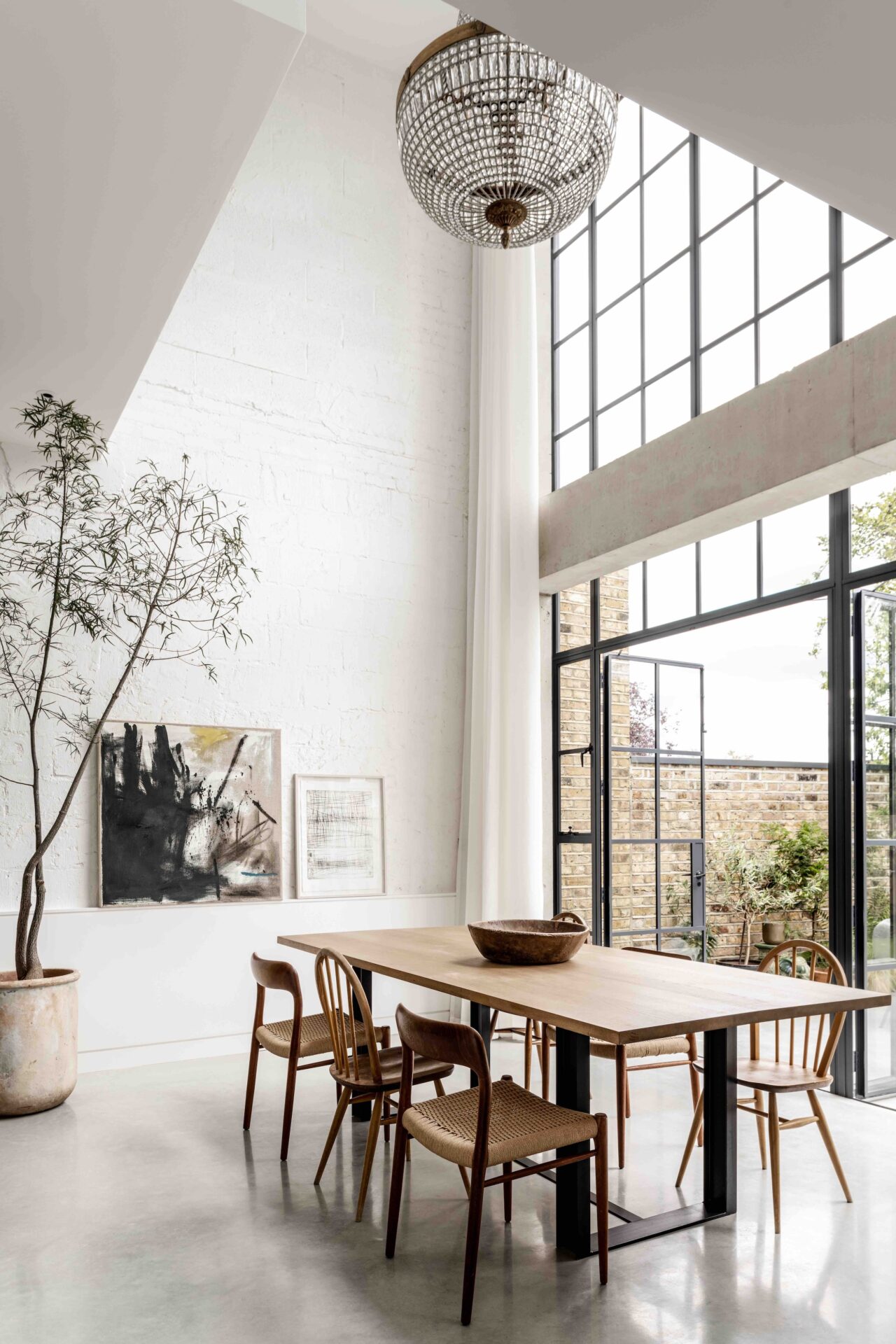
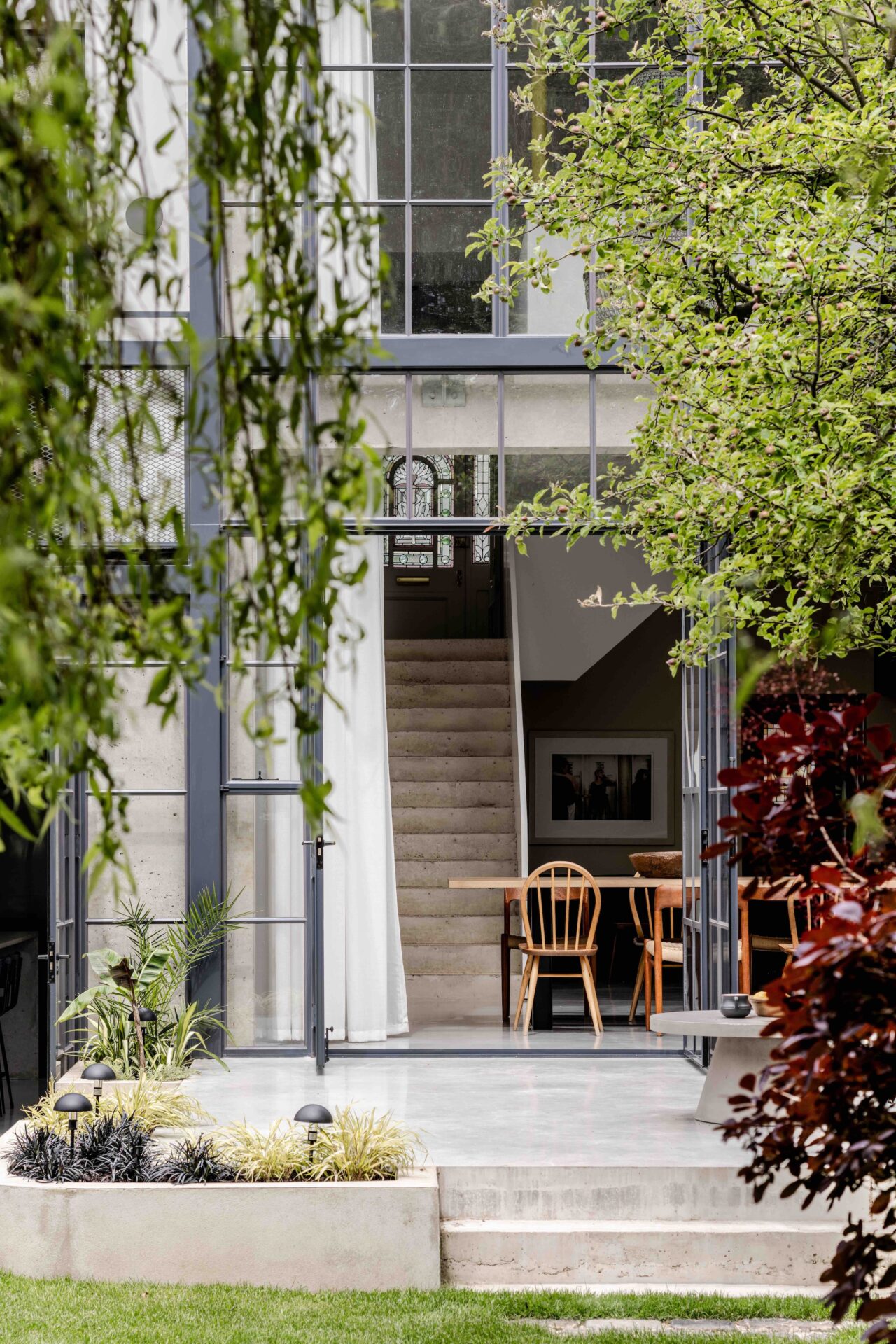
In a city that measures the value of its homes in square metres, it can take some guts to prioritise thin air over additional floor space. But this Edwardian London home by Matthew Giles Architects, with its soaring double-height extension, demonstrates that value can also be attached to drama, daylight and cathedral-like proportions.
“During one of our first design meetings, we showed [our clients] an image of a Japanese project, with double-height steel-framed glazing and some dramatic curtains. They were like, ‘Oh wow’,” says practice architect Lu Bai. She says that the practice “got really lucky” with a sympathetic planning officer, and permission was granted for a two-storey extension, helped by the fact that the adjoining house had applied for a similar addition at the same time.
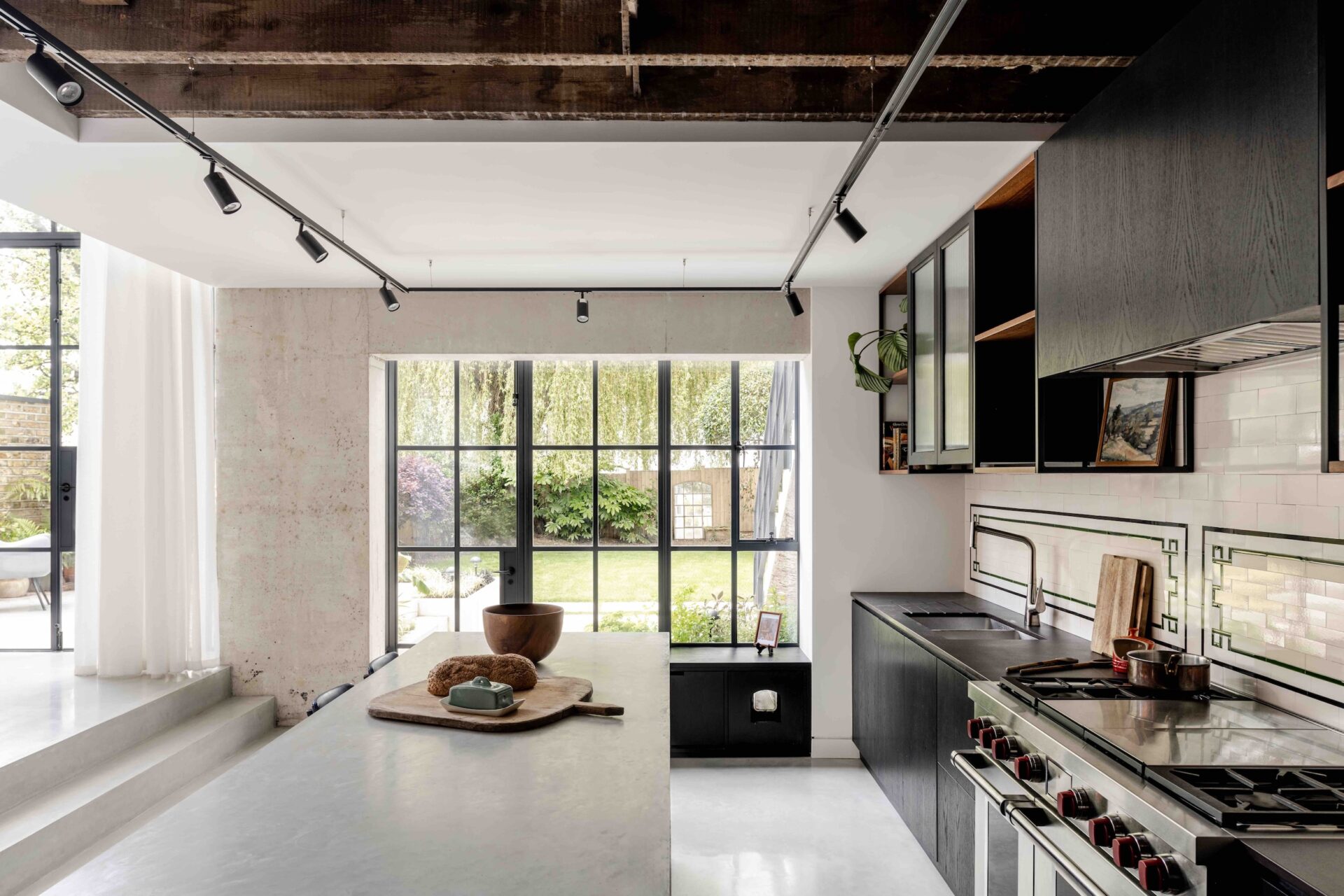
On the more practical side, the brief was not just to add more living space for the owners, a couple with three children, but to make sense of a fractured layout. “The houses in this area of Muswell Hill are all split level – split left-to-right, rather than front-to-back – which was quite disorientating when you walk in,” says Bai. Giving due prominence to a beloved mature willow tree in the garden was also part of the brief, and Bai explains how “the grand gesture was punching through the centre, which opened up the view.”
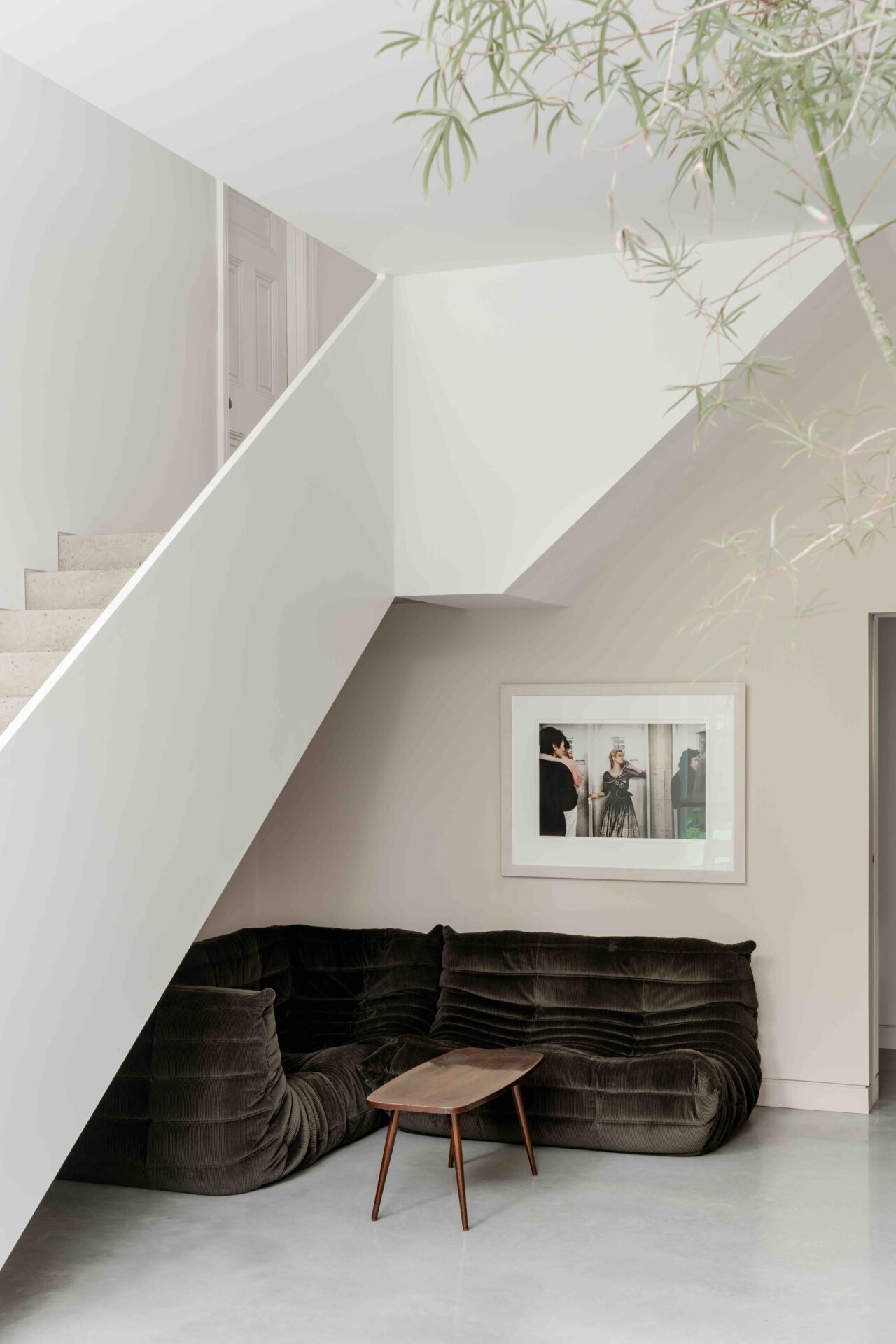
On arrival, visitors see the top part of the glazed rear elevation and then step down (via a minimalist staircase with white-painted ply solid balustrade) to the new kitchen-diner. The view also takes in Alexandra Palace, whose distinctive Victorian glazed roof provided further design inspiration.
Bai’s clients had seemingly contrasting aesthetics – he loved industrial-style concrete and steel, she is a former vintage furniture dealer who’s now a student – but the two have melded well together. In the dining area, poured, polished concrete floors, a raw concrete exoskeleton and the grey steel-framed glazing contrast with the warmth of a timber-topped table, while overhead, a vast vintage crystal chandelier hangs in the double-height space. The ethereal drapery of the huge semi-sheer curtain (which is electrically operated) softens it all.
The kitchen is monochromatic and monolithic – but with a decorative flourish of a tiled splashback inspired by Harrod’s Food Hall, and with the floor joists exposed above to add some wabi-sabi imperfection to all the sharp angles. Externally, the architects have managed to unify the new glazing with existing, more decorative elements by finishing them in the same dark grey.
On the stairs that descend into the new extension, the treads are made from a rougher concrete made with aggregate from the house’s demolition waste. It’s a practical touch as much as an aesthetic one: “We thought about extending the polished concrete but then we had to dig down and break up a lot of the existing slabs, so our contractor said, ‘We’ll just do it ourselves,’” says Bai. “It gives a nice contrast.”
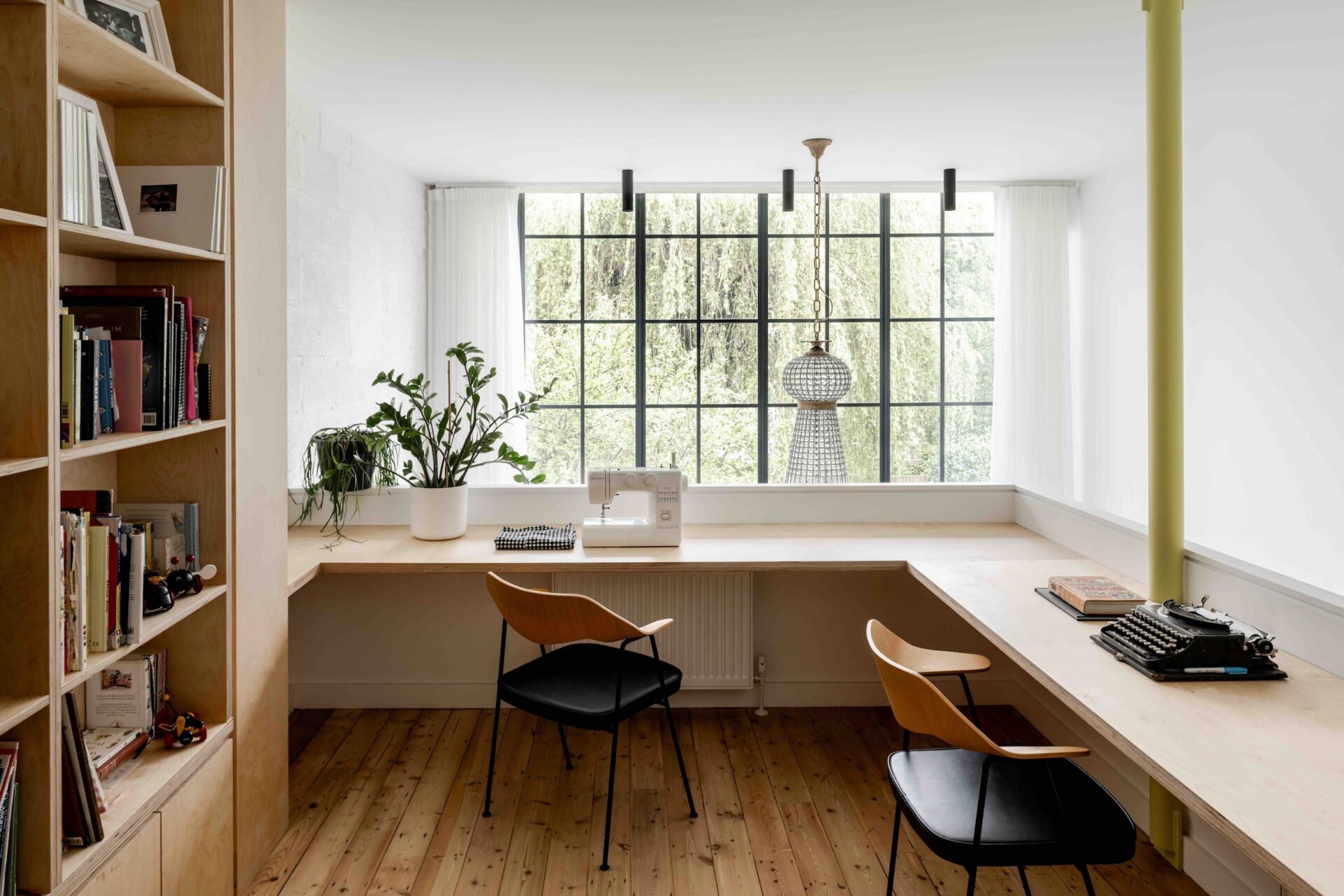
At the top of the new stairs, a mezzanine study area appears to hang over the extension (in fact, it’s supported from the ceiling by a zingy neon-yellow column). This is where the children can do their homework but still feel connected to any family life going on down below.
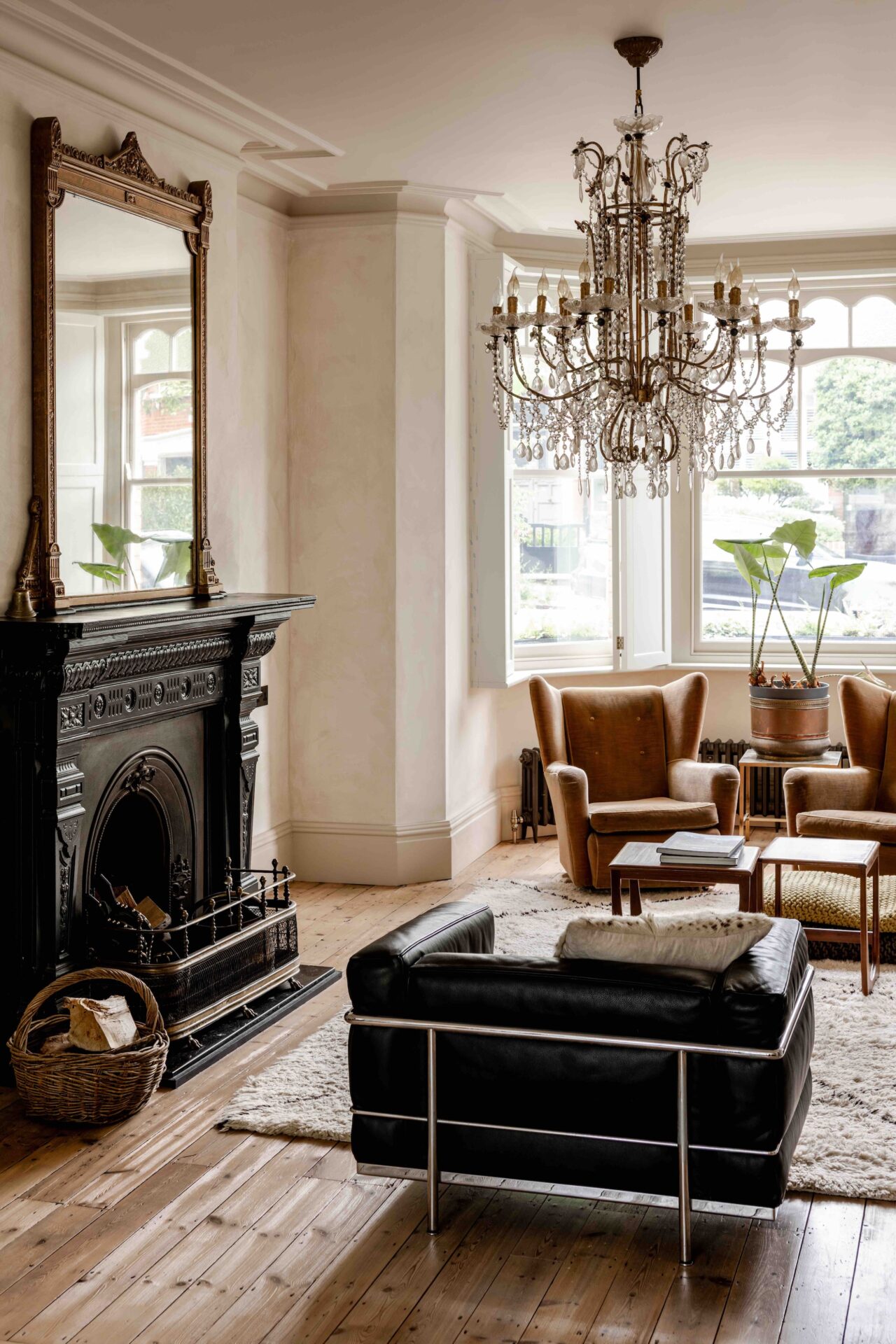
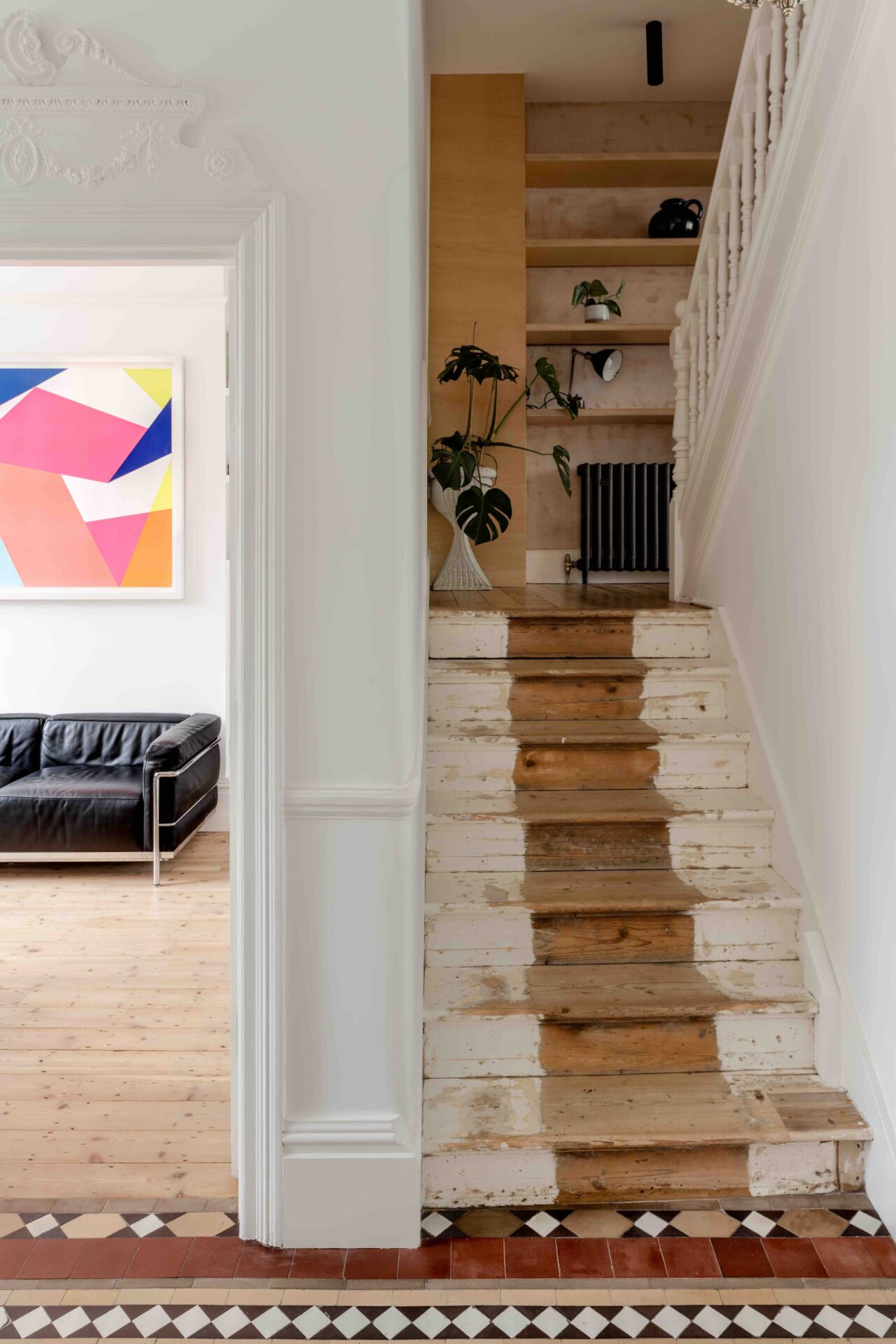
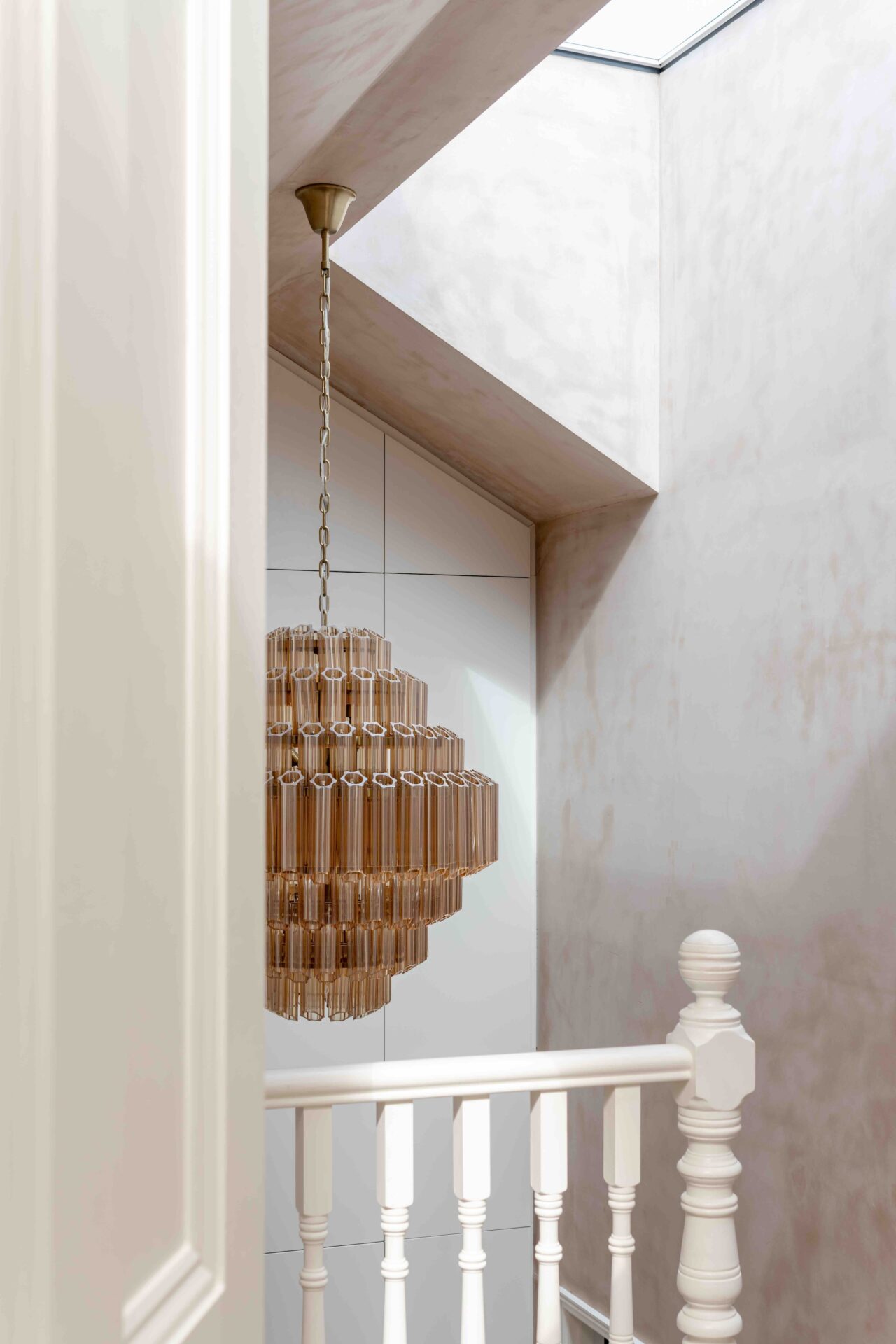
In the original part of the house, the architects applied a light touch, limewashing the walls and exposing and renovating the floorboards. The period staircase was stripped to reveal wood and the paint that once sat either side of the carpet runner: bare plastered walls rise up to a fabulous vintage chandelier topping the stairwell, a further reminder that this is a couple not afraid to play with scale.
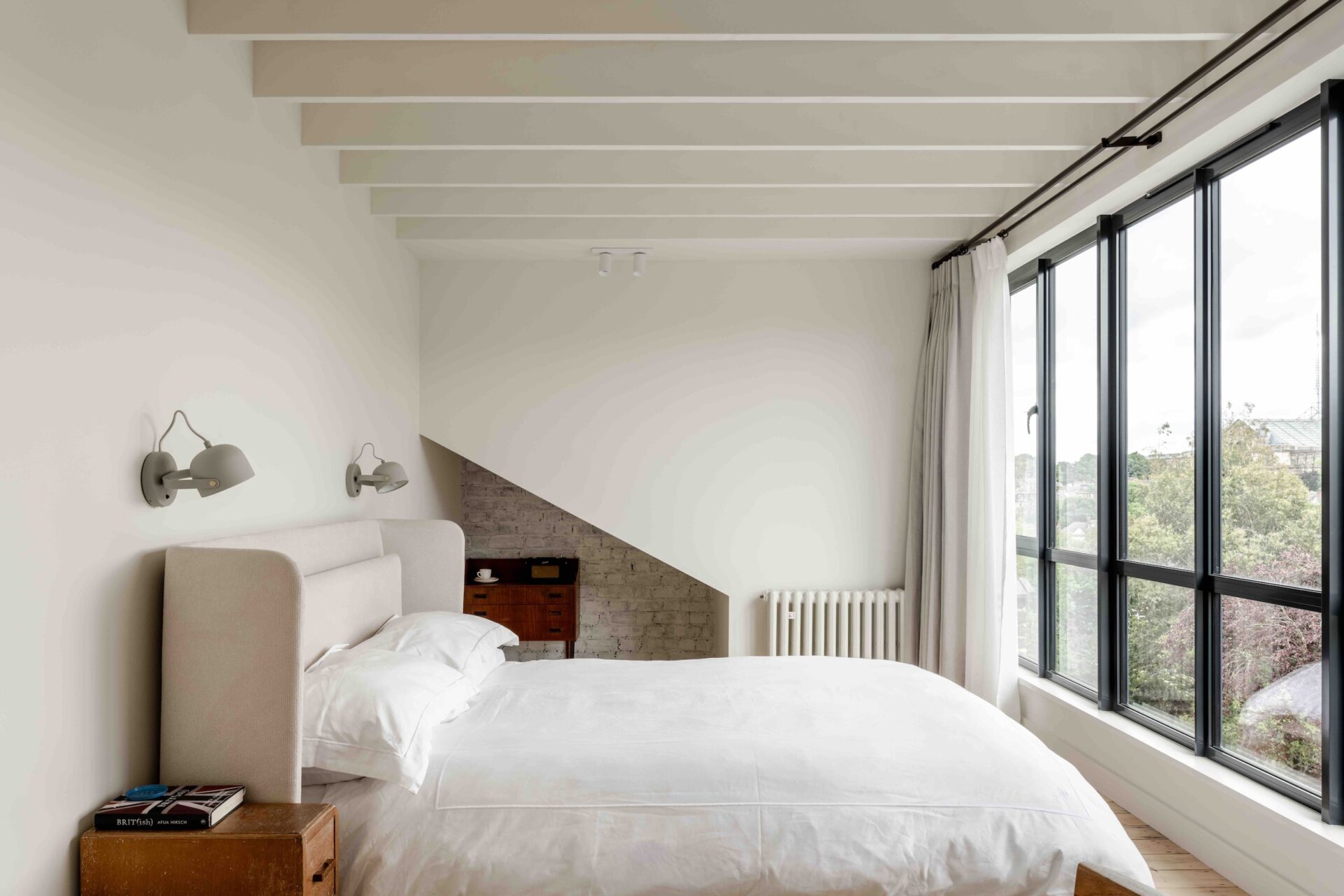
Finally, at the top of the house, a new loft extension contains the master suite. Its bed squarely faces the newly opened-up views of Alexandra Palace, with a calming pale palette that seems to put even more emphasis on the greenery outside.
Bai says that the practice always strives hard to tell the stories of its clients, “because it’s not about who we are – they’re the ones who are living in it.” That story seems to be particularly well told here: one of an active family, and a couple who may not have identical tastes, but somehow make magic when it all comes together (with a little help from their highly attuned architect).


