Golden Thread
Universal Design Studio crafts a London flagship for jeweller Azza Fahmy, where Egyptian artistry meets contemporary design in a space rich with heritage and symbolism
When it comes to the interiors of jewellery boutiques, there are the stark minimalist ones that offer no distraction from the glittering accessories themselves; and then there are the ones that treat the space like a jewelbox in itself. Egyptian brand Azza Fahmy’s new London outpost, the work of Universal Design Studio, is emphatically the latter, a place that weaves together family history, Egyptian craftsmanship and a prized location at the heart of Piccadilly’s Burlington Arcade.
“The Egyptian welcome is something that I always talk about,” says Universal Design Studio’s design director Suzanne Gaballa. “It’s about generosity. It’s about being really welcoming and putting people at ease.” During a week-long site visit to Egypt, Gaballa visited Fahmy’s family home and the workshop, and wanted to pull in some of that feeling of hospitality as well as echo the craftsmanship inherent in the jewellery itself – with both seemingly equally important in terms of the brand’s DNA. “First of all we thought about what atmosphere we wanted to create, and it’s sort of anti-high-end luxury, in a way,” she says. “From the colour temperature of the lights to the tactile materials we used, it was important that it didn’t feel austere or not welcoming.”
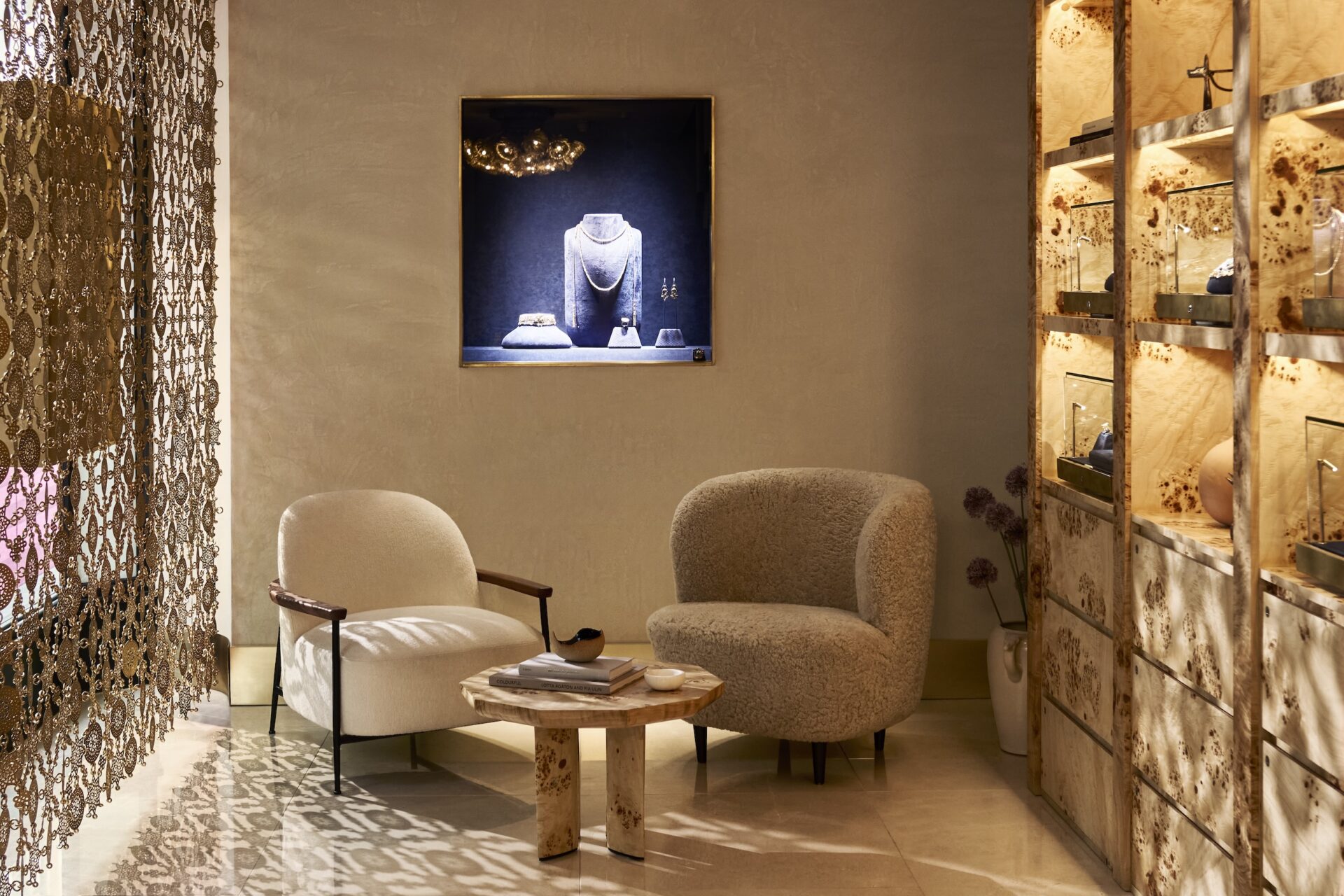
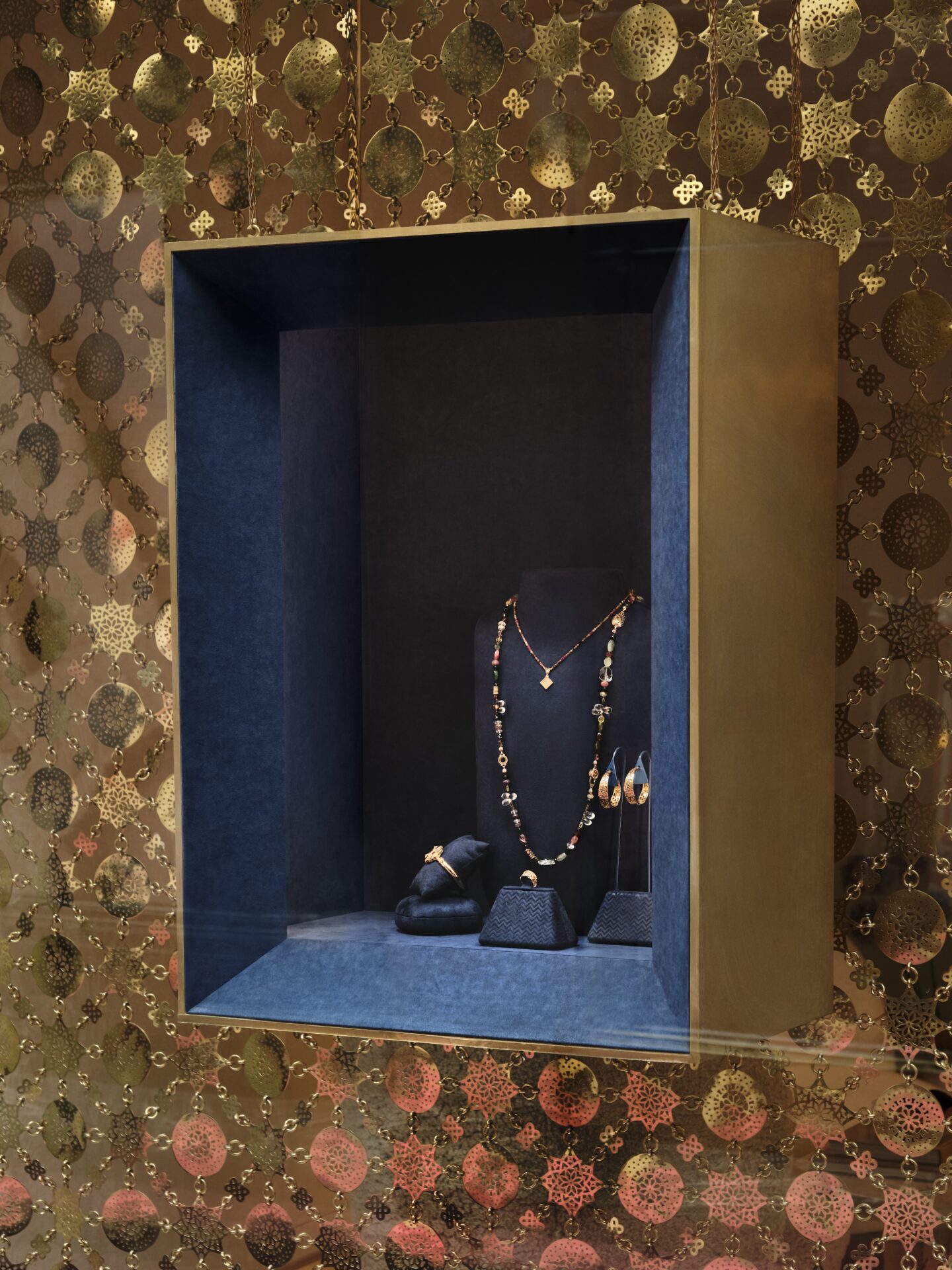
Azza Fahmy is a family business, founded by Fahmy in 1969 and now run by her daughters. The family connection goes further still, though: the founder’s sister, acclaimed metalwork designer Randa Fahmy, also had a hand in the London boutique, and her delicate brass curtain hangs in one of the windows, casting wonderful patterns on the floor of the interior (“we wanted it to feel like a veil,” says Gaballa).
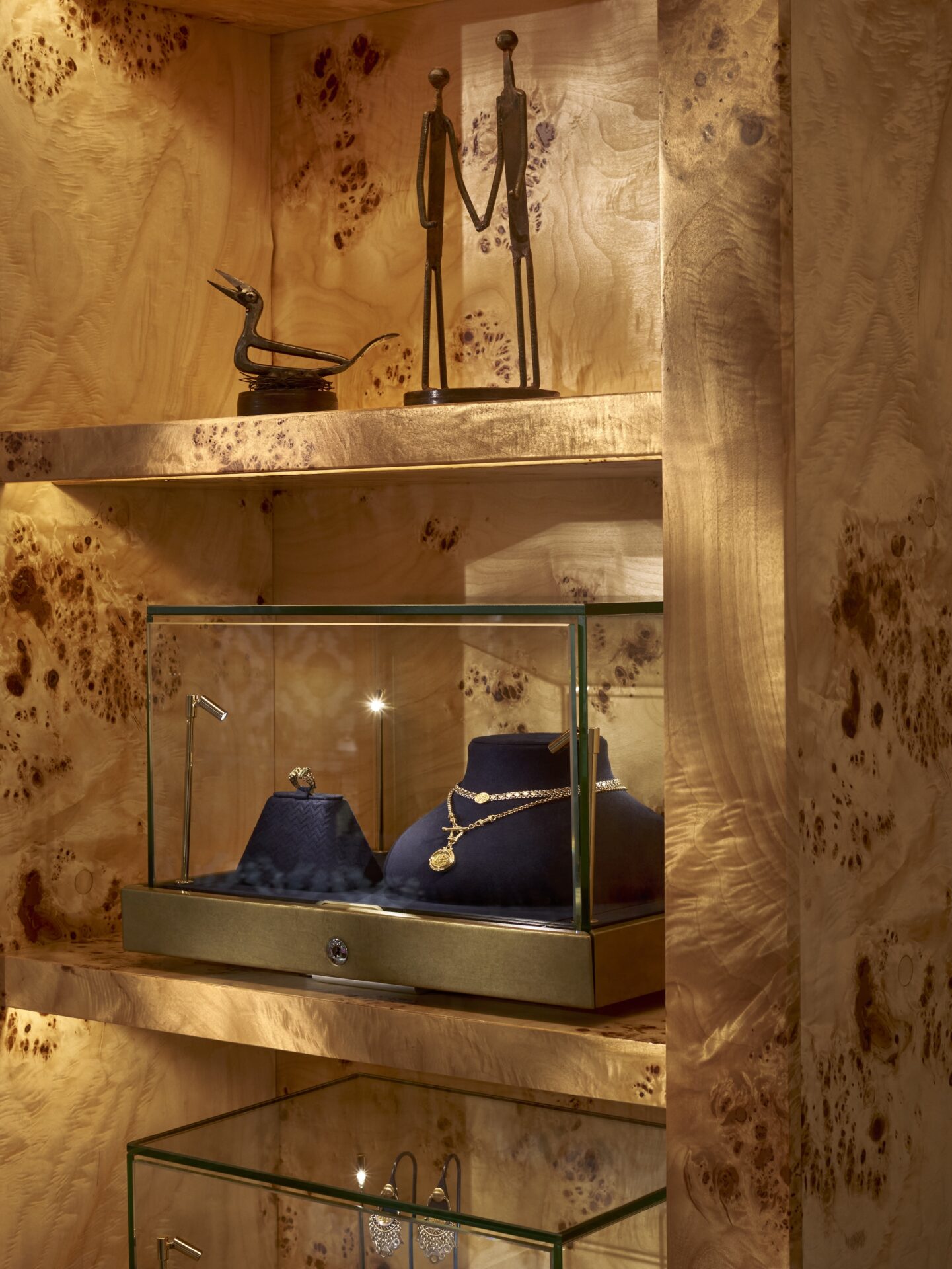
Universal Design Studio has suspended vitrines in the window to display jewellery, lined in Pharaonic blue (the colour of Azza Fahmy’s wider branding, with an intrinsic association with Egypt). Randa Fahmy also designed some of the lighting, contributing the wonderful ceiling lights made from large, loose clusters of brass flowers. The ground floor is conceived as a “salon of cultural engagement,” a place to welcome guests and get to know the brand; the colour and materiality of the window display is repeated within, with oak burr joinery – and display models in the same distinctive blue – and an oak burr table as you move through the space. Playful sculptures borrowed from the jewellery workshops are made from repurposed old tools, a contrast to the opulence of the jewellery itself.
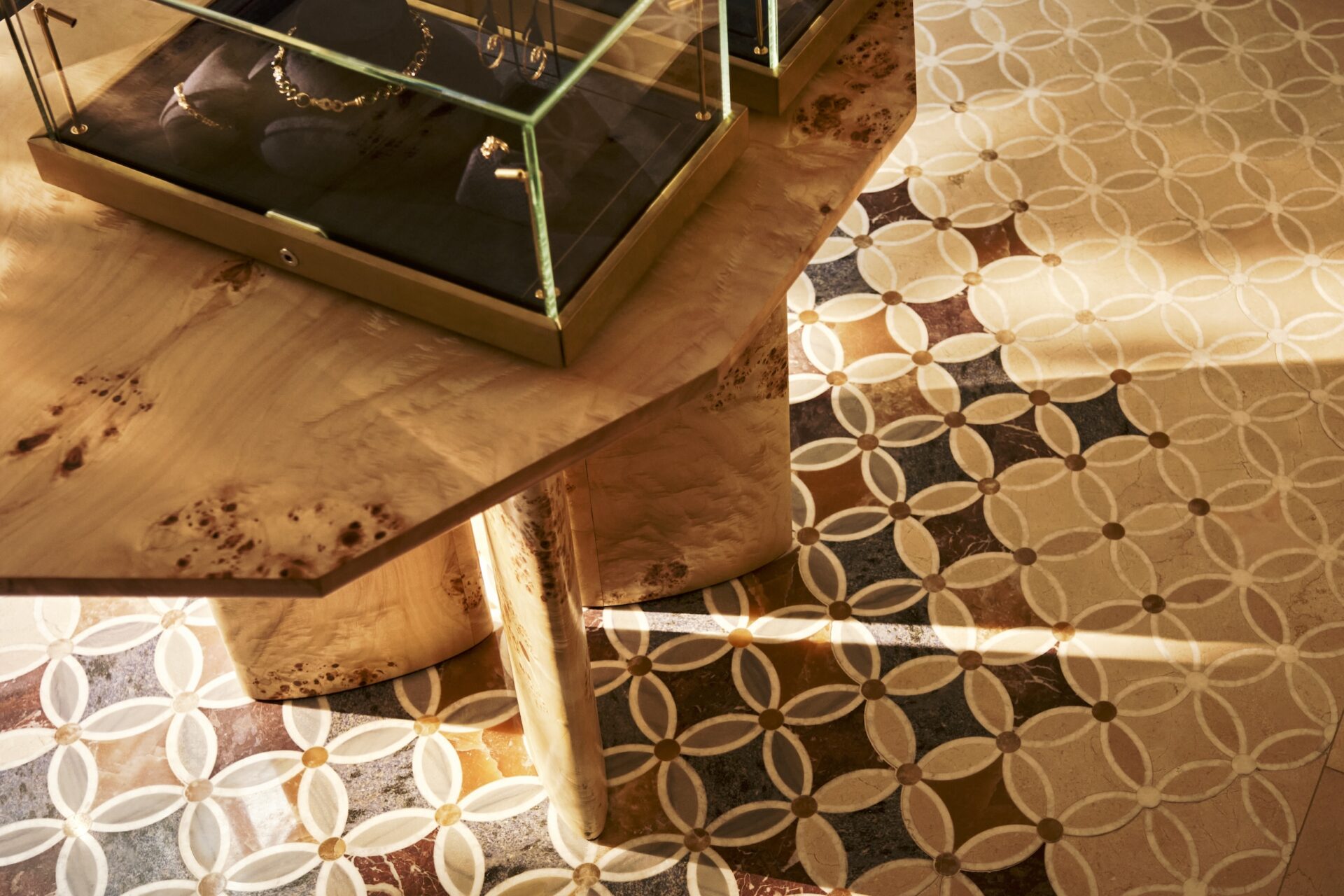
As with Fahmy’s jewellery, symbolism and meaning are woven through the interior, expressed through materials and craftsmanship. “Geometry had a lot of symbolism for [the brand],” says Gaballa, “so it was quite important that we thought about the importance of shapes in everything.” The polychrome stone floor (made in Egypt and shipped in sections before being installed on site) features a pattern inspired by the tombs in Luxor’s West Bank, with the colour gradually fading out into sandy tones as it radiates out from the burr table.
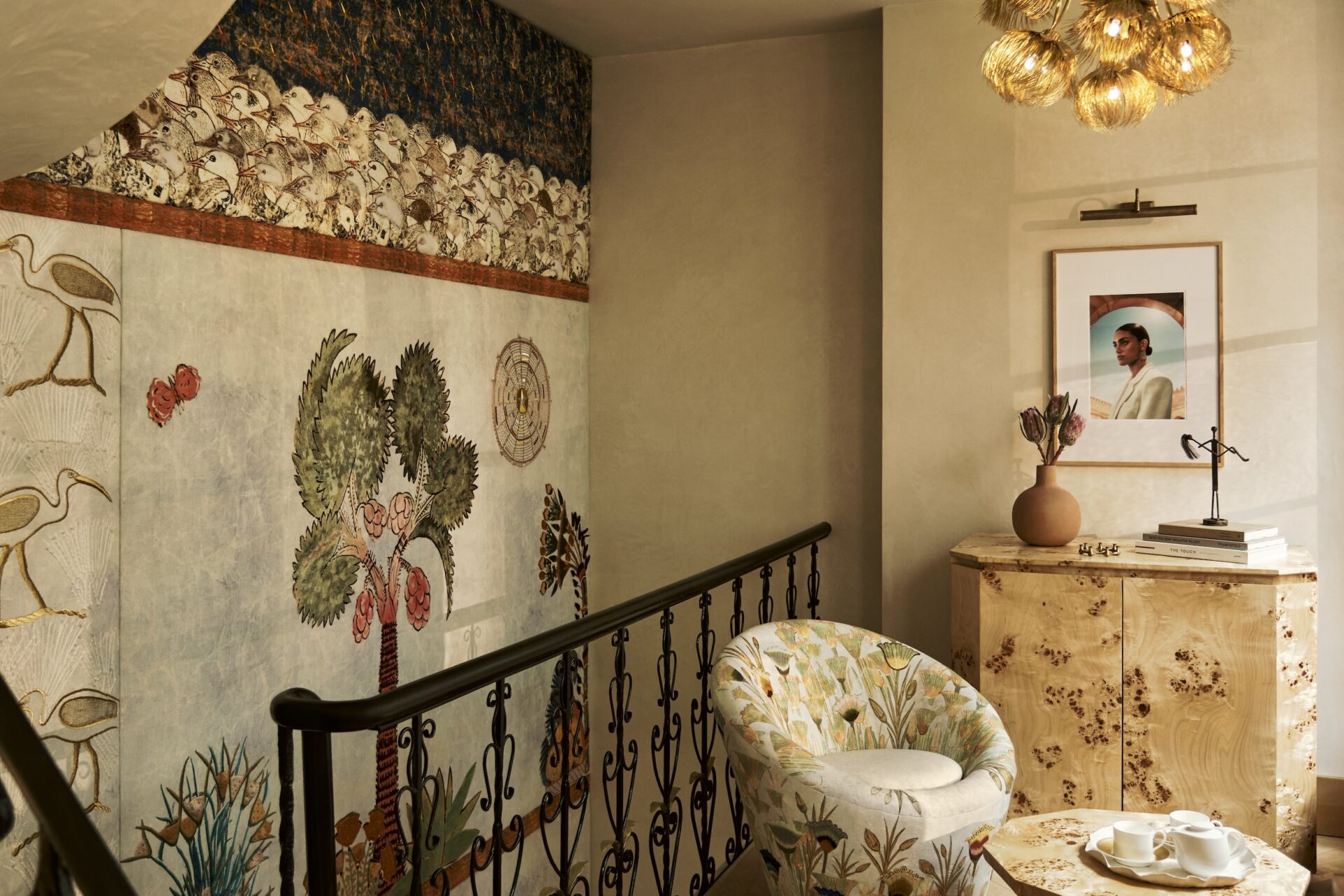
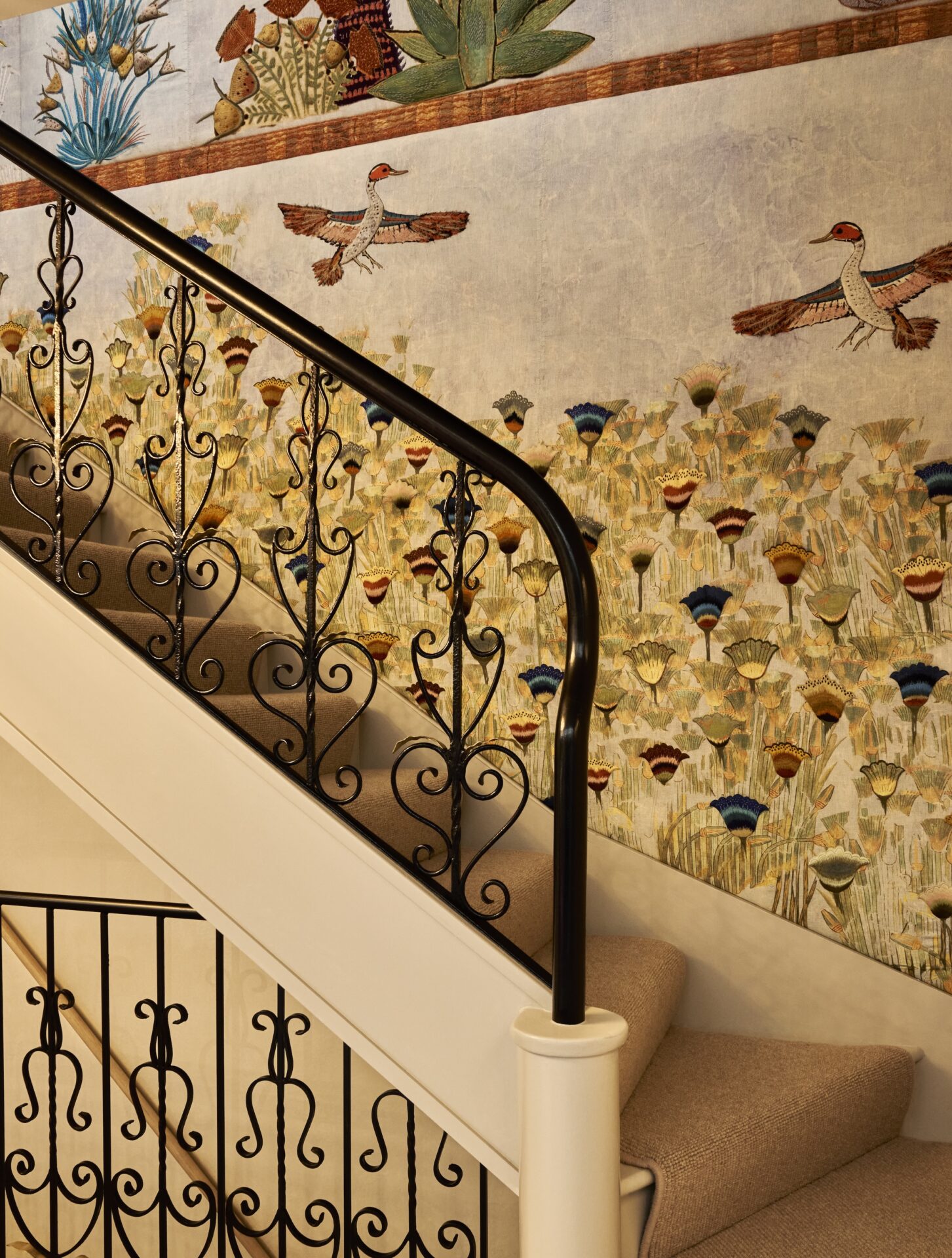
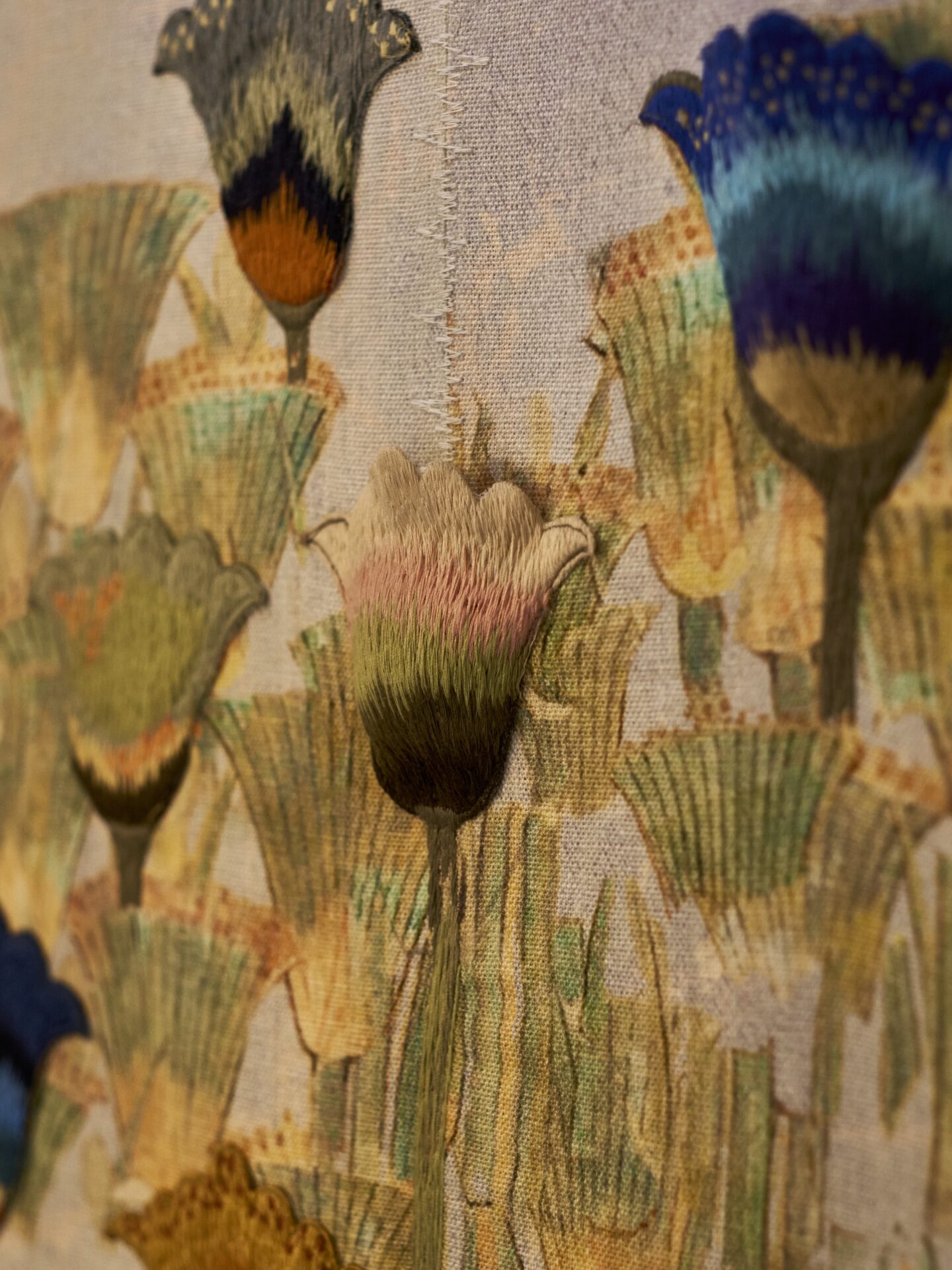
Upstairs houses private consultation space and the high jewellery collection, and the two floors are connected by a hand-embroidered wall panel that covers the entire wall. Colourful, tactile, and rich with symbolic detail (such as the ducks, representing renewal in ancient Egyptian culture), it irresistibly draws the eye up the stairs. It was made by Bokja, a Beirut-based textile collective, which also contributed some equally opulent fabric for the first floor’s tub chair.
From the colour temperature of the lights to the tactile materials we used, it was important that it didn’t feel austere or not welcoming
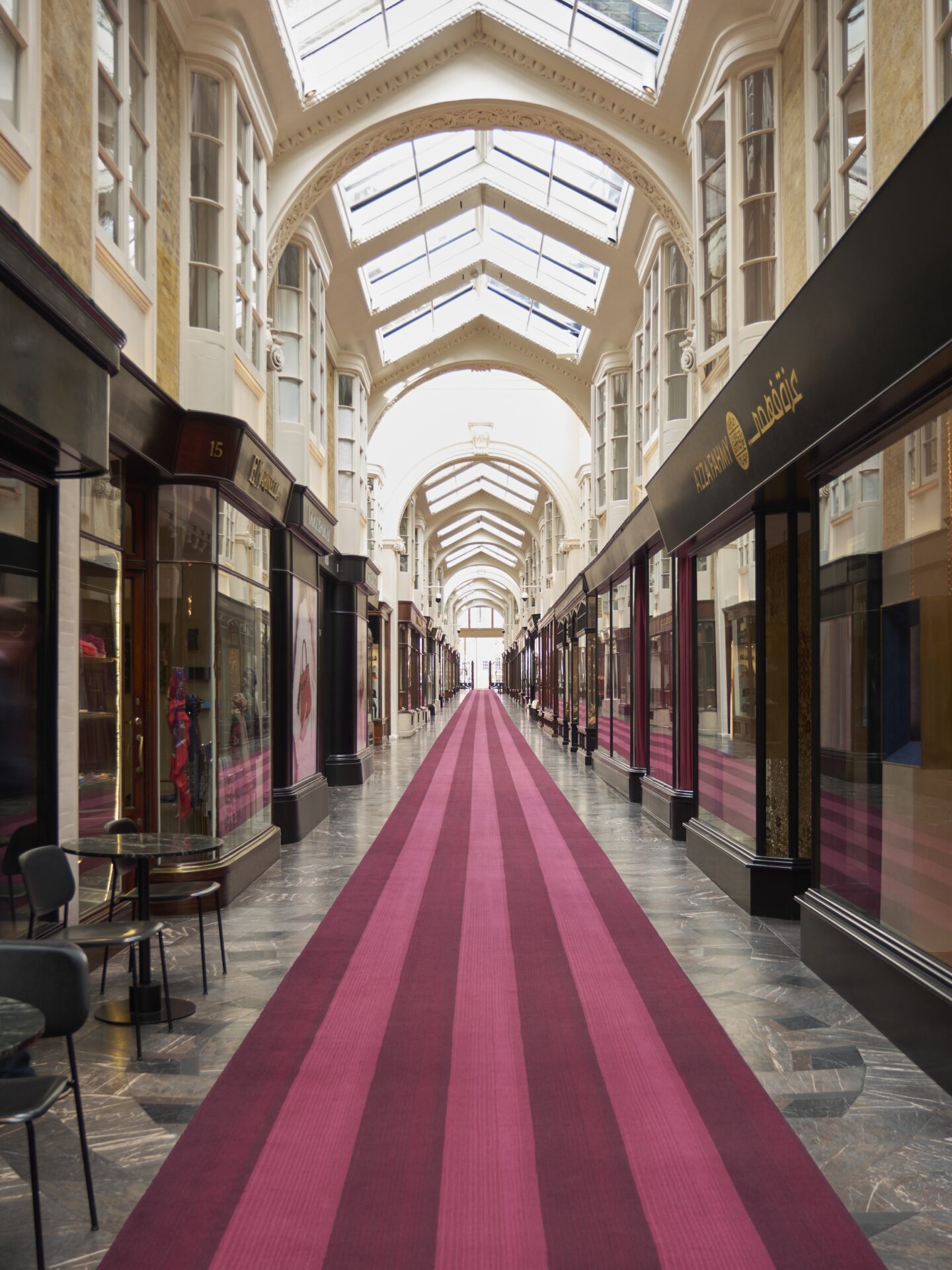
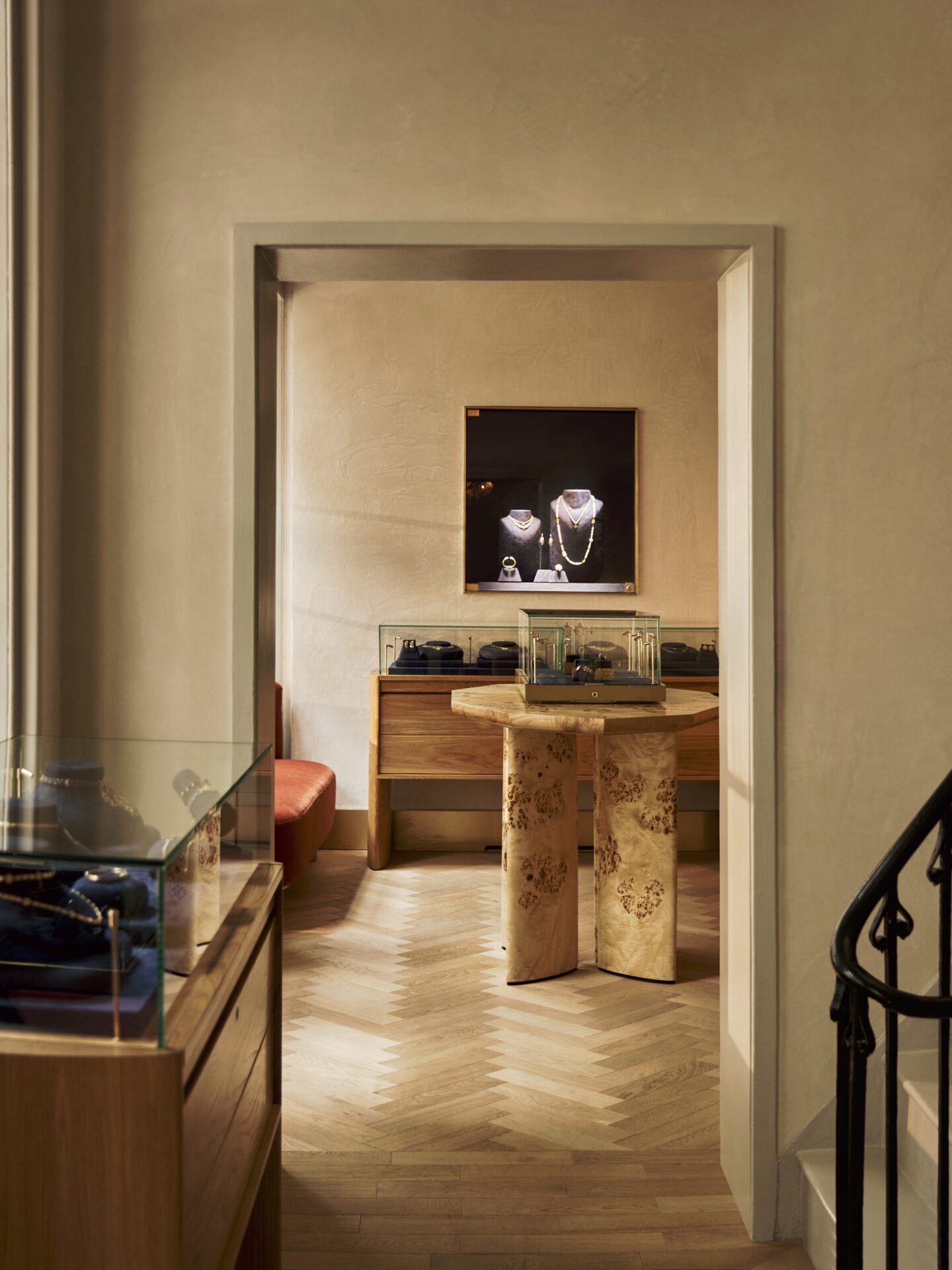
All this blends seamlessly with the interior architecture of the listed Burlington Arcade. Universal Design Studio inherited a space that was devoid of many original features and even lacked heating and cooling: air conditioning is now hidden within the walls, and a new metalwork balustrade enhances the traditional character.
Gaballa’s personal connection to this project – her father is Egyptian – helped bridge initial hesitations. “Azza was very unsure about hiring a London studio,” she says. “She was like, ‘How are they going to understand us?'” There was clearly no need for hesitation: this is a thoughtful interior that manages to straddle London and Egypt, the traditional and the contemporary. “The best projects are the best collaborations,” Gaballa concludes. “Them trusting us allowed us to have the most information about who they are and really be able to translate that in a meaningful way.”


